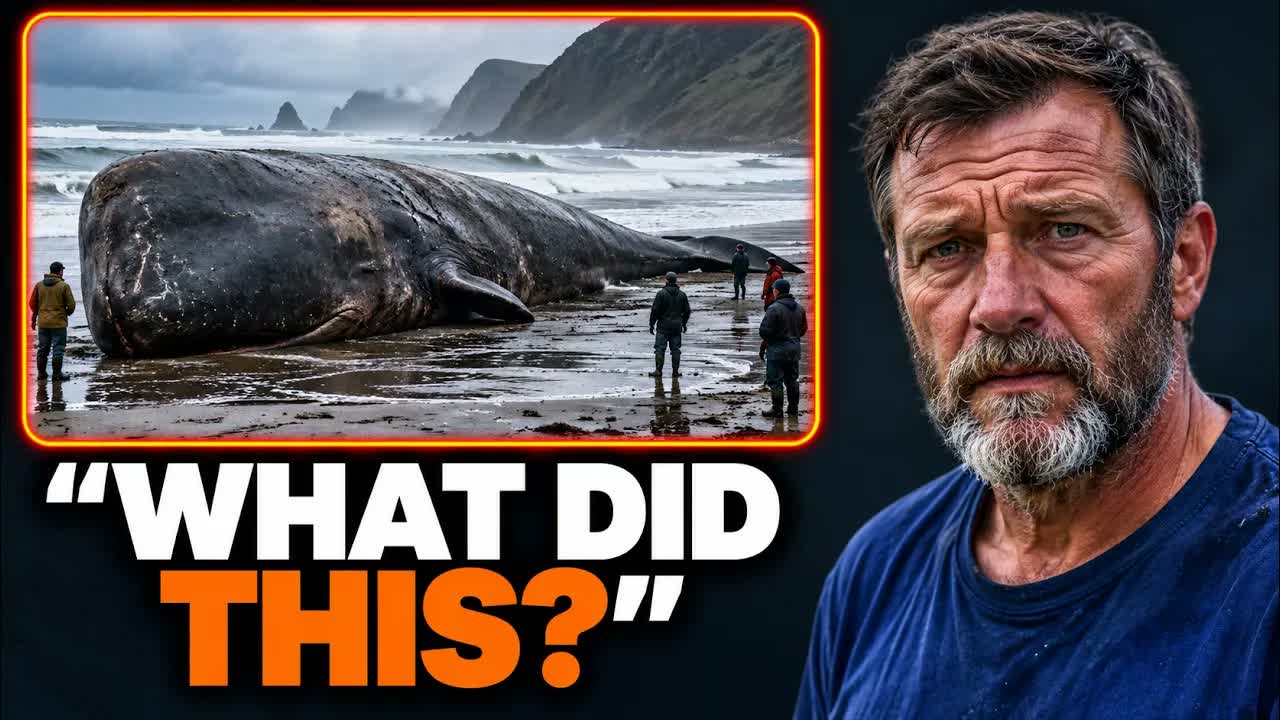
In the late summer of 1997, the pollock fleet working the outer grounds of the Bering Sea came in off the Aleutian Basin early, not all at once, over several days, boat by boat, the way a tide goes out, until the grounds that had been producing the best pollock numbers of the season were empty of American vessels. The processing ships anchored at Dutch Harbor had nothing coming in, and the quota that still had weeks left to fill sat untouched in the water. There was no storm, no equipment failure, no regulatory closure. The National Marine Fisheries Service sent an inquiry to the fleet, and the responses it received cited deteriorating catch rates, fouled gear, and poor acoustic conditions. These explanations were individually plausible and collectively implausible, because the satellite data showed the pollock still schooled on the outer grounds, and the weather had been the best of the season, and the gear that had been fouled had been fouled in a specific way that NMFS noted and then did not follow up on, because the follow-up would have required asking the skippers a question that the NMFS inquiry form did not have a box for. The question was, “What cut the gear like that?”
The man who might have answered it is named Walt Erickson. He is Norwegian-American from a Kodiak fishing family, and he was 41 in 1997 and is 70 now and still lives in Kodiak in the house his father built, and still goes out, though not to the outer grounds, not since that summer, and not past the shelf edge where the Bering Sea drops into the Aleutian Basin. He will tell you he doesn’t go that far anymore because his knees are bad and the weather out there is worse every year, and the pollock have moved shallower anyway, and there is no reason to push to the outer edge. He will tell you that if you don’t ask him directly. If you ask him directly, he sits with it for a while, and then he tells you a different reason. He says, “I came in off those grounds in August of 1997 because of what I saw out there and because of what happened to my gear, and because of what happened to the Reinhold brothers who were working the same edge two days before me, and who came in without saying why, and wouldn’t look at me when I saw them on the dock. And I knew without asking that they’d seen the same thing, or something close enough to it that we didn’t need to compare notes. And I have not gone back past the shelf edge since, because once is enough to know what’s out there, and once is enough to know that what’s out there doesn’t need me in it.”

He said this on his porch in Kodiak in the rain, which is the default weather in Kodiak. His wife called from inside. He didn’t answer. He looked at the rain and said, “I’ll tell you the whole of it, but I want you to understand something first. I’m not a man who sees things. I’m not a man who tells stories. I’ve fished Alaskan waters since I was 16 years old, and I’ve seen everything this ocean has, and I know the difference between a big animal and an impossible one. What I saw on the outer grounds in August of 1997 was impossible, and it was real. And those two things have been living in me side by side for 29 years, and I have never been able to put one of them down.” He picked up the coffee. He said, “So, let’s go. Let me take you out to the grounds first, because the Bering Sea is not one place, and the place that matters to this story is a specific place, and without the specifics, it doesn’t have the weight it needs to have.”
The Bering Sea sits between Alaska and Russia, and it is one of the most productive marine ecosystems on Earth. The pollock fishery that works it is the largest single-species fishery in the world by volume. The outer continental shelf, the broad flat table of relatively shallow water that extends from the Alaskan coast to the shelf edge, is where most of the commercial fishing happens. The water there is roughly 20 to 200 meters deep, cold, extraordinarily rich, the engine of the North Pacific food web. At the shelf edge, the floor drops away into the Aleutian Basin. This is a deep-water feature that sits in the center of the Bering Sea, enclosed on its southern side by the Aleutian Island Arc, and it reaches depths of approximately 3,800 meters. It is cold, dark, poorly surveyed, and biologically almost entirely unknown below the mesopelagic zone. Oceanographers who have surveyed the Aleutian Basin floor describe it as poorly studied and largely under-characterized. What lives in the 3,000-meter water of the Aleutian Basin is not known in any comprehensive way.
The outer pollock grounds, the edge grounds that the fleet was working in August of 1997, sit at the lip of the shelf before it drops into the basin. This is productive water because the upwelling from the basin edge brings nutrients to the surface and concentrates the pollock and their prey in dense aggregations. It is also, in the experience of the men who have worked it for decades, water with a particular character. The old Aleutian fishermen, the ones who worked before the big factory trawlers, had a name for the outer grounds that is not the official chart name. Walt knows the name. He uses it in the way that a man uses a name that is more true than the official one. He calls it the dark edge, not because it is dark. The summer Bering Sea has long light, near endless light in August. He calls it what the men before him called it because the dark is what is below it. Because the shelf is the last lit thing before the dark begins, and the outer grounds are where you can feel that most clearly, the way you feel a door standing open behind you even when you can’t see it.

Walt had been working the dark edge for a week when it happened. The fishing had been good, genuinely good, the best numbers he’d had in three seasons, and he was not a man who left good fishing early. He had his crew of five. He had a hold that was three-quarters full, and he had four more days of quota filling ahead of him, and no intention of going anywhere. Here is the morning, the way he tells it. Steady, a man who has told himself this story 10,000 times in the middle of the night, and has it exactly as it was. It was early morning, full light by 6:00 in the Bering summer, the sea running a long slow swell out of the northwest, but nothing dangerous. His crew was running the trawl on the outer edge. The net down at about 180 meters, working the base of a pollock aggregation his sounder had marked as dense and wide. He was in the wheelhouse. He had his sounder running and his radar running and his GPS, and he was watching the net monitor and drinking his third coffee of the morning, and it was the best kind of ordinary.
The pollock left the sounder. He describes this the way other captains describe the tuna leaving their sounders, and the way still others describe a reading collapsing off the screen, and I have stopped believing this is a coincidence across these stories. The fish go first every time. Before the men see anything, before the gear is affected, before the encounter begins, the fish read something in the water that the men cannot read yet, and they go. The pollock aggregation, which had been marking as a dense mass across most of his sounder display, emptied in approximately 10 seconds. Not scattered, not thinned, not moved laterally. Dropped. Straight down as fast as fish drop when something large comes through from below, and the only safe direction is away from it. Walt noted it and thought large whale, which is what you think in the Bering Sea when the fish drop like that. And he watched the sounder for the whale return, and the whale return did not come. Instead, his net came tight, not snagged. He knew the difference between a snagged net and a net under biological load. The tension on the warp cables went up fast and high, the way it goes when you’ve hit a heavy mass in the water, and then it went higher than that, and then the wheelhouse began to vibrate, a low frequency shudder that he felt in his teeth before he heard it.
What happened next is where the account becomes difficult, and where the corroboration becomes important. Walt says the net was not pulled. It was pushed. The warps went slack for a moment, all at once, the way they do when the load releases, and then the net surfaced behind the boat, and it surfaced wrong. The codend was intact. The mesh was intact. But the trawl doors, the heavy steel plates that hold the net open, were gone, and the steel cable bridles that connect them to the net were not broken. They were cut. Walt describes the ends as clean, bright, and sheared, the way a cable looks when it is severed by something with an edge, not when it parts under strain. He has been a fisherman for more than fifty years. He has seen cables part under strain. He knows what that looks like, and he says this was not that. He radioed the Reinhold brothers, who were working the same edge two days ahead of him, and the brother who answered said only, “We’re coming in,” and then said nothing else. Walt says he stood in the wheelhouse for a long time after that, looking at the water, and the water looked like water, and the sounder was empty, and the light was the long August light, and everything was exactly as it should have been except that it was not.

He says he saw it once, briefly, at a distance he estimates at 200 meters, off the port bow, as he was turning to bring the net back aboard. He describes a dorsal fin, and then a length of back, and then a tail, moving in a line that was too straight and too steady for a whale, and too large for anything he knew. He estimated the length, and he has never changed the estimate in 29 years, at roughly 125 feet. He is aware of what that number means. He is aware that the largest confirmed great white shark was around 20 feet, that the largest confirmed whale shark was around 60 feet, that the fossil record for Otodus megalodon suggests a maximum length in the range of 50 to 65 feet, and that a 125-foot shark is not a large shark but an impossible one. He is aware of all of this. He says it anyway. “I know what I saw,” he says. “I know what the number means. I’m not asking anyone to believe the number. I’m telling you the number because it’s what I saw, and if I told you a smaller number I’d be lying to you, and I’ve never lied to anyone about this, and I’m not going to start now.”
The NMFS inquiry that followed the fleet’s early return did not produce a public report, and the agency has not confirmed any specific incident on the outer grounds in August 1997. What is documented is the pattern: the early departure, the several days over which it happened, the untouched quota, and the responses the agency received. The Reinhold brothers did not respond to requests for comment for this article, and one of them has since died. Other captains who worked the edge that season have given similar accounts over the years, always off the record, always with the same details: the fish leaving the sounder first, the gear coming back cut rather than broken, the reluctance to say more. A retired fisheries biologist who reviewed the account at my request, and who asked not to be named because he still consults for the industry, said that the gear damage as described is consistent with a very large animal interacting with the trawl, and that the size estimate is not consistent with any known species. He said the two statements are not in conflict. They are simply both true, and the space between them is where the story lives.
Walt Erickson is not a man who wants attention. He agreed to talk because, he says, he is 70 years old and his knees are bad and he would like the story to be somewhere other than in his own head. He is not asking anyone to believe him. He is asking, in the way that a man who has spent his life on the water asks for things, that the question be left open. The Aleutian Basin is 3,800 meters deep and poorly surveyed, and the shelf edge is a place where the lit world ends and something else begins, and the men who work it have always known that. What came up under Walt Erickson’s net in August of 1997 cut steel cable like it was rope and left the fish gone and the water empty, and the fleet came in early that year, and no one has gone back to the outer grounds in quite the same way since. Whether that is because of what was out there, or because of what the men who saw it carry with them, is a question that the inquiry form did not have a box for, and probably never will.

The rain in Kodiak kept falling, the way it does, and Walt finished his coffee and looked out at the water he no longer crosses. He said the thing he always says at the end, the thing he has said to every person who has asked him about that summer. “The ocean is bigger than us,” he said. “That’s all. It’s bigger than us, and it’s deeper than us, and there are things in it that don’t need us to know about them. I went out there once and I came back, and I’ve been grateful for that every day since. I don’t need to know what it was. I just need to know I’m not going back.”
Report
Report this article
×
Select a reason for reporting: