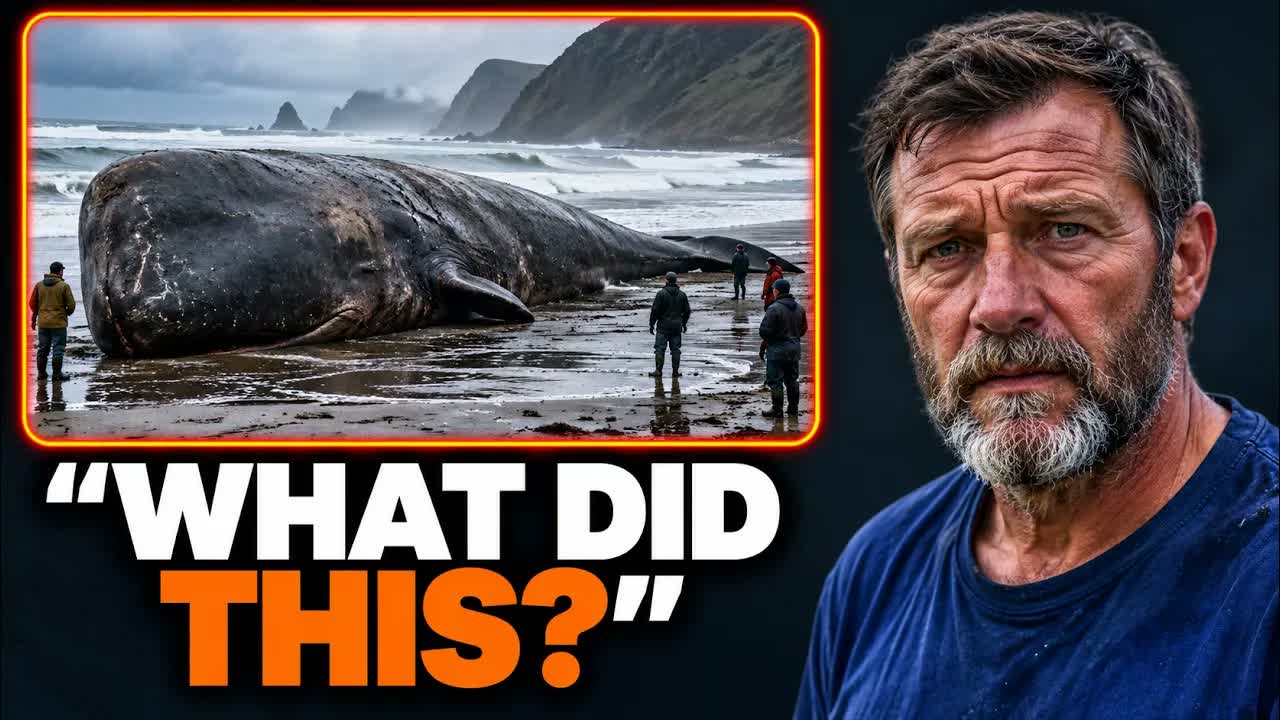
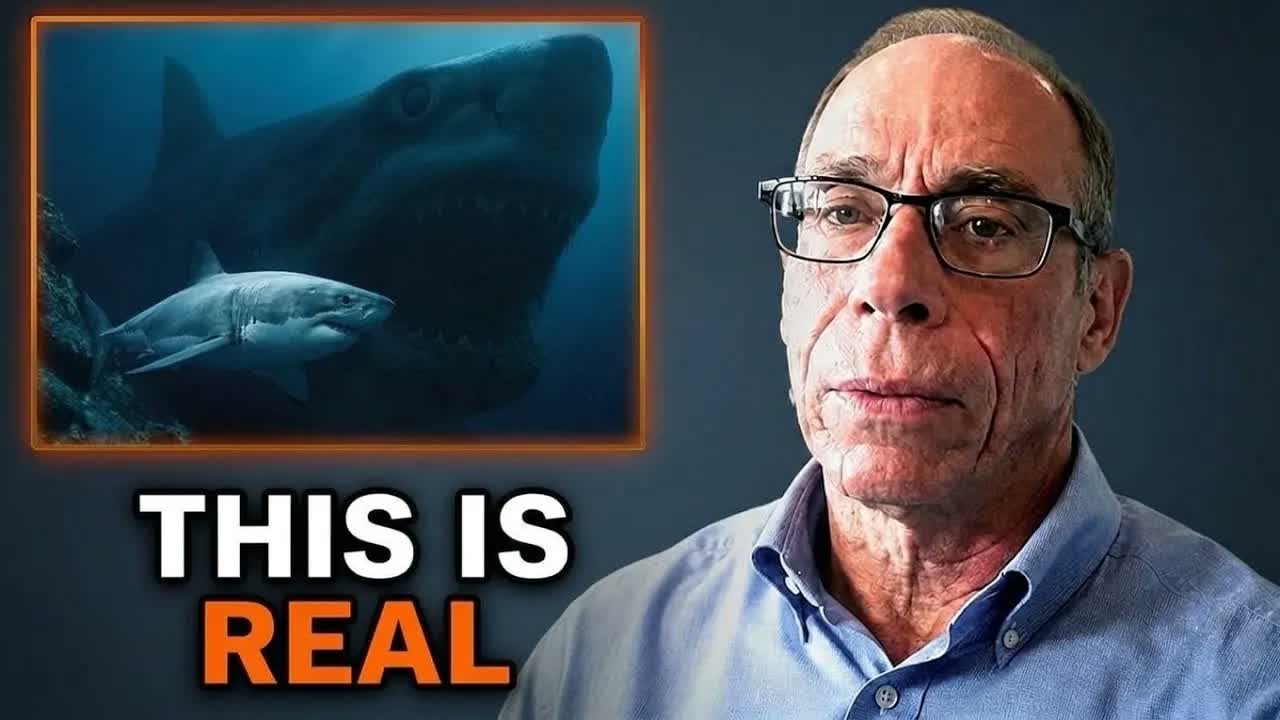
In the autumn of 2004, underwater cameraman Russ Hartley was filming an eighteen-foot great white shark through the bars of a dive cage off Guadalupe Island, Mexico, in water so clear he could see roughly 150 feet in every direction. When a second shark entered the frame beside the first, the original animal — the largest great white Hartley had ever filmed — suddenly looked small. He kept shooting. That is the first thing to understand about Russ Hartley, and the reason this story exists at all. He was a professional. He had spent twenty years filming wildlife in difficult places, and what separates a professional from anyone else is that when the impossible appears in the viewfinder, the professional does not lower the camera. He holds the shot. So for the eleven seconds the second shark stayed beside the first, Russ Hartley held the shot. He now keeps, in a plastic case in a drawer at his home in Monterey, eleven seconds of footage showing an eighteen-foot great white — a measured, recorded, precisely documented animal — swimming beside something that makes it look like a small practice fish. Almost no one has seen those eleven seconds, because they were cut.
Hartley was at Guadalupe in 2004 under contract to film a wildlife documentary, one of many shot at the island in those years, because Guadalupe was where you went if you wanted clean footage of great white sharks — the cleanest in the world. He filmed for two weeks, delivered his tapes, and when the documentary was released, the second shark was not in it. It had been reviewed in a Los Angeles edit suite by people whose job was to decide what a documentary could and could not show, and it was excluded and described in an email Hartley kept as an “anomaly,” most likely a lens artifact or a depth-of-field error, and unusable. The raw tapes — those eleven seconds and the hour before and after them — went home with the cameraman, as raw tapes usually do, and stayed in a drawer for twenty-one years, until I wrote to a man I had been told filmed at Guadalupe in the early days and asked whether he had ever shot anything there he could not explain. He replied with two words. Which time?

I should tell you who Russ Hartley is, because the witness is half of every story of this kind, and this witness is not the sort who invents things. He is not a shark enthusiast. He is not a man who came to the ocean looking for monsters. He is a technician, a professional cameraman who spent thirty years filming natural history for television stations you would recognize, in deserts and on ice and underwater. A man whose entire professional value rested on being the person who does not exaggerate, who films things accurately and comes back with footage that can be trusted. He is, in his own description, a boring man. He says it with a kind of pride, because “boring” in his profession is a compliment. Boring means reliable, means your tape is sound, means your editors do not have to wonder whether you tampered with the lens. He has no book to sell and no channel of his own, and he did not come to me. I went to him. He spent most of our first conversation trying to talk me out of being interested, telling me all the reasons the footage was probably nothing, listing the flaws of the camera and the tricks of water and light with more precision than any skeptic I could have hired. Then, at the end, when I asked whether he believed his own explanations, he was quiet for a while and said: “No. But I’ve needed them for twenty-one years.” That is the kind of witness in this story. Not a man who wants there to be a monster, but a man who has spent two decades wishing it were a technical error and failing.
This is the story of eleven seconds of video. It is the story of a shark we measured and named and trusted as a baseline, and the thing that appeared beside that baseline and broke it. It is the story of an edit suite in Los Angeles where a decision was made about what an audience was prepared to see. And it is the story of all the calm, logical, professional reasons that the most important footage ever shot at Guadalupe was classified as a technical error. It is also the story of the most unsettling idea the ocean has ever offered me, which is not that there is a bigger shark. It is that we built our entire perception of shark size on the largest one that regularly appears where we can see it, and that the ocean may simply keep a larger one below the level we measure.
Before I go further, one thing. This involves real places, real science and real people, and I will keep separate what is documented from what is only my expectation. When I tell you something that can be verified, I will say so. When I am drawing an inference, I will say that too. There is no fixed schedule to this work. There is only the next tape that someone kept. And now, Guadalupe Island.

I want to begin not with the sharks but with the water, because the water is the entire reason this footage cannot be dismissed as easily as the edit suite dismissed it. The water around Guadalupe Island is not like the water of other great white shark sites. In most places where you might find a white shark — the cold green water off California, or the thick plankton soup off South Africa — visibility is poor, twenty or thirty feet, and a diver’s estimate of size is nearly worthless because things appear and fade in water you cannot see through. Guadalupe is the opposite. It is a volcanic rock 150 miles out in the open ocean off the coast of Baja, and the water around it is open-ocean blue, with clarity reaching 100 feet on ordinary days and 150 feet on clear ones. It is, by a wide margin, the clearest water on Earth where adult great white sharks gather. It is the only place where you can sit in a cage and watch a shark appear from fifty yards away and trust your eyes the whole time, because the water hides nothing from you. That clarity is why Guadalupe became, for nearly twenty years, the world’s center of knowledge about these animals. Cage boats came from San Diego overnight across open sea and anchored in the lee of the island and put people down into that blue. And the footage that came back — the footage that taught most of the world what a great white shark actually looks like while doing what it does — came from Guadalupe because it was the only place you could film them clearly. When you imagine a great white gliding through bright blue water, unhurried and enormous, you are almost certainly imagining Guadalupe, because that is the image that was made there.
And I want you to consider what that clarity really means for the question of size, because it is the joint on which everything turns. In murky water, every estimate of size is a negotiation with doubt. You saw something big, but you saw it faintly, at a distance you are not sure of, through water that distorts and shrinks and lies. A skeptic can take any monster from murky water and dismantle it, honestly, on the strength of poor visibility and adrenaline. Nine times out of ten the skeptic is right. That is why most great sea-monster stories come from bad water, because bad water is where the mind is free to build things. Guadalupe is the one place that strips away that defense. At 150 feet of visibility, a thing looks like what it is. There is no haze to hide in, no distance you cannot estimate, no blur for your imagination to fill. The clearest window humanity has ever had onto large sharks is the window of Guadalupe Island. And that window is precisely why this footage is a problem, because you cannot do what you do with other monster videos, which is blame the water. The water there is the clearest there is. Everything in that frame was seen with a clarity we do not otherwise get in the ocean. The same clarity that made Guadalupe the capital of what we know about the great white is the clarity that makes its eleven seconds hard to explain away. There is something oddly funny and chilling about that. We went to the clearest water on Earth so that we could finally see these animals without doubt. And it showed us something clearly that we would have preferred to be able to doubt.
So when I tell you that Russ Hartley’s eleven seconds are difficult to explain, the first reason is the water. Whatever is in that footage is in the clearest water in which a white shark has ever been filmed, up close, by a professional, on a locked-off shot. This is not a blur at the edge of vision. These are two animals, lit and clear, in water you can see through for 150 feet.

And here is the second reason, which matters more, so I need to explain it carefully. The white shark in the footage — the first one, the eighteen-footer — was known. The white sharks of Guadalupe were not anonymous transients. This is real, documented science. For years, researchers and dive operators photographed and catalogued the sharks at that island, identifying each one by a unique pattern of pigmentation and scarring around its gills, the shape of its fins, and the particular topography of its scars. They gave them names and tracked their movements. The catalogue eventually reached roughly 400 sharks, each one known, each one a familiar character returning to the island year after year. The operators knew them the way you know regulars at a cafe. There was one famous shark, years later, that the world came to know as Deep Blue, a female that approached twenty feet in length and is the largest great white ever reliably filmed. And when she appears on video, professional shark divers go quiet, because Deep Blue’s twenty feet is close to the maximum size reliably documented for the animal. Deep Blue is the ceiling. She is the measure.
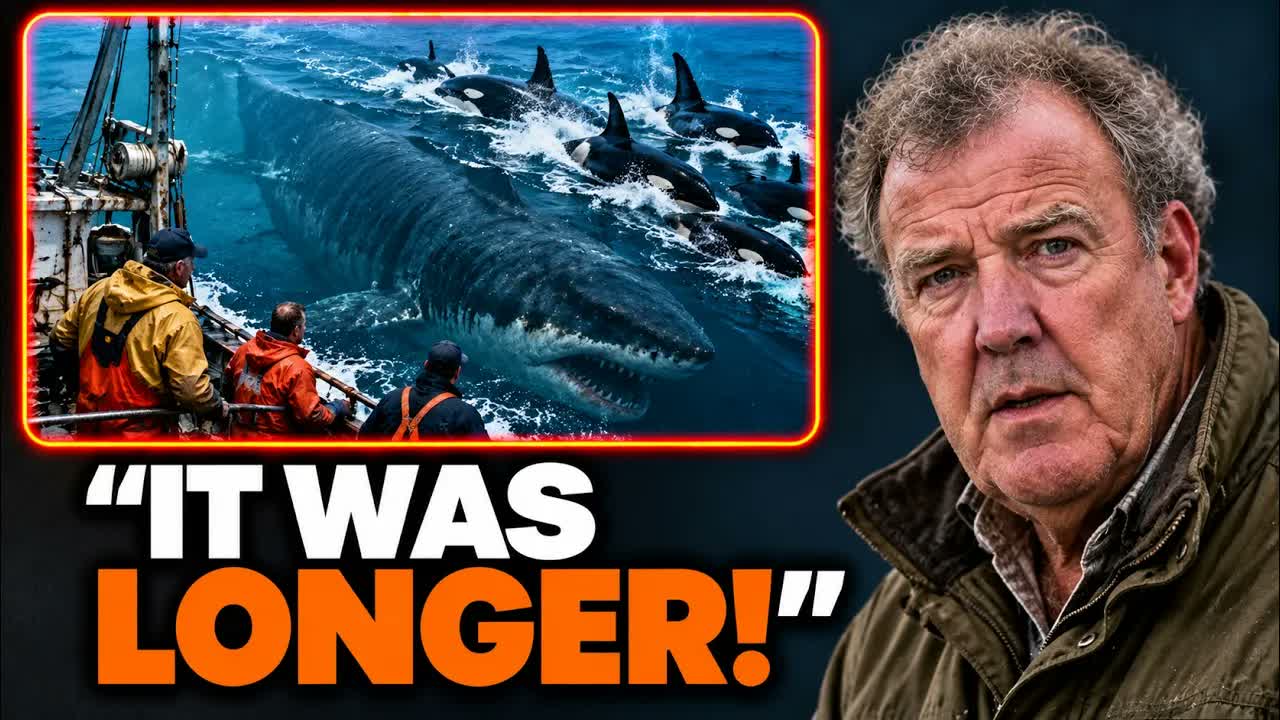
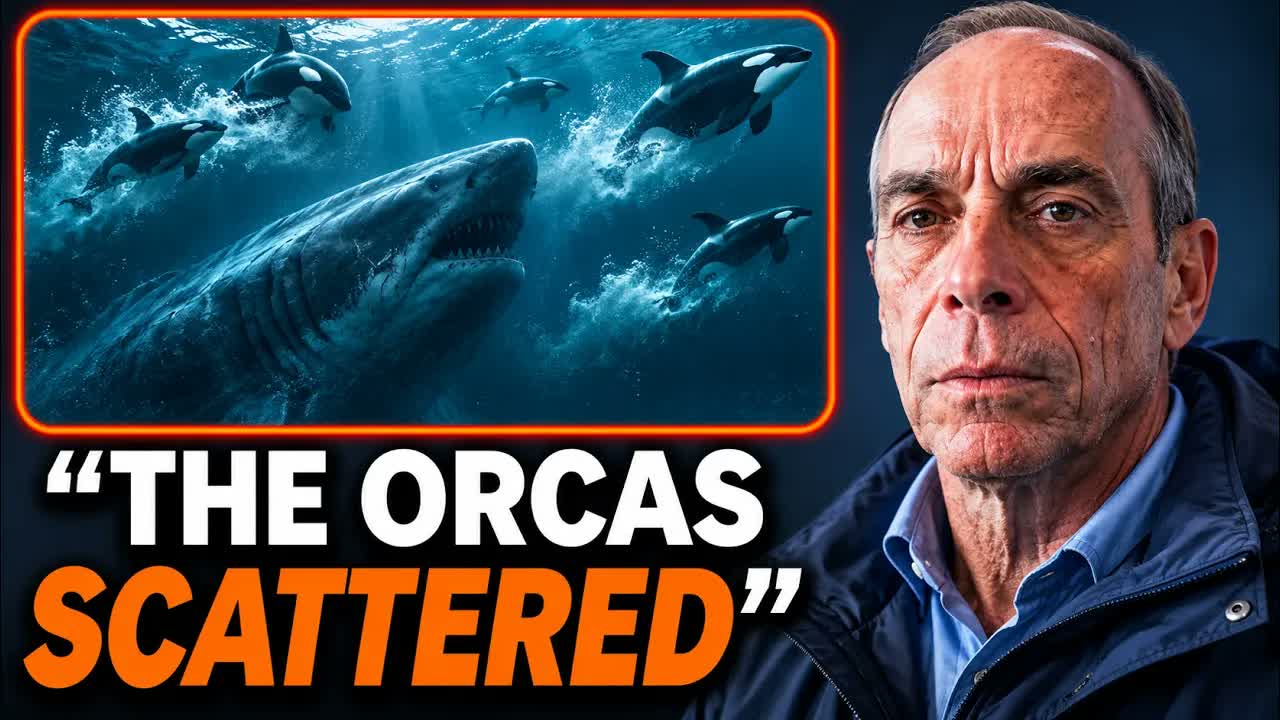
That is what makes the Guadalupe footage different from every other account of a very large shark. The eighteen-footer beside which the second animal appeared was not a guess. It was a catalogued individual, measured against a frame, filmed in water clear enough to verify the measurement, by a cameraman with no interest in exaggeration. The baseline in that shot is as solid as any baseline in shark film. And the thing that swam beside it made the baseline look small. Hartley has described the moment plainly: he was filming the largest white shark he had ever seen, and then a second animal entered the frame and the first one shrank. He did not pan, he did not zoom, he did not refocus. He held. The eleven seconds exist because a professional did the one thing professionals are trained to do when the impossible arrives, which is to keep the camera steady and let the record be made.
The edit suite saw it differently. According to the email Hartley preserved, the shot was judged an anomaly, most likely a lens artifact or a depth-of-field error, and unusable. I want to be fair to that decision, because it was not made by fools or by cowards. Documentary television operates under real constraints. A shot that appears to show an animal dramatically larger than the largest verified individual is, from a broadcaster’s point of view, a liability. If you air it, you are making a claim. If the claim is wrong, you have damaged the credibility of the film and the reputations of everyone attached to it. The safe, professional, defensible choice is to cut it and to describe it as a technical problem, because technical problems are common and monsters are not. I have spoken to people who work in that world, and their reasoning is not mysterious. The anomaly explanation is the one that costs the least and risks the least. It is also, in this case, an explanation that its own author did not fully believe.

Hartley’s account of his own twenty-one years is the part of this story I find hardest to shake. He did not keep the tape because he wanted it to be a monster. He kept it because he could not make it stop being one. He catalogued the possible errors himself, in more detail than any outside skeptic would bother with — the geometry of the cage bars, the refraction of the housing port, the way a second animal closer to the lens can appear larger than a more distant one, the way a shark swimming at an angle can read longer than its true length. He wanted one of those explanations to hold. He told me he needed one of them to hold. And after twenty-one years of trying them on, none of them closed the question. That is not the testimony of a man selling something. It is the testimony of a technician who has been failed by his own expertise.
There is a scientific context here that deserves to be stated carefully, because it is where the story stops being a curiosity and becomes something larger. The great white shark is a species for which maximum size is genuinely uncertain. The reliably measured records cluster around eighteen to twenty feet, with Deep Blue near the top of that range. But the historical literature contains accounts of larger animals, and the fossil record contains a relative, Otodus megalodon, that was in a different category altogether. Modern white sharks are not megalodon, and nothing in Hartley’s footage suggests they are. What the footage suggests, if it suggests anything, is something more modest and more disturbing: that the largest shark we routinely see may not be the largest shark that exists. The catalogue of 400 known animals at Guadalupe is a catalogue of the sharks that come to the cages. It is not a census of the species. The ocean is deep and large and mostly unobserved, and the animals that visit our windows are the ones curious or bold enough to visit our windows.
That is the idea I cannot put down. We did not build our picture of the great white from the average shark. We built it from the biggest one that regularly shows up where we can see it. Deep Blue is the ceiling not necessarily because she is the largest of her kind, but because she is the largest of her kind that has been reliably filmed. Those are different statements, and the gap between them is where this story lives. A population can hold individuals larger than any yet documented, and the documented maximum will still be an honest number, because it is a record of observation, not a record of existence. The eighteen-footer in Hartley’s frame was a known animal, measured and catalogued and trusted. The second animal was not in the catalogue. It was not supposed to be there, at that size, beside that baseline, in that water. And the institution that reviewed it had no category for it except error.

I asked Hartley what he thought he had seen, and he gave me the answer of a careful man. He said he did not know. He said he had spent two decades trying to know, and that the trying had become its own kind of answer. He does not claim a monster. He does not claim a new species. He claims eleven seconds of clear footage, taken by a professional, of two animals whose relative sizes do not fit the catalogue, and he claims that the explanation offered for cutting it was not an explanation he could accept. That is a smaller claim than the internet would make of it, and a larger one than the edit suite was willing to air.
There is a final thing to say about Guadalupe itself, and it is not a happy thing. The island that gave the world its clearest window onto the great white is no longer the place it was in 2004. In 2022, Mexican authorities closed Guadalupe to shark diving, and the cage boats that had crossed overnight from San Diego stopped coming. The water is still there. The sharks are still there. The window is closed. The footage that taught most of the world what these animals look like was made in a place that most of the world can no longer visit, and the catalogue of 400 known sharks is now a record of a community observed during a particular period, not an ongoing census. When a window closes, the things that were visible through it become easier to doubt, because there is no longer a place to go and look.
So what do we do with eleven seconds? I think the honest answer is that we hold them the way Hartley held the camera. We do not lower the record because the record is inconvenient. We do not turn a cut shot into a monster, and we do not turn an anomaly into a fact. We say what is documented: that in the autumn of 2004, in the clearest water on Earth, a professional cameraman filmed a known eighteen-foot great white shark beside a second animal that made it look small, and held the shot for eleven seconds, and the footage was cut and described as a technical error, and the man who shot it has spent twenty-one years failing to believe his own explanation. We say what is uncertain: what the second animal was, and how large it was, and whether the catalogue of the largest sharks is a catalogue of the largest sharks or only of the ones that come close enough to be measured. And we say what is unsettling: that the clearest window we ever built onto these animals may have shown us the edge of something we did not have a category for, and that the most professional response available at the time was to file it as a mistake and put the tape in a drawer.

Hartley still has the drawer. The plastic case is still there, and the eleven seconds are still in it, and the hour before and the hour after. He is not a man who wants to be right about this. He is a man who wanted to be wrong, and who has been waiting twenty-one years for someone to show him the error he could not find himself. That is the witness. That is the water. That is the tape that someone kept. And somewhere out past the lee of a volcanic rock 150 miles off Baja, in blue you can see through for 150 feet, the animals that never came to the cages are still swimming, at sizes no catalogue has recorded, in water that has never lied and has never been asked.
Report
Report this article
×
Select a reason for reporting: