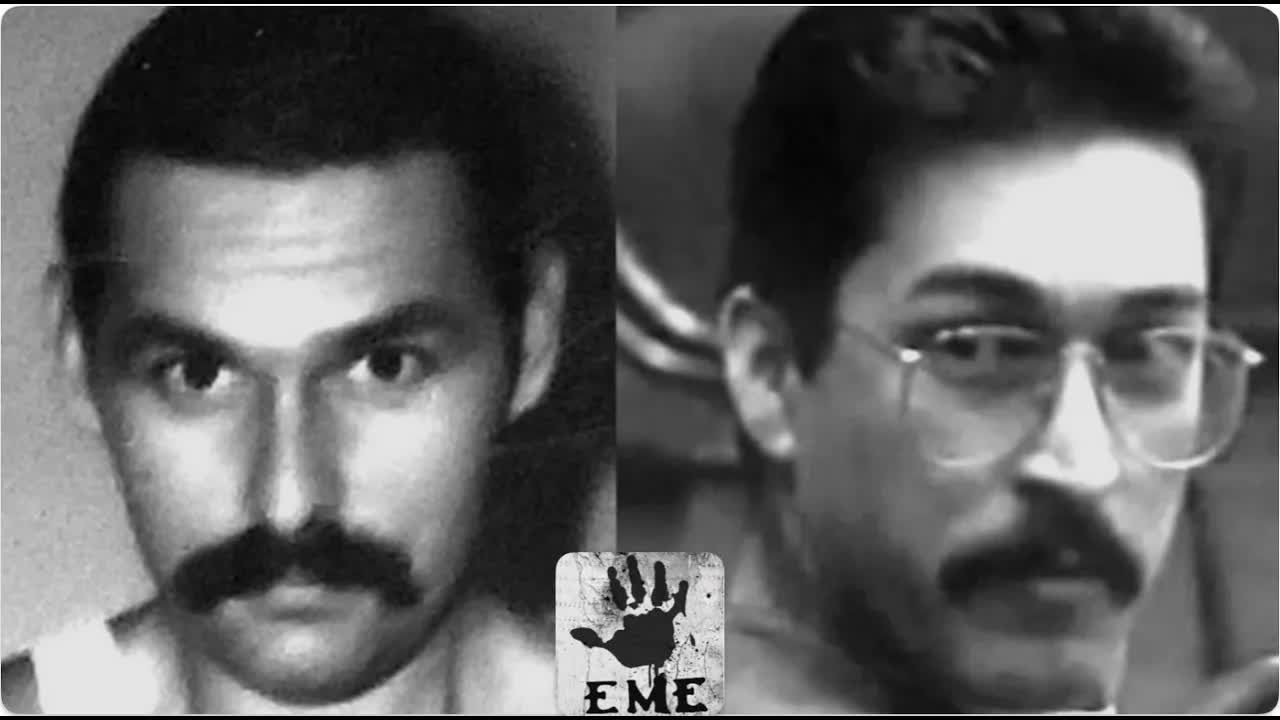
In April 2025, the California Supreme Court issued a ruling that reverberated far beyond the courthouse steps, overturning the murder convictions and death sentence of Timothy Joseph McGee, a man prosecutors had once described as one of Los Angeles’s most dangerous gang figures. The decision did not declare McGee innocent. It did not find that the killings he was accused of never happened. Instead, a unanimous court concluded that the trial judge had violated the Constitution when he removed a juror who had expressed doubts about the credibility of the prosecution’s witnesses. That single procedural ruling erased three murder convictions and lifted a death sentence that had stood for more than a decade, reopening wounds in a community that had lived through years of violence and fear.

The case against McGee centered on a violent period between 1997 and 2001, when, according to prosecutors, he led a faction of the Tunaville Reefer 13 gang, known as TVR-13, in the Atwater Village area of Los Angeles. McGee, born on April 27, 1973, to a Scottish American father and a Mexican American mother, grew up in a neighborhood that knew him first as a skateboarding kid. By the late 1990s, however, investigators said he had become a central figure in the gang’s operations, and prosecutors argued that he personally took part in shootings rather than simply ordering them. The jury that convicted him heard testimony from former associates, many of whom testified under protection, describing a hierarchy in which McGee sat at the top and demanded absolute loyalty.
The prosecution’s case drew on more than witness testimony. Ballistics evidence linked the same firearm to several shootings, and investigators said McGee kept that weapon close. Rap lyrics found in his possession were also presented to the jury, with prosecutors arguing that lines referencing violence against rivals and witnesses reflected actual crimes rather than artistic expression. McGee’s defense countered that the lyrics were fiction, comparable to the work of any recording artist, and that the state was asking jurors to treat creative writing as a confession. The jury rejected that argument and returned convictions, setting the stage for a death sentence.

Among the crimes at the heart of the case was the 1997 shooting of Ronald Martin, a member of a rival Frogtown group who prosecutors said crossed into the wrong territory. That same year, Pedro Sanchez and Juan Cardiel were shot; Cardiel survived but was left paralyzed. On July 4, 2000, prosecutors alleged that McGee fired at two Los Angeles Police Department officers, an accusation that underscored the gang’s willingness to confront law enforcement directly. Ryan Gonzalez was sixteen years old when he was killed in Tunaville territory, a slaying prosecutors characterized as an execution meant to send a message to rivals that their children were not safe. On November 9, 2001, Marjorie Mendoza was sitting in a car when gunfire penetrated the windshield; her girlfriend survived, but Mendoza did not.
The night of Mendoza’s death became a turning point in the investigation. A woman named Christina Duran, who had witnessed events connected to the case, gave a videotaped statement to LAPD detective Jose Curillo implicating McGee. Within weeks, Duran was dead. McGee was never charged in connection with her killing, and no witnesses came forward, but investigators and community members alike understood the message her death conveyed. Prosecutors later argued that the killing of a witness demonstrated McGee’s determination to eliminate anyone who cooperated with authorities, and the episode became central to the state’s theory of the case.

To understand how McGee rose to prominence, investigators and former gang members pointed to the history of Tunaville Reefer 13 itself. The gang had claimed territory in Atwater Village since the 1930s, and by the time McGee came of age, the neighborhood was changing. Gentrification was creeping in from Silver Lake, Frogtown was pushing from one side, and rival groups were pressing from another. McGee served a four-year prison term from 1993 to 1997 for assaulting a police officer, and former associates later testified that he returned to the streets transformed, more organized and more ruthless than the skateboarding kid they remembered. One former member, testifying under protection, described McGee as running the neighborhood with an iron fist, a leader who could smile at someone one moment and order his elimination the next.
Detective Frank Serno, who worked gang cases for decades, later said McGee stood out from typical shot callers because he was hands-on. Most leaders at his level, Serno noted, direct operations from custody or from a distance; McGee, by contrast, was alleged to have personally participated in shootings. Prosecutors presented evidence that he treated murder as a form of messaging, with each killing intended to advertise the gang’s reach and resolve. The shooting of a teenager in broad daylight, the attack on police officers on Independence Day, and the killing of a woman in her car were all presented as calculated acts designed to instill fear in rivals, witnesses, and the community at large.
By 2001, prosecutors argued, McGee had built TVR-13 into what they described as a criminal enterprise involved in illegal substances, extortion, and witness intimidation. That prominence drew attention. The LAPD formed a task force, the FBI became involved, and the pressure on McGee intensified. November 2001 became the most violent period of the case: Mendoza was killed on the ninth, Duran gave her statement that same night, and soon afterward Duran was dead as well. Investigators said the sequence sent an unmistakable message to anyone considering cooperation with police.

The manhunt that followed was unlike anything the Northeast Division had seen, according to detectives who worked it. A multi-agency task force involving the LAPD, the FBI, and the U.S. Marshals Service pursued leads, and McGee’s face appeared on wanted posters in liquor stores from Atwater Village to Eagle Rock. Rewards were offered, and his name was added to lists of the most wanted. Yet in the neighborhood, tips were scarce. Residents had seen what happened to Christina Duran, and many feared that speaking to authorities carried a price. Detective Curillo later testified that investigators knew McGee had to be taken off the streets because every day he remained free, potential witnesses were dying or disappearing.
McGee went underground, but not in the manner some expected. According to sources cited in later reporting, he did not flee to Mexico or hide in a relative’s basement. Instead, he stayed local for months, moving between safe houses protected by TVR associates and acquaintances who, in the words of one investigator, found the idea of dating a killer exciting. One detective described the pattern as hiding in plain sight: tips would place McGee at a party in Glassell Park, officers would arrive, and they would find only frightened faces and no suspect. The investigation ground forward on witness statements, forensic links, and the slow accumulation of evidence.
The breakthrough came in February 2003, in Bullhead City, Arizona. A customer at a convenience store, waiting to buy cigarettes, noticed something familiar about the man standing behind him in line: the pale complexion, the walk, the bearing. That recognition set in motion the events that would eventually bring McGee back to Los Angeles to face trial. The arrest closed one chapter of the manhunt and opened another, one that would unfold in courtrooms over the following years and ultimately produce a death sentence that the California Supreme Court would later vacate.

The 2025 ruling turned on a question that had lingered since the original trial: the dismissal of Juror Number Five. During deliberations, that juror had listened to a parade of gang members testifying against McGee and raised a concern that others had reportedly considered but not voiced. The juror said the witnesses’ stories seemed rehearsed and questioned why men would risk their lives to testify against a figure known for targeting witnesses. The trial judge treated that skepticism as bias and removed the juror, a decision that the state Supreme Court, in a unanimous opinion written by Justice Goodwin Liu, concluded violated the defendant’s rights. The removal of a dissenting juror, the court held, undermines the integrity of the entire verdict.
The ruling did not address whether McGee committed the crimes; it addressed whether he received a fair trial before a jury that reflected the full range of views in the deliberation room. Three murder convictions were erased, and a death sentence was reversed. McGee, described in court proceedings as a father of eight, is no longer condemned to die. Prosecutors have indicated they may seek to retry the case, and the families of the victims continue to seek accountability through a legal system that has now returned the matter to an earlier stage. The decision has also renewed debate about how courts evaluate juror skepticism, particularly in cases where witness credibility is central and where the witnesses themselves face extraordinary risks.
For the people of Atwater Village, Silver Lake, and Los Feliz, the ruling does not erase the memories of the violence that marked the years between 1997 and 2001. It does not bring back Ronald Martin, Ryan Gonzalez, Marjorie Mendoza, or Christina Duran. What it does is reopen a legal process that many had believed was finished, and it leaves open the question of what comes next for a man whom prosecutors once called one of the city’s most dangerous figures. The California Supreme Court’s decision is a reminder that the criminal justice system is built on procedures as well as facts, and that a single ruling about a single juror can reshape the outcome of a case that dominated headlines for years.