The names Carl Williams, Tony Mokbel and Mick Gatto recur again and again in any serious account of organised crime in Australia, and for good reason: each of these Melbourne figures became, through court proceedings, royal commissions, police task forces and years of journalism, a kind of shorthand for a particular era in the country’s underworld history. This is not a ranking of who was most dangerous or who made the most money. It is an account of the three men whose stories Australia has found hardest to forget, and of how small and tightly closed the circles of Melbourne’s criminal world turned out to be. Most of the people in these stories knew one another, worked with one another, and in at least one case eventually decided that another of them had to die. Each of the three men was the subject of extensive, independently documented court reporting, and the details that follow are drawn from that public record rather than from rumour or dramatisation. What follows is a condensed account of who they were, what the courts and investigators established, and why their names endured.

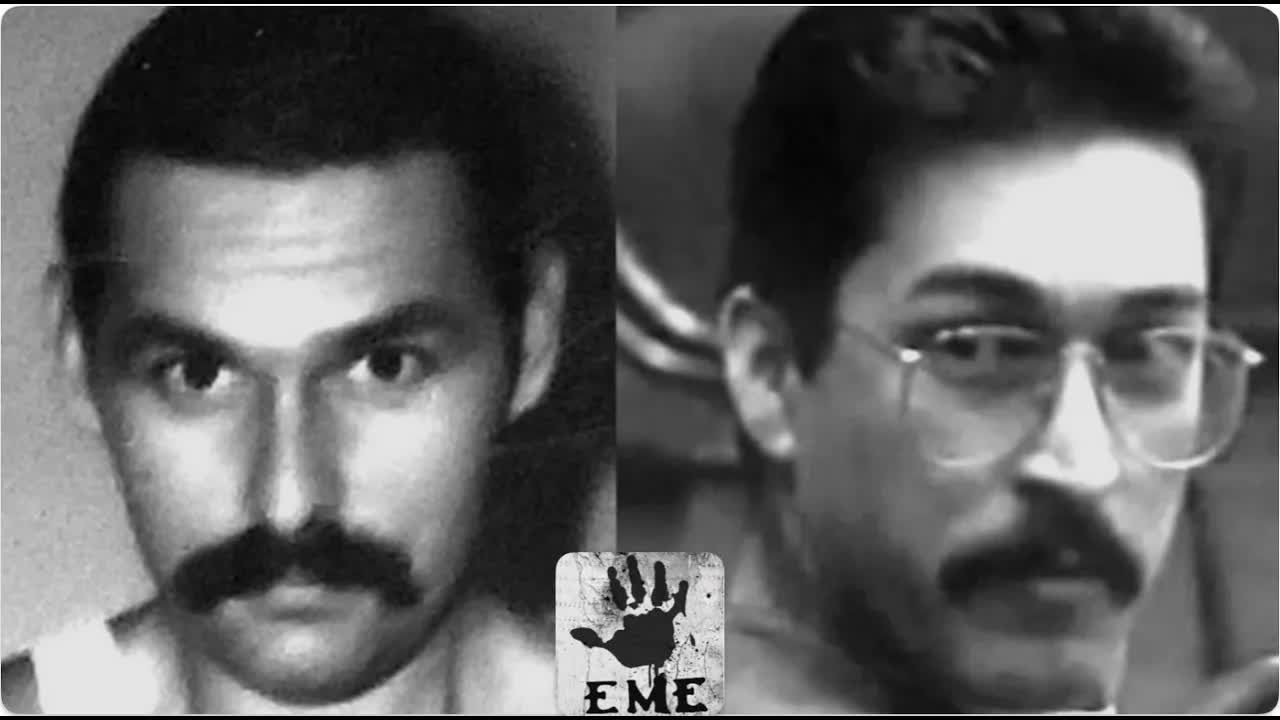
The first of the three, Carl Anthony Williams, was born in Melbourne on 13 October 1970 into a family already connected to the city’s drug trade; his father, George Williams, was later convicted of drug trafficking offences. What struck journalists, police and defence lawyers alike, again and again, was how ordinary Williams looked. His soft, almost boyish face contrasted sharply with what would become one of the most violent chapters in modern Australian criminal history, and the media settled on a nickname that stayed with him for the rest of his life: the baby-faced killer. Williams began his involvement in organised crime through the amphetamine trade in Melbourne, not initially as a major player but as an ambitious operator working to establish himself against far more entrenched figures. His particular method of breaking into that market deserves attention because it was the direct spark for much of what followed. Williams began cutting his amphetamine mix with ketamine, which allowed him to undercut his competitors on price. Those competitors belonged to what was known as the Carlton Crew, an established Melbourne drug network that had dominated the city’s amphetamine trade for years. The price-cutting brought Williams into direct conflict with the Moran family, and specifically with prominent figures inside the Carlton network. On 13 October 1999, his twenty-ninth birthday, Jason Moran shot him in the stomach during a confrontation in Gladstone Park over a drug-related debt said to have been around 80,000 dollars. Williams survived. What followed, according to Victoria Police’s later assessment, was a direct and deliberate campaign of retaliation, as Williams committed himself to what became known as the Melbourne gangland killings: a long and brutal underworld war that ultimately claimed between 27 and 36 lives, depending on which killings investigators linked to the wider dispute between 1998 and 2010.

It is worth being precise about the actual starting point of the war, because it predates the personal shooting of Williams by more than a year. The killing widely credited with igniting the entire Melbourne gangland conflict was the murder of Alphonse Gangitano in January 1998, a prominent Carlton Crew figure known for a distinctive underworld style as the Black Prince of Lygon Street. Williams’s own war against the Moran family, inflamed by the 1999 shooting, essentially escalated and prolonged a conflict that had already been simmering in Melbourne’s underworld before he himself became a significant figure in it at all. What Williams built after recovering from the shooting was a far more organised and lethal operation than his earlier career as a small-time amphetamine dealer might suggest. He recruited and directed a series of associates willing to carry out contract killings in exchange for substantial cash payments. This account should be straightforward about the model: it was built explicitly on delegating violence to others rather than carrying it out personally. Among the men he brought into his circle during this period was Andrew “Benji” Veniamin, whom Williams met through a mutual friend, Tony Mokbel, the second figure in this account. Veniamin became Williams’s right-hand man and the executor of his orders from 2002 until late 2003, operating as one of the most active and feared participants in the war. On 15 June 2000, Mark Moran, Jason Moran’s half-brother, was shot dead outside his home in Aberfeldie. Williams was later to stand trial specifically over that killing, although the charge was ultimately dropped after he pleaded guilty to a series of other murders instead. That is an important legal detail to note directly, because it means the death of Mark Moran, although widely attributed to Williams within the broader gangland narrative, was never the subject of a formal conviction against him. The most significant incident in this war, in terms of the wider coverage of this story, occurred on 21 June 2003. Jason Moran and his associate Pasquale Barbaro were shot dead as they sat together in Moran’s car at a football club in Essendon. Williams personally ordered two of his associates to carry out that particular killing.

That detail matters because it connects this account of Williams to a family this subject has already documented across multiple generations. Pasquale Barbaro, killed alongside Jason Moran in 2003, was part of the extended Barbaro family whose history has been traced in detail through earlier reporting on Harley Barbaro, a record that documented a family whose men died violently across three separate generations: a grandfather shot outside his home in Brisbane in 1990, a cousin killed alongside Jason Moran in that very incident in 2003, and Harley’s brother killed in Sydney in 2016, before Harley’s own death in 2026 closed that account without a violent end to match what had come before. It can now be stated directly that Carl Williams was personally responsible for issuing the order in the second of those three violent deaths, a genuine documented link between two entirely separate bodies of reporting produced more than a decade apart, now revealed to share a single specific point of intersection. Williams’s campaign of violence continued through the rest of 2003 and into 2004. Michael Marshall, a kickboxer connected to the wider underworld dispute, was shot dead outside his home in South Yarra in October 2003. Lewis Moran, father of Jason and Mark and the last remaining leadership figure of the Moran family at that time, was shot dead inside the Brunswick Club in daylight in March 2004. Mark Mallia, another victim connected to the wider conflict, was killed in August 2003; his identity was initially suppressed by a court during the proceedings that followed. It is worth reflecting on the specific scope of what the Purana Task Force, the Victoria Police unit dedicated to the gangland violence, concluded about Williams’s personal role in the wider conflict. While he was formally convicted of ordering three murders, as well as conspiring to kill a fourth victim in an attempt that failed, Purana investigators believed his actual responsibility went considerably further, encompassing at least 10 deaths linked to the broader gangland war, even though formal charges could not be brought against him in every killing they suspected he was directing.

There is a further connection worth mentioning here, one this subject has previously established in detail through entirely separate reporting. Andrew Veniamin, Williams’s right-hand man and the executor of his operations throughout 2002 and 2003, was himself killed in March 2004 by Mick Gatto during a confrontation at a restaurant. That matter has been covered extensively through dedicated research into Gatto’s life and career. Gatto was tried for Veniamin’s murder and acquitted, the jury accepting his account that he had acted in self-defence. It is worth considering carefully what this link represents: the man who would eventually become one of the most closely examined figures in this series was, in that separate coverage of Gatto’s construction-industry career and the 2026 police raid on his home, directly connected to the killing of a member of Carl Williams’s inner circle. Williams himself was eventually convicted over the murders of Lewis Moran, Jason Moran and Mark Mallia, as well as the conspiracy to kill Mario Condello, and was sentenced to a substantial term of imprisonment. In April 2010, he was killed inside Barwon Prison, a death that closed the story of the baby-faced killer but not the public fascination with it. His funeral drew widespread media attention, and his former wife, Roberta Williams, remained a figure of public interest long afterwards. The Purana Task Force’s work, meanwhile, produced dozens of convictions and effectively dismantled the networks that had fought the gangland war, though at a cost of years of investigation and a permanent mark on Melbourne’s reputation.

The second figure, Tony Mokbel, was born in Melbourne in 1965 to Maltese parents and became one of the most recognisable names in Australian crime reporting, not least because of the extraordinary circumstances of his flight from justice. Mokbel built a substantial drug importation and trafficking operation, and his name surfaced repeatedly in the investigations that followed the gangland killings, including in connection with the amphetamine trade that had drawn Williams into conflict with the Carlton Crew. He was arrested in 2006 and faced a series of serious charges, but in 2007, while on bail and standing trial, he disappeared. What followed was one of the most extensive manhunts in Australian history, with Mokbel spending more than a year as one of the country’s most wanted fugitives before he was located and arrested in Athens, Greece, in 2008, reportedly after a tip-off and surveillance operation. He was extradited back to Australia, and in 2012 he was convicted of drug trafficking offences and sentenced to a lengthy prison term. Mokbel’s case became a byword for the reach of Australian law enforcement and for the determination of investigators to close the circle on the gangland era. His appeals and legal challenges continued for years, and he remained a figure whose name was inseparable from the story of Melbourne’s underworld. The third figure, Mick Gatto, occupies a different place in the public imagination: a man whose name became so synonymous with Australian crime that many people who have never opened a true-crime book could probably tell you who he was. Gatto, a former boxer and construction-industry figure, was acquitted of the murder of Andrew Veniamin in 2004 on self-defence grounds, and he later became a public figure of sorts, known for his mediation role in underworld disputes and for his appearances in the media. His career and the police interest in him, including the 2026 raid on his home, have been documented extensively, and he remains a reminder that the line between the criminal world and the legitimate one was often blurred in Melbourne. Taken together, these three men illustrate how small the world of Australian organised crime really was: a closed circle of acquaintances, rivals and associates whose decisions, made in the heat of a drug war, produced a body count that a city is still reckoning with, and a set of stories that Australia has never quite stopped telling.