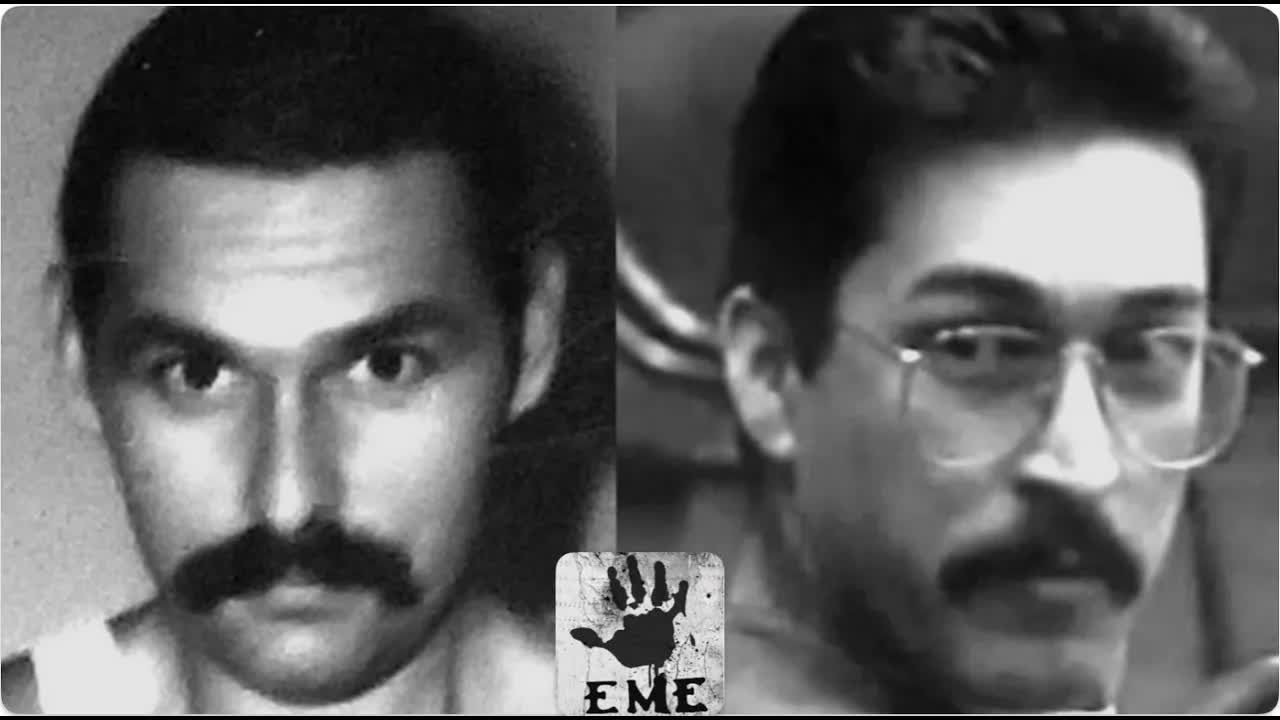
The case of Anthony Phillips Sitar stands as one of the most puzzling and persistent mysteries in Australian law enforcement history. A man who once ran a modest Latin American bar in Melbourne’s inner east has, according to the Australian Federal Police, transformed into one of the most significant drug intermediaries operating between Latin America and the Australian criminal underworld. More than a decade after his sudden disappearance, Sitar remains a fugitive, the subject of an Interpol Red Notice, and a figure whose story continues to unfold somewhere along Mexico’s Pacific coast. Unlike the countless criminals whose tales end in arrest, conviction, or death, Sitar’s narrative remains open, a rare case of a fugitive who has apparently not only evaded capture but flourished in the shadows.

The origins of this extraordinary case trace back to what appeared, on the surface, to be an ordinary business venture. Before becoming a fugitive, Anthony Sitar presented as a conventional entrepreneur. He had a background in professional kickboxing and, in his late twenties, was a co-owner of the Destino Latin bar on Chapel Street in Windsor, an affluent suburb of eastern Melbourne. The establishment specialized in Mexican beer and appeared to any casual observer as simply another venue capitalizing on the trendy Latin American food and beverage craze of the time. However, police allege that the bar was something else entirely: a front for one of the largest drug trafficking operations Victoria had ever witnessed. This seemingly ordinary man, with his athletic build and business credentials, was allegedly operating at the intersection of legitimate commerce and international organized crime.
The investigation that would eventually expose this operation began with a shipping container. In 2011, a container arrived at the Port of Melbourne aboard a vessel named the Manet. The shipment contained pallets of Cocapa beer, a Mexican brand manufactured in the Baja California peninsula. During inspection of the cargo, customs officers discovered 1,100 bottles of methamphetamine and cocaine concealed within the shipment, distributed across 46 of the 84 boxes in the container. The quantity was staggering: 134 kilograms of methamphetamine and 14 kilograms of cocaine, with an estimated street value of approximately 300 million dollars. Rather than simply seizing the shipment and alerting the criminal network, the Australian Federal Police made a calculated decision. They emptied the bottles, refilled them with water, resealed the boxes with new labels, and returned the container to the supply chain to monitor its movement and identify who would come to collect it.

Sitar, according to investigators, was in constant contact with the shipping company responsible for the consignment. He sent emails notifying them of the container’s arrival and called them twice on the day it was returned to the port. The following day, he transferred 1,500 US dollars via Western Union to a bank account in Mexico. A few days later, he paid more than 11,000 US dollars in import fees on the shipment at a freight warehouse in Tullamarine, then requested delivery of the container to a warehouse he owned in Laverton North, a western suburb of Melbourne. According to police, he was in the process of delivering the drugs to a buyer known only as John when the operation began to unravel. The meticulous surveillance had paid off, and the authorities were closing in on the network.
Sitar’s associates were not so fortunate. Errol Ramanoglu was arrested with stored beer at his home in Yaraville. During a bail hearing, police revealed that he had attempted to swallow a handwritten to-do list before officers managed to retrieve it from his mouth. Around the same time, Adrian France, a property developer and co-owner of the Destino bar, was also arrested. A note, allegedly in his handwriting, was found containing instructions on dismantling the shipment, disposing of packaging materials, and ensuring his wife and pet were cared for in his absence. France was later sentenced to 17 years in prison, while Ramanoglu pleaded guilty to six charges and received an eight-year sentence. The contrast between their fates and Sitar’s escape could not have been starker.

Sitar was not present when the arrests occurred. He was driving toward his parents’ home near Albury-Wodonga, on the border between New South Wales and Victoria, while his associates were being taken into custody elsewhere. Somehow, he had advance knowledge of what was about to happen. Court documents later revealed that he had been communicating with his associates about obtaining a forged passport on the very day he fled. His genuine passport was never used to leave the country. Investigators believe he may have taken a domestic flight north to Darwin or far north Queensland before slipping across the water toward Indonesia or Papua New Guinea on a small boat. Whatever method he employed, he left no financial trail, no phone records, and no traceable contact with anyone. He simply vanished, leaving behind a network of associates, a business, and a life that had been carefully constructed to conceal a far more sinister reality.
By 2012, Interpol had issued a Red Notice for Sitar, placing him among a small group of Australians at risk of arrest upon entering any international airport. His name was later added to Operation Infrared, an Interpol initiative tracking approximately 500 fugitives across 37 countries, the same operation that ultimately helped locate the Canadian killer Luka Magnotta in Germany. For years, news of Sitar dried up. Investigators believed he had ended up in Mexico, partly due to his business dealings there and partly because his wife’s family resided in the country. Sitar had married a Mexican woman named Monica in 2004, shortly before she applied for an Australian visa, and it was always likely he would eventually return to Australia where he had connections. This theory was later confirmed by evidence Sitar never intended to make public: a private photograph.

The photograph showed two young children believed to be his sons, born after his disappearance from Australia. In the background appeared a distinctive mural and, behind it, a balcony with a unique thatched roof design. Investigators compared the building’s design to the Palmer Tropical Hotel in San Pancho, a resort town on Mexico’s Pacific coast in an area known as Riviera Nayarit, a region famous for its luxury restaurants, private villas, and laid-back lifestyle that attracts wealthy tourists and expatriates. It is also worth noting that the area serves as a base for Mexican police targeting Australian motorcycle gangs. According to the Australian Federal Police, Sitar did not merely hide upon arriving in Mexico. He allegedly reinvented himself as an intermediary connecting the Jalisco New Generation Cartel, known as CJNG, with Australian organized crime groups, including the Comanchero and Lone Wolf motorcycle gangs. The CJNG is one of Mexico’s most violent cartels, a rival to the Sinaloa Cartel, associated with car bombings targeting police, dismemberment of victims, and the killing of politicians.
A federal police officer familiar with the case described the situation bluntly: “Brokers like Anthony operate in an environment akin to a struggle for survival, driven by the enormous profits available in the Australian cocaine and methamphetamine market, and surrounded by the constant danger that a rival broker might report them to eliminate them from the market.” Speculation has also circulated that Sitar may have taken more drastic measures to remain unseen. Retired homicide investigator Charlie Bazina, who investigated the murder of one of Melbourne’s most prominent crime figures, Alphonse Gangitano, suggested that Sitar may have undergone cosmetic surgery to defeat facial recognition technology currently used at airports and by police forces worldwide. A plastic surgeon based in Istanbul, the city where Australian fugitive Hakan Ayik was previously known to hide, confirmed that facial surgery is a procedure sought by wanted individuals. He added that patients rarely disclose the reason for wanting the operation. Bazina compared Sitar’s long evasion of police to the flight of Tony Mokbel, one of Australia’s most notorious drug traffickers, who hid in a small rural town in Victoria for six months before fleeing to Greece on a yacht in 2006.

More than a decade later, Anthony Phillips Sitar remains one of the Australian Federal Police’s most significant targets and is still wanted under an active international arrest warrant. He is described as Caucasian, between 185 and 190 centimeters tall, with an athletic build, brown eyes, and shaved brown hair. However, investigators acknowledge that this description may be outdated. Assistant Commissioner Kirsty Schofield stated that the Australian Federal Police is committed to combating drug gangs at their roots rather than waiting for drugs to reach Australian shores, working with international partners including Mexican authorities in coastal cities such as Lazaro Cardenas, one of the busiest cocaine and methamphetamine shipping points in the country. As one federal police officer put it, fugitives like Sitar eventually make a mistake. It may take another year or ten, but the file remains open, and somewhere on the Mexican Pacific coast, the story of Anthony Sitar continues to unfold, a fugitive whose tale has no ending yet.