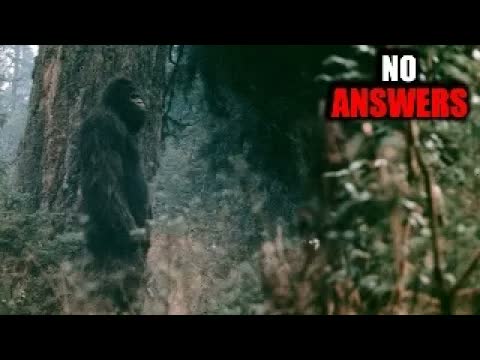
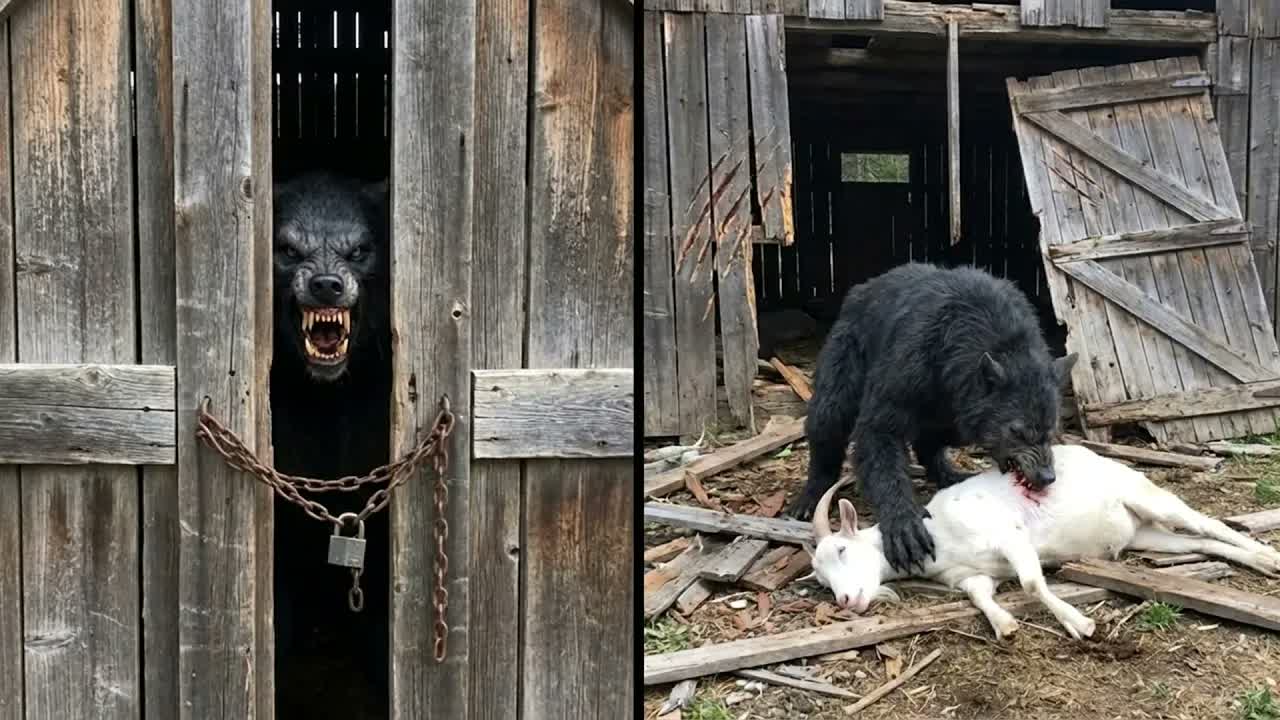
A newly circulating video said to show a large, upright creature in a remote forest has reignited debate among wildlife researchers, content creators and longtime followers of the Bigfoot phenomenon, with the person who recorded the material describing the encounter as one of the most frightening experiences of his life. The footage, attributed to a hunter named Kevin Paul and said to have been captured in April 2026 in the mountain forest of the Nahanni country in Canada’s Northwest Territories, has been shared widely online alongside older accounts of unexplained sightings, including a decades-old camping incident in the Tennessee Mountains that two women still cannot fully explain.

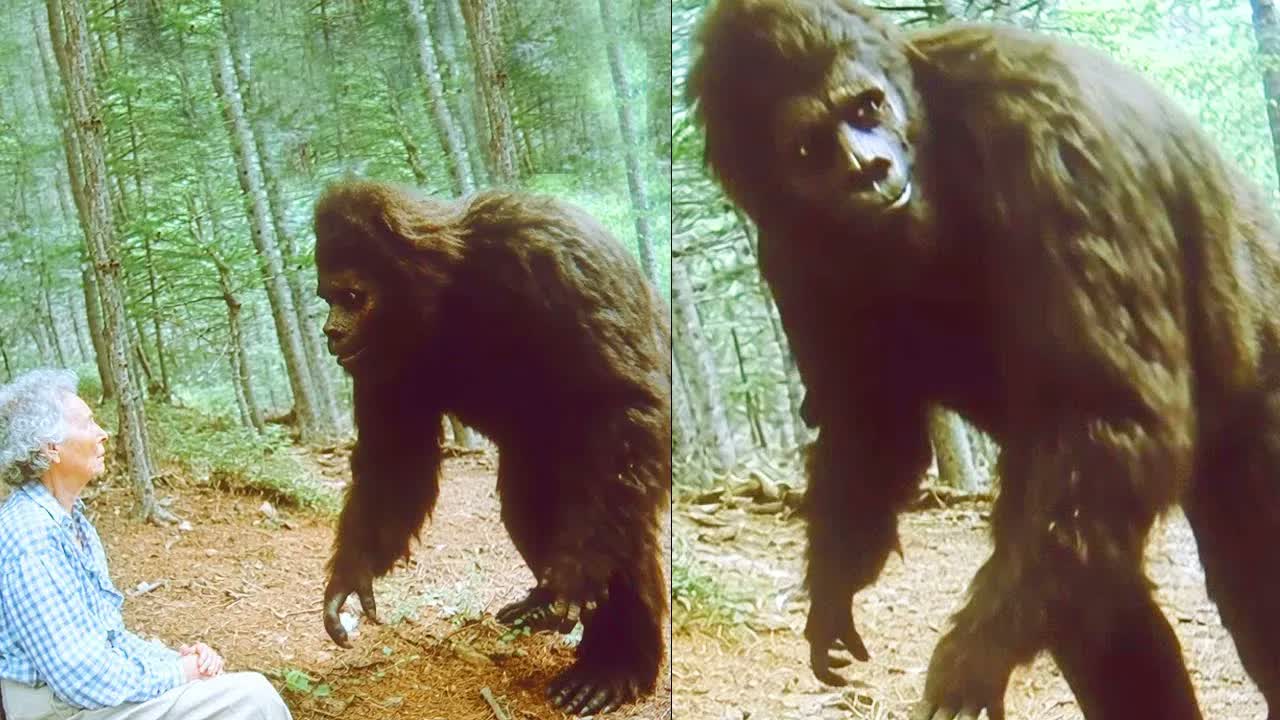
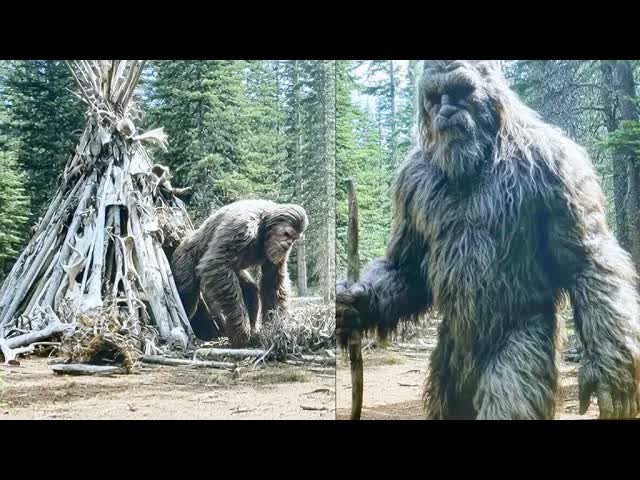
The new clip has drawn attention less for its length than for a single, much-discussed moment. According to descriptions accompanying the video, Paul was moving through dense timber when the forest around him went abruptly silent — not the ordinary quiet of a still morning, but the kind of silence experienced hunters learn to distrust. Every bird and every squirrel within roughly 100 meters was said to have stopped at the same moment. Then, in the trees ahead, he reportedly saw something standing upright on two legs, built like a man but on a scale no man reaches. He raised his camera, and in the few seconds the lens was rolling, the figure was said to turn its massive head toward the lens. Slowed down frame by frame, the movement has been interpreted by some viewers as a blink — a detail that supporters of the footage argue is difficult to fake with a costume, and one that skeptics say is far from conclusive.
The setting itself has added to the story’s mystique. Nahanni National Park in northwestern Canada contains a roughly 200-mile gorge that has long been referred to as the Valley of the Headless Men, a name that, as one account bluntly puts it, offers no picturesque metaphors. The valley has earned a grim reputation: according to the claims circulating with the footage, 44 people have died or vanished inside it since 1908, and some were reportedly recovered without their heads. Those figures have not been independently verified in the material reviewed, and the historical record of disappearances in the region is complex, but the association has given the new video a ready-made backdrop of mystery and danger.

The Paul footage is only the latest entry in a long tradition of alleged encounters, and it has prompted renewed attention to earlier accounts that many enthusiasts regard as more compelling precisely because they were not filmed. One such account dates to the summer of 1992, when two girls who had just graduated from high school set out on a four-day camping trip in the Tennessee Mountains. One of them had camped in the area with her family for years and knew the terrain well. Shortly after arriving, however, the pair began hearing incredibly loud, unexplained sounds coming from somewhere in the woods — sounds one of them later compared to a gunshot, but louder, a single sharp “pow” that seemed to come from no identifiable source.
The following day, while hiking back from a nearby waterfall, they heard something else. At first they thought friends were hiding off the trail trying to scare them, so they followed the sound until they reached a small creek. What happened next, described in a recorded interview, remains vivid in the speaker’s memory. She recalled yelling “Hello” because the noise was so loud, then stepping out onto the creek with her companion. When they looked to the left, she said, there was “this thing” standing in the middle of the creek. She said she did not know what it was and assumed it was a Bigfoot. What struck her most, she said, was the sheer size of it — “I’ve never seen anything that big.” Both of them froze immediately.

The encounter, as she described it, escalated quickly. The figure was so still that she found herself wondering whether it was real. It was crouched, she said, in an in-between position, not fully upright and not fully down. Then came a sound she likened to rocks hitting each other — “clack, clack, clack,” very fast — and when they looked back, the figure was about a car length away. It then bent backward, she said, almost like a character in The Matrix, before popping back up “like there was a string in the top of his head.” At that point she thought it was coming toward them, and she still could not move. The figure stared at them, its expression never changing, and as she took a small step back, a growl came — one she said she felt in her whole body.
She described the figure then taking the back of its hand and flinging it out at them, making a sound she rendered as “wah,” spoken like the letter W. When it made that sound, she said, its mouth opened so wide that “you could probably have put a watermelon in there.” The figure stared at them as it walked backward up the creek bank, then repeated the gesture and the sound before taking off into the woods. The moment it reached the tree line, she said, the noise that erupted from those woods sounded like whole trees breaking. There were thuds they could feel in their feet, screaming, and things snapping and breaking. “It sounded like a herd of elephants,” she said, and it seemed to go on for a really long time.

The girls headed back to camp as quickly as they could, both in a state of panic. Once there, they grabbed only what they could carry and made a beeline for the guard station. Her friend, she said, was hysterical and tried to explain what they had seen. The guard’s eyes got big, and he said what she recalled as the weirdest thing of all: “Well, you know, we don’t have like wild men in these mountains.” She said she did not even know what to make of the phrase “wild men.” To this day, she says she still does not know what she encountered in those woods, but they never went looking for it again. The account, which has circulated in online collections of alleged encounters, contains no physical evidence and rests entirely on the recollections of the two women, a limitation that researchers routinely note when evaluating such stories.
A separate account making the rounds alongside the Paul video concerns a man identified as Mark, who was said to be stranded alone at a remote location when a heavy blizzard covered everything in roughly 30 centimeters of snow. In a video, Mark filmed the window and explained that the people who were supposed to help him had gotten stuck in another county with a broken-down pickup truck. Visibly tense, he stated that it was not a good place to be trapped alone. He had no idea, the narration claims, that the worst night of his life was about to begin. Something fell on the roof — possibly a tree limb brought down by the heavy snow — and when he went out to check, he reported seeing footprints again, on the roof itself, and questioned how anyone could have gotten up there in those conditions.

In the final recording, said to have been made at night, Mark reports a very loud thud on the roof. Thinking the weight of the snow had broken a branch, he goes out into the dark with a flashlight to inspect. Pointing the beam at the edge of the snowy roof, he goes into total panic as the camera focuses on barefoot tracks stamped on top of the house. He curses, questioning how something could have climbed up there in those conditions. As he remains in shock filming the roof, new strange noises begin to surround him in the darkness. The video cuts out, and according to the account, that was the last time he was seen. The owner of the footprints was never identified, and Mark’s whereabouts remain, in the words of the narration, an absolute mystery to this day.
Taken together, the stories illustrate why the Bigfoot phenomenon endures despite decades of skepticism and the absence of verified physical evidence. Wildlife biologists and skeptics note that eyewitness testimony is notoriously unreliable, that forests are full of sounds that carry and distort in unusual ways, and that video footage can be misread, staged or simply too brief to analyze. Enthusiasts counter that the sheer volume of accounts, from Tennessee to the Northwest Territories, suggests something worth investigating, and they point to details — the reported silence in the forest, the sustained upright posture, the apparent blink — that they say are hard to explain away. Neither side has produced definitive proof, and the new footage, like the accounts that preceded it, is likely to be debated for years. What remains clear is the hold these stories have on the public imagination, and the careful, often uneasy way people who experience something unexplained in the woods describe it afterward: with uncertainty, with detail, and with the sense that they may never know exactly what they saw.