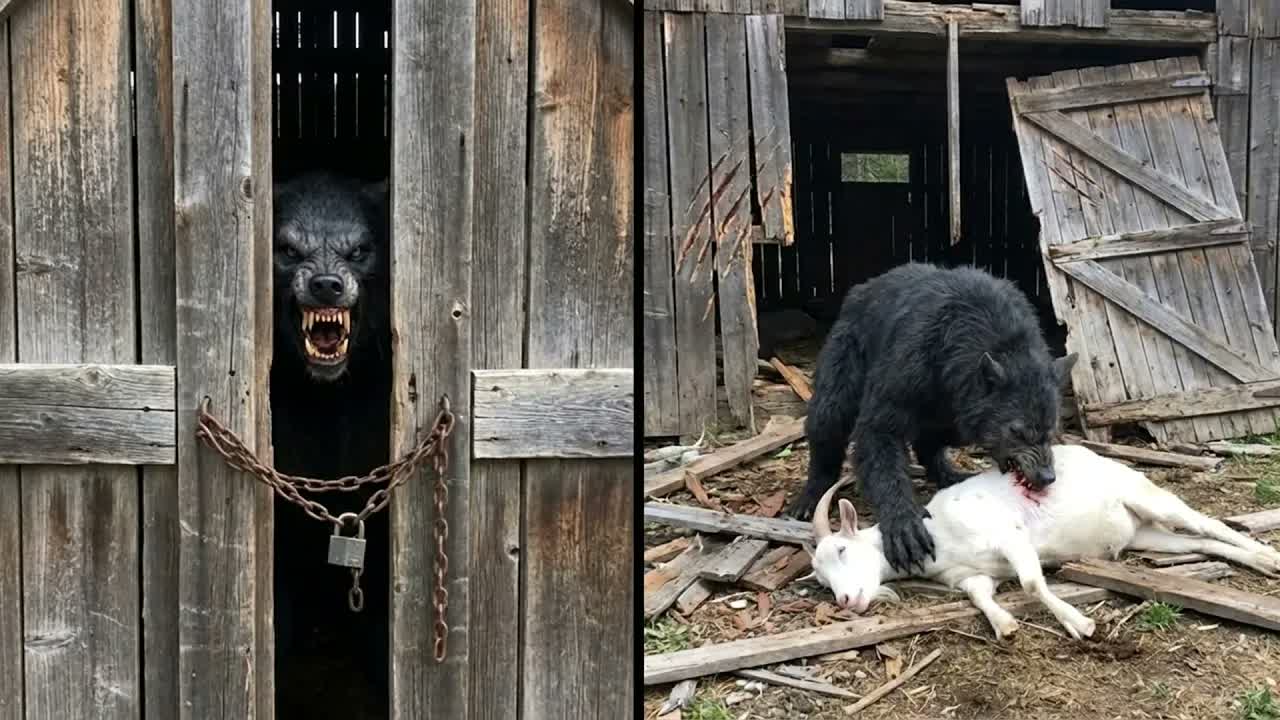
For four decades, a woman living alone in a remote cabin in the Pacific Northwest mountains has kept a secret that challenges everything most people believe about the creatures known as Sasquatch. Now in her seventies, she has decided to speak publicly about the extraordinary relationship that began during a brutal winter storm in 1984, when she found an injured giant collapsed in the snow near her woodshed and chose compassion over fear. Her account, offered as a personal testimony rather than scientific proof, describes not a monster or a myth, but an intelligent being whose deepest instinct toward humanity is avoidance born of fear. She says she is sharing her story now because she believes someone should know the truth before she and her silent companion are both gone.

The story begins with weather. In late November 1984, the first major storm of the season struck the mountains where she has lived her entire life, dumping roughly three feet of snow in two days and cutting her off from the outside world for weeks. She was well prepared, with ample supplies, a reliable wood stove, and the self-reliance she had learned as a girl from her father, who taught her to hunt, fish, and survive in the high country. Her husband had passed away in the early 1980s, leaving her the property and a lifetime of memories, and she made her living through a small garden, woodworking sold in town, and the quiet rhythms of a simple life surrounded by forest. On the third night of the storm, she heard something outside that did not fit the usual sounds of branches cracking under snow or wind moving through the trees. It was heavy, deliberate movement near the woodshed. The next morning she bundled up and went to investigate, and the tracks she found in the fresh snow stopped her heart. They were massive, easily seventeen inches long and seven or eight inches wide, with five distinct toe impressions, leading from the treeline to the woodshed and then veering back toward the forest.
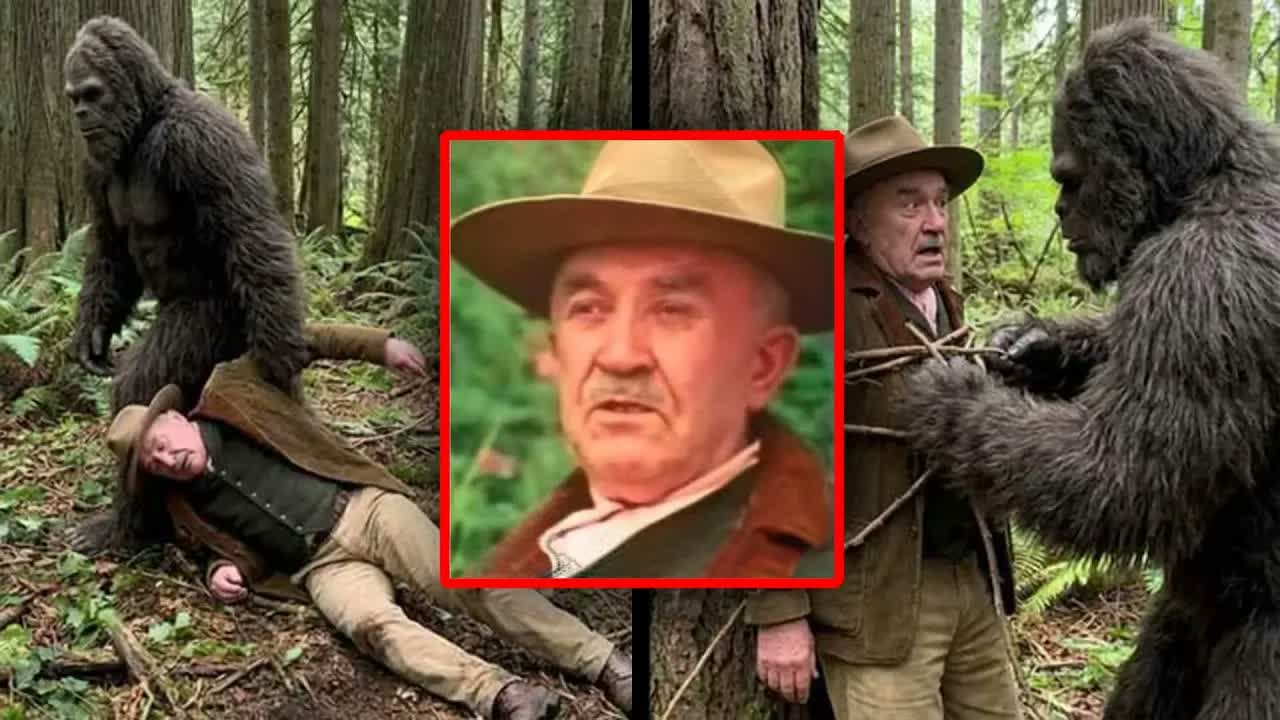
She followed the trail with her rifle slung over her shoulder, more for comfort than protection, and about a hundred yards into the trees she found him. The creature was enormous, easily eight feet tall even lying collapsed in the snow, covered in dark brown fur matted with ice and blood. At first her mind tried to make him into something else, a bear or a person wrapped in furs, anything that made sense, but as she got closer there was no denying what she was seeing. His left leg was twisted at an unnatural angle, clearly broken or badly injured, and his chest rose and fell in shallow breaths. He was dying. When she was about twenty feet away, his eyes opened, dark and intelligent, and locked onto hers with a mixture of fear and resignation. He did not try to move and did not threaten her; he was too weak. They stared at each other for what felt like hours but was probably only a few minutes, and in that gaze she saw something that changed everything. It was not an animal looking at her, she says, but a person, someone who understood he was at her mercy and had accepted whatever came next. She returned to the cabin and stood in her kitchen for a long time, every logical part of her brain telling her to leave it alone, let nature take its course, or call someone. But she kept seeing those eyes, the understanding in them, the quiet acceptance of death, and something in her could not walk away.

She thought about her late husband, who had always had a soft spot for injured creatures, bringing home birds with broken wings or deer struck by cars and trying to nurse them back to health. Most of the time they died anyway, but sometimes they survived, and those successes meant everything to him. She realized he would have helped this creature without hesitation, seeing past the impossible nature of it to the simple fact of suffering that could be eased. So she made her choice, not because it was logical or safe, but because it was right, because turning her back on a dying being of any kind would have made her someone she did not want to be. She gathered supplies and headed back into the snow, loading a sled with blankets, food, and a thermos of hot broth. It took three trips to get everything out there, and he watched her the whole time, never moving, barely reacting. On her first approach she left the food about fifteen feet away and backed off, then ten feet, then five. By the fourth trip she was close enough to drape a blanket over his massive shoulders, feeling his coarse fur under her hands and the trembling from cold and pain. That first day she stayed until sunset, just sitting nearby and letting him get used to her presence, talking to him as she would talk to anyone, telling him about the cabin, about her husband, about the mountains. His eyes followed her, and sometimes his head would tilt slightly, as if he were trying to understand the words. When she left that evening, she promised she would come back in the morning.
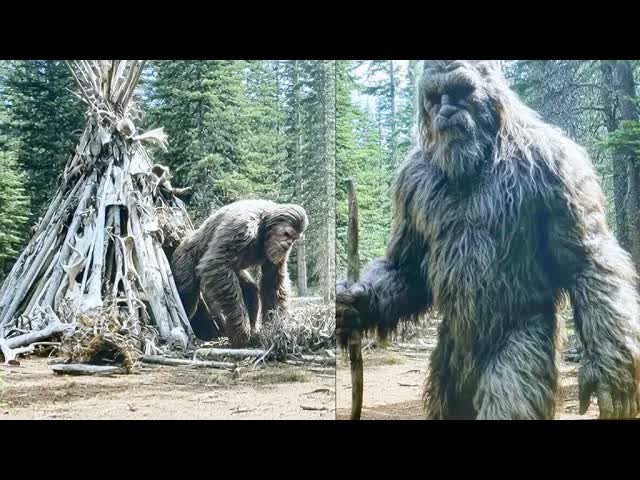
The next few weeks established a routine. Every morning and evening she made the trek out with food, fresh blankets, and whatever supplies she thought might help, including vegetables from her root cellar, dried meat, and fish she had smoked the previous fall. He ate slowly at first, as if testing whether the food was safe, but eventually he began eating as soon as she left it. She noticed things about him as the days passed. He was male, probably middle-aged if the graying patches in his fur were any indication. His hands were enormous but incredibly dextrous, with thick fingers that could manipulate the food she brought with surprising delicacy. His face was a strange mix of human and ape, with a pronounced brow ridge, but eyes that were unmistakably aware and thinking. After the first week she started trying to help with his leg, bringing bandages and a splint she had fashioned from cedar branches. The first time she touched the injury he tensed, and she thought he might lash out, but he only watched her, breathing hard through the pain as she worked. The leg was bad, probably broken weeks before she found him and healed wrong, and there was not much she could do except stabilize it and hope. She built a shelter around him using branches and a tarp to protect him from the worst of the wind and snow, and he watched her work. Once, when she was struggling with a particularly heavy branch, he reached out and steadied it for her. That was the first time they worked together, she says, and the first time she understood this was going to be more than just her helping an injured animal.

Spring came slowly that year, but when it did, he started moving around more: first just shifting positions, then standing with the help of a tree, eventually taking careful steps. His leg would never be right, and she could see he walked with a noticeable limp, favoring the injured side, but he could walk, which was more than she had hoped for when she first found him. What surprised her was that he did not leave. Even when he could clearly travel again, when the snow melted and the forest opened up, he stayed near her property. Some mornings she would look out and see him sitting at the edge of the treeline, watching the cabin. Other times she would find signs that he had been closer during the night, footprints near the woodshed or the garden fence. At first she wondered if he stayed because he could not hunt properly with his injured leg, but as she watched him move through the forest over the following weeks, she realized he was perfectly capable of surviving on his own. He could fish, forage, and climb trees despite the limp. No, he was staying by choice. He had found something there that he valued more than solitude, more than the safety of deep wilderness. He had found companionship, perhaps the first safe companionship he had known since losing his family. She continued bringing food, and he continued accepting it, but something new started happening. He began leaving things for her, small gifts, she supposes you could call them: interesting stones, perfectly round or with unusual colors, pieces of wood worn smooth by water, and once a handful of wild strawberries arranged on a flat rock near where she usually left his food. He was reciprocating, communicating in the only way he knew how.
Over the months and then the years, that communication deepened. She learned to read his moods from the set of his shoulders and the angle of his head, and he seemed to learn her habits, her schedules, the sound of her voice. He never spoke, at least not in any way she could recognize as language, but he made sounds, low rumbles and soft huffs that carried meaning she gradually came to understand. When she was upset, he would sit closer. When she was sick with a fever one winter, he stayed near the cabin for three days, and she found fresh tracks circling the property each morning. She, in turn, learned to respect his boundaries, never approaching too quickly, never bringing others to the site, never asking more of him than he was willing to give. The relationship, if that is the right word for it, was built on years of small, consistent acts of trust. And yet, for all that closeness, there remained a wall between them that she could not fully explain, a wariness in him that never entirely faded. It took nearly four decades for her to understand what that wall was made of.

The answer, she says, came gradually and then all at once, through a series of observations she pieced together over the years. The first clue was how he reacted to other people. On the rare occasions when a hunter or a hiker wandered close to her property, he vanished completely, sometimes for days, and when he returned he was different: more watchful, more distant, slower to accept the food she left. The second clue was what he did with the gifts she gave him that came from the human world, things like a metal cup or a length of rope. He would examine them with obvious fascination, turning them over in his huge hands, but he never kept them. He always left them in a neat pile at the edge of the treeline, as if returning them was a form of courtesy, or perhaps a form of refusal. The third clue was the stories he seemed to carry, expressed not in words but in behavior. When she once brought a friend’s old hunting dog to the property for an afternoon, the creature she had come to know as a gentle and curious being retreated into the forest and would not come near the cabin for a week. When she later burned a pile of brush and the smoke drifted toward the trees, he moved far upslope and watched from a distance until the fire was out. Fire, she realized, was not something he associated with warmth and safety. It was something he associated with danger.
She began to think about what his life must have been like before that winter of 1984, and the picture that emerged was not a happy one. He was middle-aged when she found him, with graying fur and old scars on his arms and chest that she had noticed while treating his leg. Some of those scars, she believes, were not from falls or fights with animals. They were too straight, too regular, too much like the marks of tools or weapons. She never asked him, of course, and he never told her in any way she could verify, but she came to believe that his fear of humans was not instinctive. It was learned. It was taught to him, probably when he was young, by experiences she could only imagine and would not wish on anyone. And the more she thought about it, the more she understood that his avoidance of people was not a rejection of her specifically. It was a survival strategy, honed over a lifetime, and the fact that he had made an exception for her was not a small thing. It was, she says, the most extraordinary gift she has ever received.

She is careful, even now, not to overstate what she knows. She is not a scientist, she says, and she has no photographs, no DNA samples, no physical evidence that would satisfy a researcher or a skeptical public. What she has is forty years of lived experience, a relationship she cannot fully explain, and a conviction that the creature she cared for is a person in every sense that matters. She has never told many people, and those she did tell mostly did not believe her, which is part of why she kept silent for so long. But she is in her seventies now, and her companion, if he is still alive, would be elderly too, and she felt that the story should not die with them. She wants people to understand that the fear Sasquatch reportedly shows toward humans is not monstrous. It is rational. It is the fear of a thinking being who has learned, over generations, that contact with people brings danger. And she wants people to consider what it would mean if that fear were ever proven correct, and what it would say about us if the most intelligent response a creature could have to humanity was to hide. Her story, whatever one makes of it, is ultimately a story about choice: the choice she made to help a dying stranger in the snow, and the choice he made to trust her, against everything his experience had taught him. She says she thinks about that every day, and that it will stay with her until her last breath.