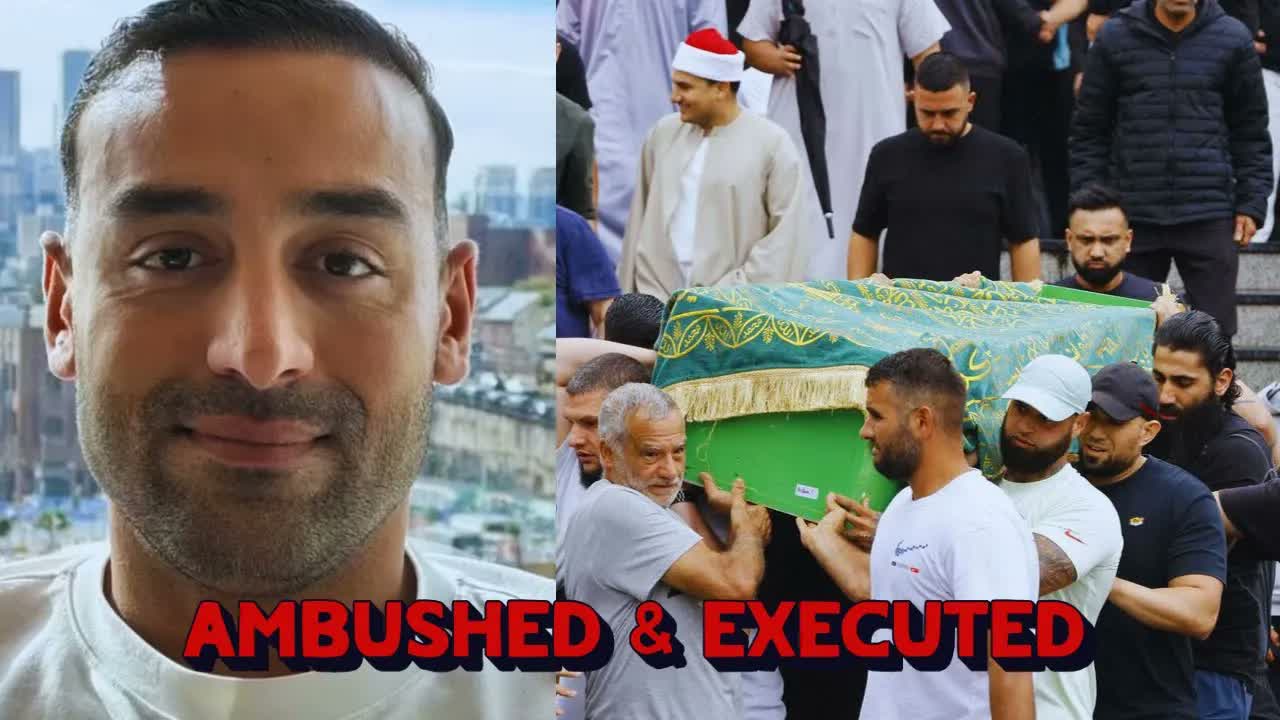
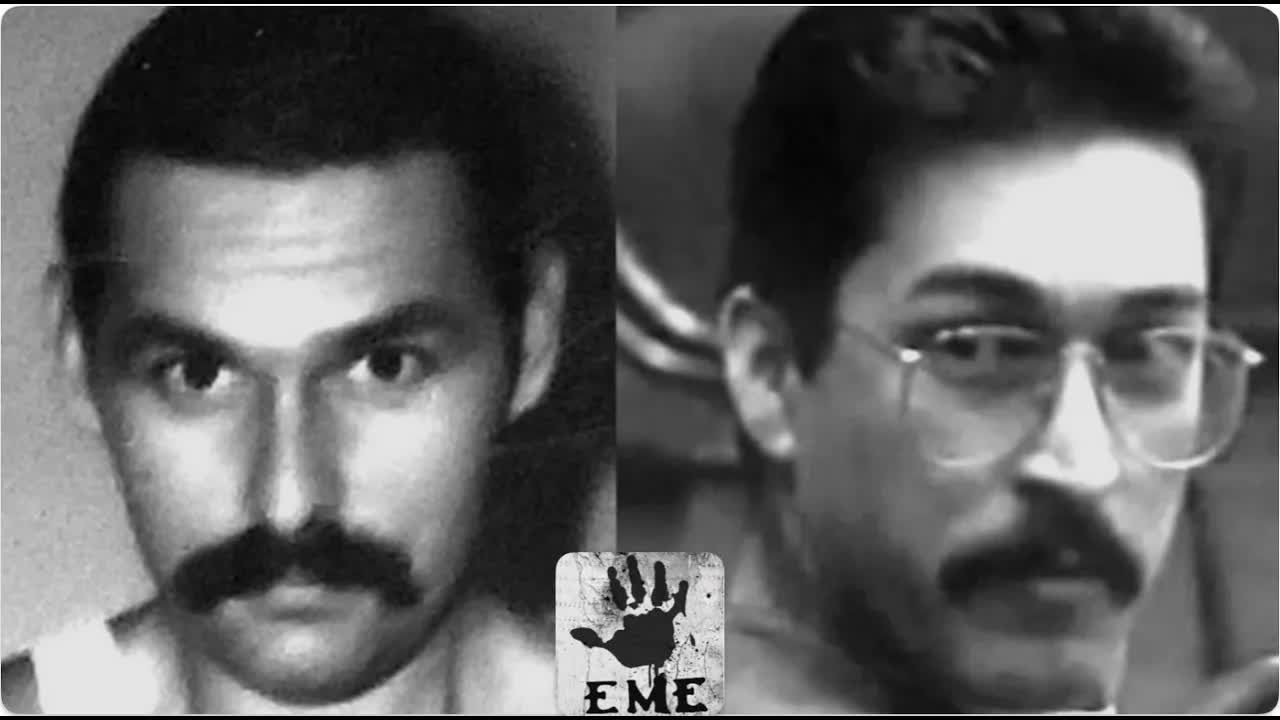
The name Har Sherwani carried weight in Melbourne’s criminal underworld long before the morning he was killed, a figure whose reputation for violence, strategic alliances, and an unforgiving approach to rivalry made him both feared and isolated. On January 9, 2025, that reputation met its final test when Sherwani was shot and killed in a meticulously planned ambush in Caroline Springs, a suburban area west of Melbourne’s city centre. The circumstances of his death — a vehicle resembling a police car, a sudden forced stop, and a burst of gunfire that lasted approximately nine seconds — immediately signalled to investigators and observers alike that this was not a random act of street violence but a calculated execution. The question that has since dominated discussions among law enforcement, criminal analysts, and the public is straightforward yet extraordinarily difficult to answer: was this revenge, a play for power, or something else entirely?

Sherwani’s life story did not begin in Australia. He was born in northern Iraq, in a region shaped by conflict, displacement, and the daily uncertainty that accompanies prolonged instability. His family fled the country when he was a child, seeking safety and a fresh start in Australia. They settled in Melbourne’s northern suburbs, an area where opportunity coexisted with social challenges and where newly arrived families often found themselves navigating the difficult terrain of integration. For Sherwani, the transition was not smooth. By his teenage years, he had already begun to drift toward the margins, drawn to the streets rather than the classroom, to the informal hierarchies of youth gangs rather than the structured expectations of school and conventional employment. Those who knew him in those early years describe a young man with a quick temper and a readiness to use his fists, qualities that earned him attention in circles where physical reputation mattered more than academic achievement.
His path eventually led him to the Comancheros, one of Australia’s most prominent outlaw motorcycle clubs, an organisation with a long and documented presence in the country’s criminal landscape. Sherwani’s rise within the club was rapid, driven by a willingness to undertake tasks that others avoided and by a capacity for violence that was both calculated and unrestrained. He acquired the nickname “Harry the KO,” a reference to his ability to end confrontations with a single blow. Within the club and the wider underworld, the nickname was not merely descriptive; it was a warning. By his mid-twenties, Sherwani had become a known quantity, a man whose name surfaced in police intelligence reports and whose activities attracted the attention of organised crime investigators.
The incident that cemented his reputation occurred in 2014 at a smash repair shop in Collingwood. The target was a former Comanchero member who had fallen foul of the club’s internal code. The attack was captured on closed-circuit television, and the footage later became central to a criminal prosecution. Sherwani and an associate entered the premises and carried out a sustained assault that left the victim with severe injuries, including fractured arms and facial trauma. Police described the footage as among the most violent they had reviewed. Sherwani was arrested, charged, and eventually sentenced to four years in prison. For many offenders, such a sentence might serve as a deterrent or an opportunity for reflection. For Sherwani, prison appeared to function as a period of consolidation rather than rehabilitation. He emerged in 2015 with his reputation intact and his connections reinforced, but also with a growing list of enemies and a criminal profile that made him a permanent target.

The years following his release were marked by a series of incidents that deepened the sense of threat surrounding him. On October 27, 2015, a shooting at a residence in Thomastown resulted in the death of 54-year-old Rashad Adra, a man described by police as having no criminal ties. Adra was shot while in bed, and his four-year-old son, Kareem, was also struck by gunfire but survived with serious injuries. Investigators initially treated the case as a targeted attack, and speculation quickly linked the shooting to Sherwani, though no charges were ever brought against him in connection with the incident. The absence of witnesses willing to cooperate and the limited forensic evidence left the case unresolved. In the underworld, however, silence did not equate to innocence. The shooting was widely interpreted as part of an escalating pattern of violence connected to Sherwani’s circle, and it further isolated him from any possibility of a quiet exit from criminal life.
A year later, another incident added to the mounting tensions. In 2016, Ahmed Alhamza, then an 18-year-old figure beginning to establish himself in Melbourne’s Middle Eastern organised crime scene, was shot in the leg near the Al Diwan cafe in Campbellfield. The wound was not fatal, but the message was unmistakable. Alhamza was a rising operator with ambitions and connections, and the attack on him was seen as a warning or a provocation. Sherwani’s name surfaced again in connection with the shooting, though no charges were laid. What made this incident particularly significant was the trajectory of the victim. Over the following years, Alhamza would evolve into a Dubai-based crime figure with international reach, a development that transformed a local dispute into something with far broader implications. The 2016 shooting, whether directly ordered by Sherwani or carried out by associates acting on his behalf, planted a seed that would germinate over nearly a decade.
By the early 2020s, Sherwani was operating in an environment where his notoriety had become both an asset and a liability. He had accumulated power, connections, and a reputation that made him a significant figure in Melbourne’s underworld, but he had also accumulated enemies. Reports at the time indicated that a bounty of approximately one million dollars had been placed on his life, a figure that reflected the seriousness with which his rivals viewed him. Sherwani took precautions. He varied his routines, travelled with security, and maintained a level of vigilance that suggested he understood the risk he faced. Yet the events of January 9, 2025, demonstrated that in the criminal underworld, vigilance is not a guarantee of survival. The ambush in Caroline Springs was executed with a level of precision that suggested detailed planning, insider knowledge, and significant resources. The use of a vehicle designed to resemble an unmarked police car indicated that the attackers had studied Sherwani’s movements and understood how to exploit his instincts. When a vehicle with police-style markings signals a driver to stop, the natural response is compliance. That moment of compliance was all the attackers needed.

Investigators have since focused on several possible motives. The first and most frequently cited is revenge. Sherwani had been involved in numerous violent incidents over more than a decade, and the list of individuals and groups with grievances against him was extensive. The 2015 Thomastown shooting, the 2016 attack on Alhamza, and various other confrontations had created a network of resentment that extended across multiple criminal networks. Revenge in the underworld operates on a different timeline than justice in the conventional sense. It can take years to materialise, and it often involves individuals who were not directly involved in the original incident but who carry the obligation of retaliation. The precision of the Caroline Springs attack suggested a level of commitment and planning consistent with a long-nurtured vendetta.
A second possible motive is power. Sherwani’s position in the underworld was significant but not unassailable. His death created a vacuum that others might seek to fill. In criminal organisations, the removal of a prominent figure can serve multiple purposes: it eliminates a rival, it sends a message to others, and it creates opportunities for advancement. The use of a fake police vehicle and the military-style execution suggested that the attackers were not simply settling a personal score but making a statement. The message was directed not only at Sherwani’s associates but at the broader criminal ecosystem. It demonstrated that even a figure of Sherwani’s stature could be reached, that his security measures were insufficient, and that the individuals behind the attack possessed resources and resolve that matched or exceeded his own.
A third possibility, less frequently discussed but no less plausible, is that the killing was connected to international criminal networks. Alhamza’s transformation from a local figure to a Dubai-based operator with international reach meant that the disputes of 2016 had acquired a transnational dimension. Criminal networks that operate across borders have long memories and long reach. The resources required to stage an ambush of the kind seen in Caroline Springs — the fake police vehicle, the coordinated timing, the apparent intelligence gathering — suggest a level of organisation that could be supported by international connections. Whether the order came from within Australia or from overseas remains an open question, but investigators have not ruled out the possibility that the killing was linked to disputes that originated years earlier and had since evolved into something far more complex.

The impact of Sherwani’s death on Melbourne’s underworld has been significant. His killing removed a figure who had been a fixture of the criminal landscape for more than a decade. It also raised questions about the effectiveness of police strategies aimed at disrupting organised crime. Sherwani had been on the radar of law enforcement for years, and his activities had been the subject of multiple investigations. Yet he had continued to operate, and his death came not at the hands of the justice system but at the hands of his rivals. For the police, the killing represents both a challenge and an opportunity. The challenge lies in managing the potential for retaliatory violence and in addressing the sense of impunity that such a public killing can create. The opportunity lies in the intelligence that may emerge from the investigation and in the possibility of disrupting the networks that enabled the attack.
Community reactions to the killing have been mixed. In some quarters, Sherwani’s death has been met with indifference or even relief, a reflection of the fear and resentment his reputation inspired. In others, it has prompted concern about the broader implications of a public execution in a suburban area. The residents of Caroline Springs, like residents of any community where such an event occurs, have been left to grapple with the unsettling reality that the violence of the underworld can intrude into ordinary life. The use of a fake police vehicle is particularly troubling, as it undermines trust in the very institution that is supposed to provide safety. If criminals can convincingly impersonate police officers, the consequences extend beyond the immediate victims of the crime.
The investigation into Sherwani’s death is ongoing, and details continue to emerge. Police have appealed for witnesses and have released limited information about the vehicles and individuals involved. The forensic examination of the scene, the analysis of CCTV footage from surrounding areas, and the review of Sherwani’s recent movements are all part of a painstaking process that may take months or years to yield results. In cases of this nature, the challenge is compounded by the reluctance of witnesses to come forward and by the sophisticated methods employed by the perpetrators. The use of a fake police vehicle suggests that the attackers anticipated the possibility of being observed and took steps to create confusion and delay the response. The short duration of the attack — approximately nine seconds — indicates that the perpetrators were highly trained or highly motivated, or both.

As the investigation continues, the broader questions remain unanswered. Was the killing an act of revenge, a calculated move for power, or something else entirely? The truth may lie in a combination of factors. In the underworld, motives are rarely singular. Revenge and power are often intertwined, and personal grievances can become entangled with strategic objectives. Sherwani’s life was defined by the choices he made and the enemies he accumulated. His death was the product of those choices and those enmities, a final consequence that he had perhaps anticipated but could not prevent. The story of Har Sherwani is, in many ways, a story about the limits of power in a world where power is measured by the willingness to use violence. He built a reputation on that willingness, and he died because others were willing to use violence against him. The question of who gave the order and who pulled the trigger remains open, but the broader lesson is clear. In the criminal underworld, the countdown to the final moment begins with the first act of violence, and it runs inexorably toward an end that no amount of preparation can fully avert.