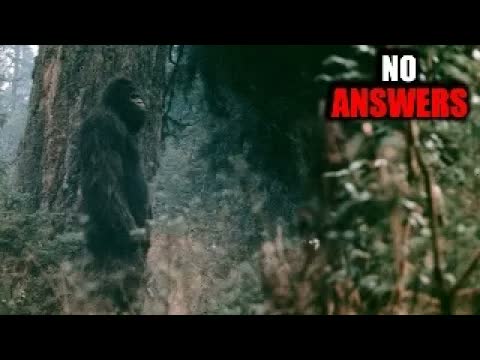
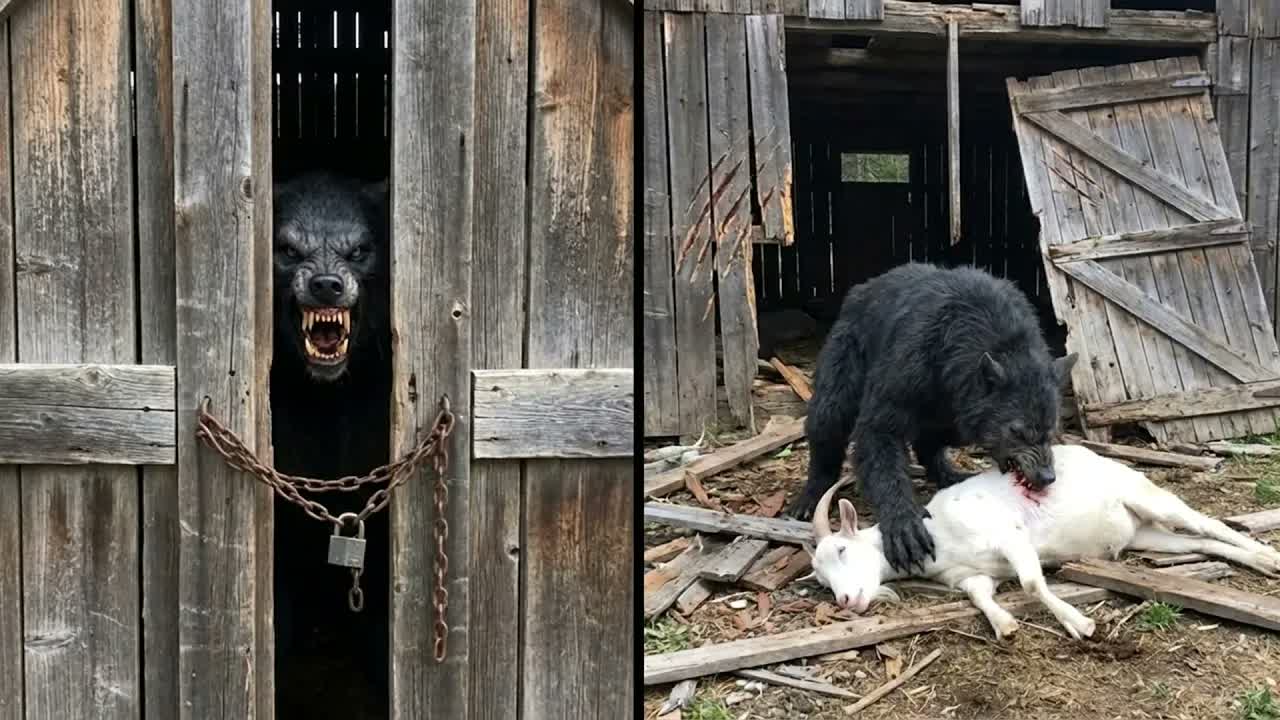
A little after 11 on a night in October 2022, two men stood at the barred mouth of an old gold mine in the Blue Mountains of Northeast Oregon, and one of them raised his phone. The mine had been sealed for decades, its entrance closed off by steel bars set into the rock and rusted orange by years of weather. The flash went off. What the two men found behind those bars, according to the account that has since circulated among a small circle of Bigfoot researchers, was a dead Sasquatch lying on a bed of dry leaves with more than one bullet hole in it. And that, the story goes, was not even the most unsettling part. The account came from a man who calls himself a Bigfoot hunter and who asked to be identified only by the pseudonym Abe. His partner that night was his nephew, identified here as Rat, also not his real name. Both men asked that the county, the creek, and the ranch be left out of any published account, and when the details of how they reached the mine are laid out, the reason for that request becomes easier to understand.

Abe is in his forties and has worked as a farrier for more than twenty years, traveling from ranch to ranch across eastern Oregon in a pickup truck with a forge in the back. He spends most of his working life bent beneath a horse in somebody’s barn while the owner talks, and ranchers, as a rule, tell their farrier things they would not tell their own brothers. Abe saw his first Sasquatch at fourteen, crossing a logging road in the Blue Mountains in front of his father’s truck, and he has been going back to those mountains ever since, mostly on weekends, with a camera, a pack, a thermos, and a notebook. He calls himself a Bigfoot hunter because that is what people call it, though he has never once carried a rifle when he goes looking. To understand what happened at the mine, it helps to understand the long-running argument inside the Bigfoot research community over what is usually called kill or no kill. One side holds that science will never accept Sasquatch until somebody brings in a body. The other side holds that nobody has the right to shoot one just to prove a point. Abe is no kill, start to finish. But he has met the other kind at campfires and conferences, men who talk about getting a body the way other people talk about getting a trophy, and he decided long ago that if anybody ever got close to one, he wanted to get there first and make sure nobody did anything foolish. Rat is in his early thirties, the son of Abe’s sister, and he fights wildfires in the summers. He had never seen a Sasquatch and did not much believe in them. He came along on Abe’s weekends for the camping and the coffee, and because somebody ought to be with his uncle when he went that far up into the timber alone.
The tip came in the spring of 2021, in a horse barn down in one of the valleys. Abe was setting a shoe on a ranch gelding, and the ranch’s hired man, a kid in his early twenties, was holding the lead rope. Everybody in that valley knew Abe was the Bigfoot guy, and the kid had been working himself up to something all morning. When the owner walked off toward the house, the kid finally said it. There was a rancher on the other side of the mountain, up a creek that Abe asked to call Tamarack Creek, who kept something locked up behind bars in an old mine on his property. After a branding party, when everybody was drunk enough, the rancher took people up there to look at it. The kid had been one of them. Four men with flashlights, half a mile up a dirt track behind the ranch, laughing the whole way. The rancher banged on the bars with his flashlight. Something big came up off the floor in the dark, hit the bars from the other side, and screamed, and the men ran most of the way back down the hill. The rancher did not run. He stood there by the bars, laughing at them. He had one rule on those nights, the kid said: phones stayed in the trucks. And every man he ever took up that hill was a man who had hunted with him off the books, with his own reasons to keep his mouth shut.
Abe’s first thought was the obvious one. A drunk story, a bear in a hole, or a hired man in a costume — the rancher’s idea of a joke to scare his friends. Abe had heard a dozen stories like it over the years, and every one of them had fallen apart the minute he asked a second question. So he asked the second question. What did its hands look like? The kid did not even have to think about it. It had held the bars, he said, fingers wrapped around them like a man in a jail cell. He had not slept right for a week after that, and he had never gone back to that rancher’s parties. A few weeks later, Abe heard the story again from somewhere else entirely. At a livestock auction in another town, an old cattle buyer who had no idea who Abe was told a table of men about a party up Tamarack Creek where the host kept something in a hole up the hill. He told it like a joke. None of the men at that table laughed.

It is worth pausing on the question of why Abe did not simply call somebody. Call who, though? Walk into a sheriff’s office and say a ranch hand told him a man had a Sasquatch in a hole? And here is the part most people do not know: in Oregon, there is no law that protects a Sasquatch. A county in Washington State, on the other hand, passed one decades ago, but Oregon has none. So even if the story was true, it was not clear the rancher was breaking any law by keeping it. And at this stage it was only a rumor. No one was going to come for it. The only response besides total ignorance that Abe could expect was getting laughed out of the police station. If anybody was going to find out what was really in that mine, it was going to have to be Abe.
He could not just drive up and knock. The rancher had a name in that valley, the kind of man people were polite to and stayed away from. He ran a few hundred head of cattle on his own ground and on a grazing lease that ran up into the national forest, and it was said he would sell you an elk hunt on his place without asking whether you had a tag. So Abe did what he does. That summer, the old farrier who had shod the rancher’s horses for years finally hung up his tools, and Abe made sure he was the one who got the call. Shod horses need their feet done every six weeks or so, so every six weeks he drove over the mountain and spent a day under the rancher’s horses while the rancher talked. And the rancher did talk. He was funny. He was generous. He would send Abe home with a cooler of meat, and Abe learned quickly not to ask what kind it was or when it had been shot. In the shop, there were deer hides drying in July. There was a chest freezer with a padlock on it. There was a bear gall bladder hanging on a nail to dry, and the rancher mentioned there was a man in Portland who paid good money for those. Selling bear parts is a crime in Oregon, and the rancher knew it, and he laughed about it. Abe never said the word mine. He never asked about the parties. A man like that can smell a question coming, and one wrong one would have been the end of it. Once that first winter, the rancher asked him out of nowhere whether he talked much about his customers. Abe said a farrier who talks does not stay a farrier for long. The rancher looked at him across the shop for what felt like a full minute. Then he nodded and went back to his coffee. On the drive home, Abe noticed his hands shaking on the wheel.
That fall, the rancher offered to take Abe and his nephew out for elk. No tags, cash only, on his land. Abe said yes. This is the part Abe says he is least proud of, and it is why neither man will ever put his real name to this story. In September, from the back of the rancher’s truck under a spotlight, Rat shot an elk out of season with no tag on a ranch where every man in the valley knew what went on. He did it because the rancher had made it clear, without ever quite saying so, that the invitation was a test, and because Abe had decided that the only way up that hill was to be invited. It is also, by any honest accounting, a crime. Neither man offers an excuse for it. Abe says only that he has turned it over in his mind a thousand times and has never found a version of it he likes. What the hunt bought them was access. Over the following months, the rancher began to treat Abe less like a hired hand and more like one of his own. He talked about the mine in passing, the way a man talks about a shed he has not opened in years. He said the bars had been set by a previous owner, that the adit went back farther than people thought, and that he had put a lock on the door because kids from the valley had been going up there. He never said what was inside. He did not have to. Abe had learned by then to listen for what a man did not say.

The plan, when it finally came together, was not complicated. The rancher spent part of every October guiding paying hunters, and in the third week of that month in 2022 he was away for four days. Abe knew the schedule because he had shod the horses for it. He knew the gate code because he had watched the rancher punch it in a dozen times. He knew that the hired man slept in a trailer near the barn and that the barn light went off at ten. What he did not know was whether the bars at the mine had a lock, what kind, or whether the thing behind them was alive. Rat, for his part, had spent the summer becoming a believer in spite of himself. He had heard the story from his uncle a dozen times and had watched Abe come home from the ranch with his jaw set and his hands quiet, and he had begun to think that whatever was up that hill, somebody ought to lay eyes on it who was not drunk and not carrying a rifle. On the night of October 19, the two men drove over the mountain in Abe’s pickup, parked a quarter mile down the county road, and walked in through the national forest rather than the ranch road, so that anyone counting trucks at the gate would count nothing. It took them a little over an hour to reach the mine. The bars were where the hired man had said they would be, set into the rock at the mouth of the adit, rusted orange, with a steel door in the middle of them and a padlock on the door. The leaves inside the bars were dry and deep. And in the beam of Abe’s flashlight, at the back of the shallow space behind the bars, something was lying on its side.
What Abe describes is not a clean scene. The body was large, covered in dark hair, and lay in a way that suggested it had fallen rather than been laid down. There were more than one bullet hole in it, and the leaves around it were disturbed. Abe says he did not go in. The door was locked, and he had no intention of forcing it on the rancher’s ground with the rancher due back in a day. He took photographs with his phone, and Rat took more, and they stood there for perhaps ten minutes, long enough for Abe to be certain of what he was looking at and long enough for both men to feel the cold come up through their boots. Then they walked back down the way they had come and drove home without speaking. Abe has been careful, in retelling this, to say what he can support and to flag what he cannot. He says the body was consistent in size and proportion with the animal he saw at fourteen. He says the hands were visible and were not bear paws. He says he does not know what killed it, beyond the obvious, and he does not know who did. He says the photographs exist and that he has shown them to a small number of people, and that he is not yet ready to publish them. Rat, who had never believed, says only that he has not slept well since.

The second visit came a few weeks later, in early November, and it is the part of the story that has unsettled Abe more than anything he saw through the bars. He and Rat went back up the hill on a night when the rancher was again away, this time with a bolt cutter in the pack, intending to open the door and document what was inside properly. When they reached the mine, the door in the bars was standing open. The padlock was gone. There was nothing left inside. The leaves had been raked or swept, and the space behind the bars was empty in a way that suggested deliberate work rather than scavenging. Whoever had locked the Bigfoot up, or whoever had found it dead, had moved it, and had moved it in a manner intended to leave nothing to be found. Abe and Rat did not stay. They walked back down the hill, and Abe says he spent the drive home trying to decide whether the empty mine was more frightening than the full one. On one reading, the rancher had come back, found the body, and disposed of it before anyone could see it. On another, someone else had been up that hill between the two visits, someone who knew what was there and had reasons of their own to make it disappear. Abe does not know which reading is correct. He says only that the timing troubles him, and that he has gone over the four days of the rancher’s absence a hundred times without resolving it.
There is a further detail that Abe offers with obvious reluctance. In the weeks after the second visit, the rancher called him. Not about the mine, and not about the missing body, but about a horse that had gone lame, and he was, by Abe’s account, entirely himself — funny, generous, and unhurried. Abe went and shod the horse. He stood in the shop where the bear gall bladder had hung and listened to the rancher talk about the weather and the price of hay, and he says he has never in his life felt more watched. He does not know whether the rancher knew. He suspects he did. He has not been back since. The ranch is still there, the gate still has its code, and the mine, as far as Abe knows, is still open behind its rusted bars.
It should be said plainly that this account rests on the word of two men who have asked not to be named, who have admitted to a crime in the course of their investigation, and who have not produced the photographs they say exist. Abe is aware of how that sounds. He says he is not asking anyone to believe him. He says he is telling the story because the alternative — saying nothing, and letting the thing behind those bars pass out of memory entirely — struck him, in the end, as worse. He has been in touch with a small number of researchers who work on the question of whether Sasquatch exists, and he says at least one of them has seen the photographs and has urged him to keep them private until the location can be protected. That is a reasonable position, and it is also a convenient one. Both things can be true.

What the story leaves behind is a set of questions that are unlikely to be answered. Who put a body behind bars in a sealed mine, and why? What happened to it in the weeks between the two visits, and who did the moving? And what, if anything, does the absence of an Oregon law protecting Sasquatch mean for a creature that a county in Washington thought worth protecting decades ago? Abe does not claim to have answers. He claims only to have seen what he saw, twice, and to have come away from the second visit with the conviction that the most unsettling thing about the mine was not what was inside it. It was that someone had been back. The bars are still there. The leaves are still dry. And somewhere in the Blue Mountains, on a ranch up a creek that Abe will not name, a man who laughs at his guests is still running cattle, still selling hunts without tags, and still, as far as anyone can prove, keeping his own counsel about what used to lie behind the cage bars of a sealed mine.