The morning of April 9, 1892, began quietly at the KC Ranch, a low log cabin on the middle fork of the Powder River about sixty miles south of Buffalo, Wyoming. An old trapper named Ben Jones stepped outside with a bucket and walked toward the creek. He did not return. His partner, Bill Walker, went to look for him and did not return either. Inside, two cowboys were frying breakfast. One of them, Nick Ray, went to the door and was struck down by a rifle shot from the direction of the stable. The other cowboy, Nate Champion, stepped into the open doorway under fire, pulled his friend back across the threshold, and barricaded the door. He was thirty-four years old and surrounded by roughly fifty armed men concealed in the stable, along the riverbank, and behind the rise at the back of the house. Between shots, Champion took a small pocket memorandum book and a pencil from his clothes and began to write. His first line was plain and steady: “Me and Nick was getting breakfast when the attack took place.” The men outside were not drifters. They had arrived on a private train and carried a list of names. Several were among the wealthiest stockmen in the territory, members of a Cheyenne club with a French chef and a wine cellar. One of them had once worn the sheriff’s badge of Johnson County itself.

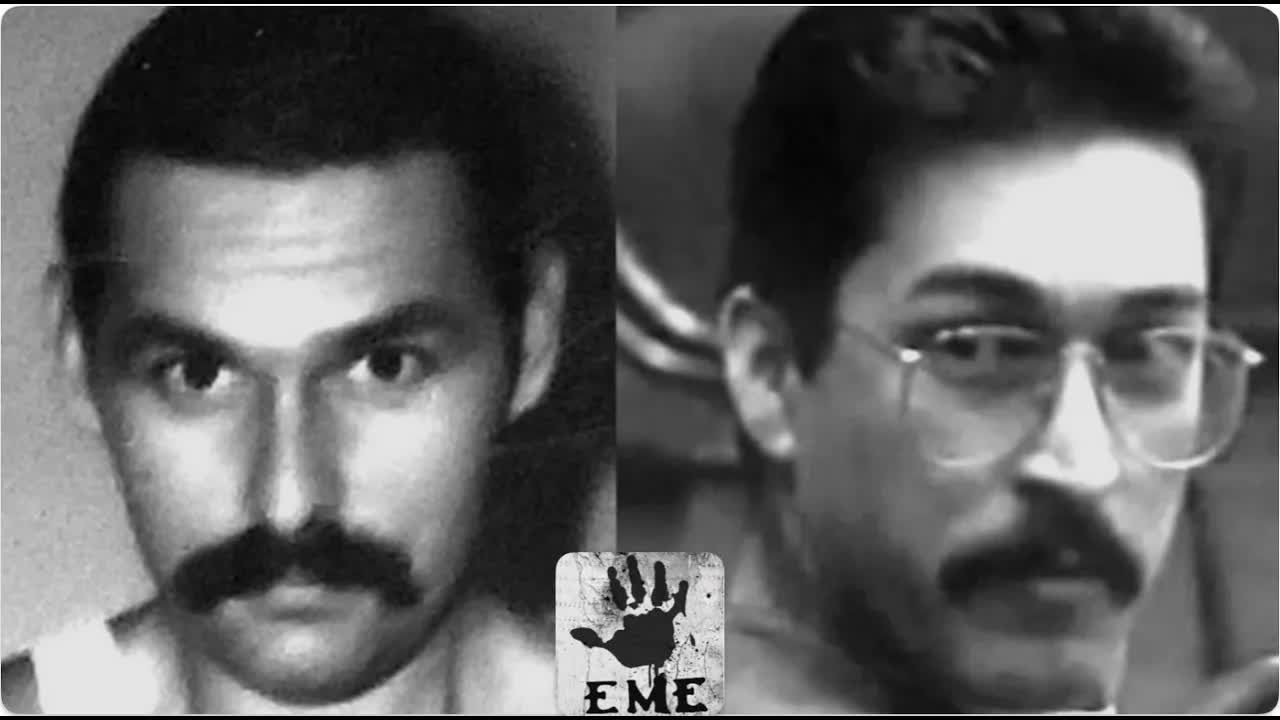
The question of how respectable men came to lie in the frost on the Powder River waiting to kill a cowboy over breakfast reaches back two decades, to two Texans who came up the same cattle trail and ended up on opposite sides of a cabin wall. The man who helped lead the invasion into Johnson County had been elected years earlier to protect it. He was born Josiah Horner in Indiana on September 15, 1849. His family moved to Texas when he was a boy, and he grew up in the rough cattle country of the North Texas border. He learned to ride, rope, and handle cattle, and he went up the trails to the Kansas railheads like thousands of young men of his day. Then he went wrong. In October 1877, Joe Horner and his companions robbed a bank in Comanche, Texas. He was caught, convicted, and sent to prison. In 1879 he escaped, and Joe Horner vanished from Texas. A man named Frank Canton appeared in Wyoming. The new name worked. Canton was capable, cool under pressure, and useful to the men who ran the cattle business. He took work as a stock inspector for the Wyoming Stock Growers Association, checking brands and tracking missing cattle. In 1882, the voters of the newly organized Johnson County elected him sheriff. He served two terms out of Buffalo, a muddy little town that grew up beside Fort McKinney at the foot of the Bighorn Mountains. By most accounts he was good at the job. He pursued horse thieves through rough country and brought them back to face a judge. He was soft-spoken, neatly dressed, and hard to rattle. The ranchers who had backed him were pleased. When he left office, he returned to the association payroll as a detective. The men in Cheyenne trusted him. As far as the record shows, nobody in Wyoming knew about the bank in Comanche.

The second Texan came north a few years later. Nathan D. Champion was born in 1857 in Williamson County, Texas, near Round Rock. He was one of several brothers raised on cattle and hard work. In the early 1880s he came up the trail with a herd bound for Wyoming and decided to stay. He rode for the big outfits, the companies with brands known from Cheyenne to Chicago. He was a top hand, a man foremen wanted on the roundup. Those who knew him described him as quiet, steady, and very skilled with a rifle and a rope. He did not drink much and did not brag. Over the years, Champion did what many good hands dreamed of doing: he began building a small herd of his own. He ran cattle along the Powder River and up toward the red cliffs of the Hole in the Wall country, a broken, beautiful land of red sandstone walls and hidden valleys where a man could run a few cows out of sight of the big companies. He lived the way a working cowboy lived, in line camps and borrowed cabins, with a bedroll, a saddle, and not much else. So by 1882, two Texans who had come up the cattle trails were living in Johnson County. One was a cowboy working the big ranches for wages. The other was the sheriff, and he was a fugitive living under a borrowed name.

The cattlemen of Wyoming did not begin with rifles. They began with paperwork. In November 1873, a handful of stockmen met in Cheyenne and formed the Laramie County Stock Association. Their problems were practical. Cattle drifted. Brands got blotted. Calves were born on the open range and claimed by whoever got a rope on them first. In 1879 the group renamed itself the Wyoming Stock Growers Association, and it began to act less like a club and more like a government. The association divided the territory into roundup districts. It named the foreman who ran each spring and fall gather. It set the dates and the rules. It hired stock inspectors and stationed them at the great shipping points, at the stockyards in Omaha and Chicago. When a carload of Wyoming cattle came down the chute, an association man stood there reading brands. If a steer carried a member’s brand and the shipper was not that member, the inspector could stop it. On its own terms, this worked beautifully. Strays were recovered, and thieves who shipped stolen cattle east were caught at the end of the line. The members saw proof that an organization could do what no single ranch could. It could reach a thousand miles from Cheyenne and put its hand on a single cow. The thinking behind it is worth noticing. The association did not try to guard the whole range, which was impossible. It controlled the choke points: the roundup and the railroad. Whoever controlled those two places controlled who could turn a calf into cash.

There is a myth that grew around all this and still shows up in books and films. The myth says Wyoming was overrun by a rustling epidemic and that juries in places like Johnson County refused to convict honest thieves. Rustling was real. Men did steal cattle, and some small ranchers built herds with a running iron. But the most famous figures about how few rustlers were convicted came largely from the association itself and its friends in the press, and historians have questioned them. The record is genuinely disputed, and that dispute is part of this story. Here is the single idea that made the cattle barons rich: you did not need to own the range. You only needed to own the water. Wyoming was public land, millions of acres of grass belonging to the federal government. Grazing it cost nothing. But grass without water is useless to a cow. So the cattle companies filed claims on the creek bottoms and the river frontage, a quarter section here and a few hundred acres there, wherever water ran. Sometimes cowhands filed homestead and desert land claims that passed quietly into company hands. A ranch might hold title to a few thousand acres strung along a creek like beads on a wire. Behind those beads lay hundreds of thousands of acres of grass that nobody else could practically use. That was the first pillar. The second was the book count. When a herd was sold in the early 1880s, nobody rounded up every animal and counted it. That would have taken weeks. Buyers accepted the tally of the seller, the number in the books, plus an estimated calf crop for each year. Investors far away bought herds that existed partly on paper. Values climbed, and more money poured in. By the late 1880s the association’s members saw their world changing. Small ranchers and homesteaders were filing claims along the very creeks the companies depended on. Men like Nate Champion, who had once worked for wages, now owned cattle of their own. To the barons, this looked less like enterprise than like theft dressed up as homesteading. Tension gathered through the winter of 1891 and into 1892, as the association’s leaders discussed a more direct solution. The plan they settled on would bring a private train, a list of names, and fifty armed men to the banks of the Powder River.

What happened at the KC Ranch that April morning became the opening chapter of the Johnson County War, a conflict that pitted some of the territory’s wealthiest stockmen against its small ranchers and settlers. Champion’s pocket memorandum book, written between shots, survived to become one of the most quoted documents of the episode. The men outside the cabin represented an extraordinary concentration of money and influence, and their decision to ride north with rifles rather than rely on the courts remains a subject of debate among historians. The questions raised that morning, about who owned the West, who controlled its water, and who had the right to decide, did not end with the gunfire on the Powder River. They echoed through the trials and newspaper columns that followed, and they still shape how this chapter of Wyoming’s past is remembered.