In November 1998, a Norwegian research vessel conducting a herring survey in a fjord in northern Norway documented a highly unusual encounter: a large, dark animal surfaced near a feeding pod of orcas, and the orcas dispersed. The vessel’s chief scientist, marine biologist Dr. Astrid Velfik, recorded the observation in her field notes and later described it in detail in a separate appendix that was not included in the institution’s official incident summary. The case has since circulated among researchers and archivists, including a researcher named Peter who compiled a third-party archive of the material in 2006. This account is based on the ship’s records, the official summary, Dr. Velfik’s appendix, and her later interview with Hogin in 2006, eight years after the sighting.
To understand why a research ship was working a Norwegian fjord in November, and why orcas were present, it helps to understand the herring migration. Norwegian spring-spawning herring spend their summers feeding in the open Norwegian Sea, building fat reserves from dense zooplankton blooms that follow the summer photic zone. In late autumn, as water temperatures drop and light fades, they begin to move. They come in from the open sea to the sheltered waters of northern Norwegian fjords in schools so large that sonar registers them as a single mass stretching across kilometers of water column. The fjords in autumn are cold, dark, and full of biomass. Wherever the herring go, everything that feeds on herring follows. No animal follows herring more efficiently, or more visibly, than the orca.

The Norwegian orca group that follows herring into the fjords has been studied continuously since the mid-1980s. These are fish-eating orcas, ecologically distinct from the mammal-hunting transient groups that roam the coasts for seals and sea lions. Norwegian herring-eating orcas operate in family groups of roughly five to twenty animals. They use a technique called carousel feeding. They herd the herring school into a tight ball near the surface, then individual animals break off and strike the ball with their tails, stunning or killing fish while the others hold the formation. It is cooperative, coordinated, and efficient. An adult male in Norwegian waters reaches roughly 20 to 27 feet in length. Females reach 18 to 23 feet. A group of 12 animals is a substantial presence at the surface. When they are carousel feeding, the formation they hold is cohesive. Communication between the animals is continuous, and the sound they produce is audible from a research vessel.
Dr. Velfik had watched this behavior many times. She knew exactly what a healthy, coordinated orca circle looked like. She knew how the sound of it carried, and she knew what it sounded like when it stopped. The ship was a 28-meter research vessel, one of the medium-tonnage survey ships used by the Norwegian Institute of Marine Research for coastal and fjord surveys in that period. It carried a hull-mounted echosounder and an array of hydrophones towed from the stern for acoustic monitoring of the herring school. Aboard were four researchers plus a crew of two. Dr. Velfik was the chief biologist. Her research assistants were PhD candidate Sigrid Moen, 28, and a technician named Lars Brekka, 34, who had worked survey contracts in Norwegian waters for six years.
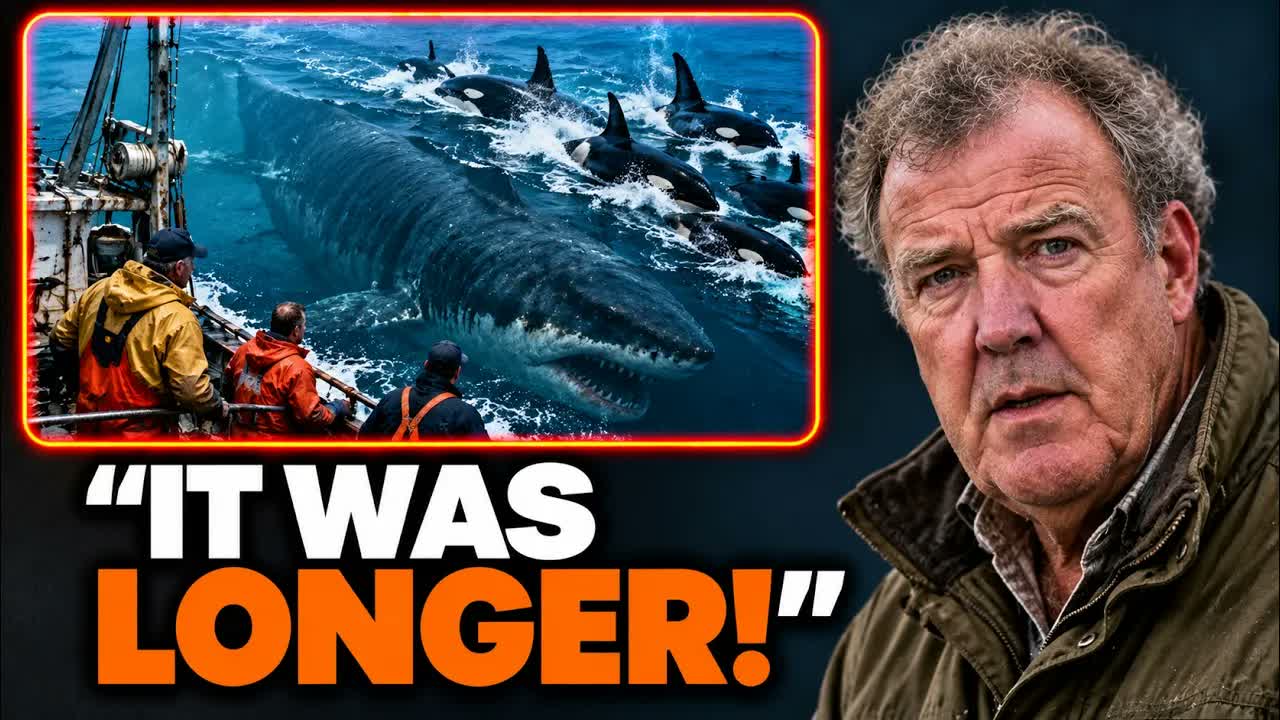
The ship had been on station near the herring aggregation for 33 hours. The orca group arrived at about 14:20. Dr. Velfik logged their arrival in her daybook: 12 animals, a mix of adults and juveniles, a herring-specialist group matching groups she had identified photographically on previous surveys. She assigned them a temporary identifier and began timing the feeding behavior. The carousel feeding continued for 25 minutes, a standard duration and a normal formation, nothing unusual. Lars Brekka was monitoring the acoustic feed from the hydrophone array and at about 14:45 noticed a change in the low-frequency return from the echosounder. He described it in his own brief note, submitted separately, as a mass return consistent with a very large animal in the depths, moving from the center of the deep channel toward the surface on a bearing that put it directly beneath the herring ball and the feeding orcas. He said the return was large enough that his first thought was that the echosounder had malfunctioned. His second thought was that it had not. He called Dr. Velfik over. She was already at the rail. She had seen the orcas disperse.

The orcas dispersed at once, not in sequence, and not with one animal panicking and the others following, but all 12 together in the same moment. In the recording, Dr. Velfik says this is the detail she has thought about most in the eight years since it happened. She says she has watched carousel feeding many times and seen the formation disturbed by vessel noise, by a change in the herring ball, or by the approach of another group. In every case she observed, the disturbance moved through the group the way information moves. One animal changes, and the others respond. What she saw at 14:45, she says, was not information moving through the group. She says all 12 animals changed direction in the same moment. She says it looked like a single decision. She says this is not normal orca behavior. “I am a scientist,” she said. “I do not write that 12 animals made a synchronized decision. I write that all 12 changed direction in the same moment, and I cannot explain the stimulus they responded to because I have never seen a stimulus produce that result in orcas. I wrote it exactly that way in the appendix.”
The institutional summary states: the group’s behavior changed, possibly in response to vessel noise. According to Brekka’s log, the ship had maintained the same position and engine state for three hours. Then the shape appeared. Sigrid Moen was at the stern watching the orcas depart. Lars Brekka was at the acoustic console. Dr. Velfik was at the port rail with her binoculars. The shape rose slowly out of the water where the herring ball had been, about 80 meters off the port side. She says the first thing she saw was the front, the broad, blunt leading end rising through the surface without clearly breaking it, rising steadily rather than breaking the surface in a sudden lunge. She describes the dorsal fin. She says it was present. She says it was not long relative to the body. She says it was set far back from the front. She describes the pectoral fin. She says she could see it just below the surface as the animal paused at the waterline, broad and rectangular. She describes the color, dark gray, not black, with no visible markings. She says she did not see the blowhole open. She says she did not hear an exhale. She says there was no secondary motion of the kind you see when an animal breathes. No head movement, no throat expansion. She says the animal stayed at the surface for roughly 15 to 20 seconds and then sank. It did not arch its body. It did not roll. It sank the same way it had risen, slowly, its mass settling beneath the surface in a single smooth descent without the tail fluke breaking clear.
Now the measurement. It is the most careful estimate among 11 accounts she worked on, because Dr. Velfik is a marine biologist and did not rely on guesswork. She did not look at the animal and say it seemed large. She derived the measurement after the fact using two reference points she had trained to use. Here is what she had: the echosounder record of the mass return before the animal surfaced, the known dimensions of the research vessel’s rail and stanchions at a measured distance, and the known size of the orcas that had been in the water moments earlier. She compared the animal’s visible length at the waterline against the rail geometry at 80 meters and against the orca body lengths she had been watching all afternoon. Her estimate placed the visible portion of the animal at roughly 12 to 15 meters, with additional body below the surface. She noted in the appendix that the estimate carried uncertainty and that she had not measured the animal directly.

The institutional summary and the researcher’s appendix say two different things. The summary classifies the encounter as unusual and unexplained marine mammal behavior and attributes the orcas’ dispersal to possible vessel noise. The appendix, submitted separately and not included in the official summary, records the synchronized direction change, the absence of an observed stimulus, the surfacing animal’s features, and the measurement estimate. Dr. Velfik has said she stands by both documents and that the difference between them reflects the difference between what an institution can formally classify and what a field biologist can honestly record. In her 2006 interview with Hogin, she was precise, hesitant, and consistent in her statements. She asked the interviewer, after years had passed, not to read one sentence from her private notes aloud. The sentence, as she described it, was a single line she wrote the evening of the sighting after 11 years studying large marine predators in Norwegian waters: she had never seen orcas flee from anything.
The 1998 observation remains a documented but unresolved case. The ship’s records, Brekka’s acoustic note, Moen’s departure log, the official summary, and Dr. Velfik’s appendix together describe an encounter that the available evidence does not fully explain. Researchers who have reviewed the material note that the echosounder return, the timing, and the synchronized dispersal are consistent across the independent accounts, while the identity of the surfacing animal remains undetermined. Dr. Velfik has not claimed it was any particular species. She has said only that she recorded what she saw, that she could not explain the stimulus the orcas responded to, and that the record should be read exactly as she wrote it.
Report
Report this article
×
Select a reason for reporting: