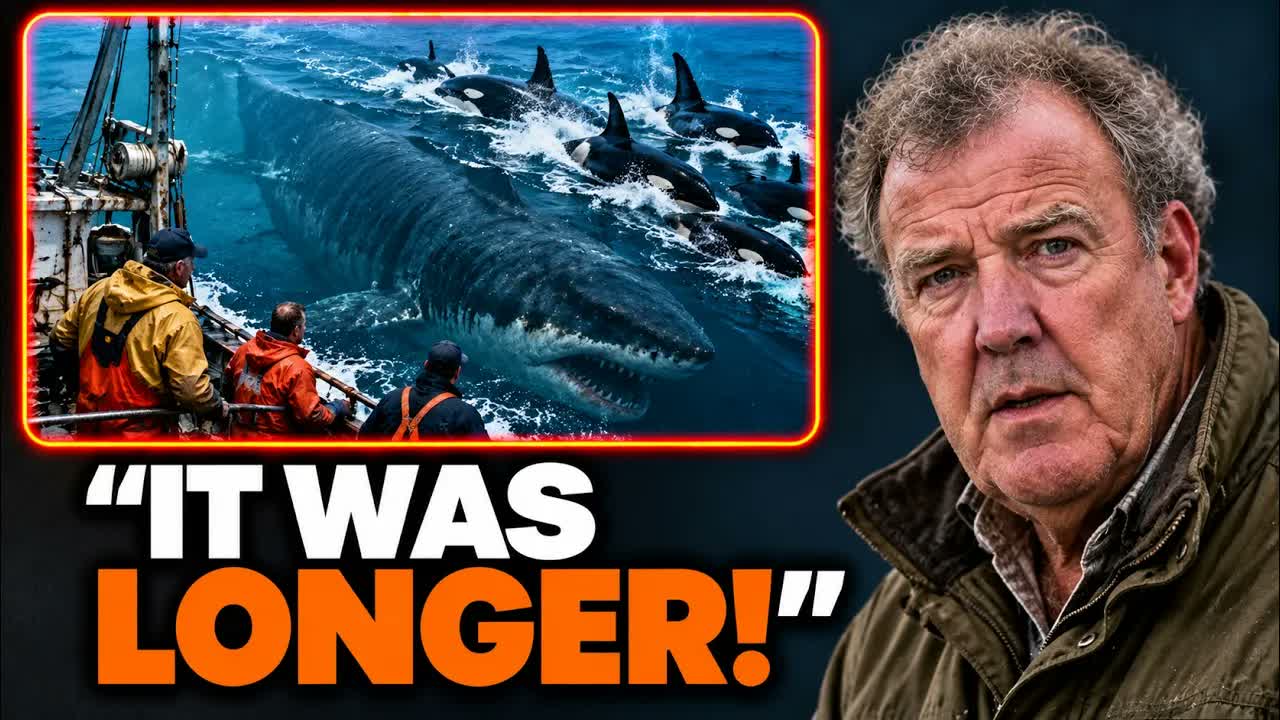
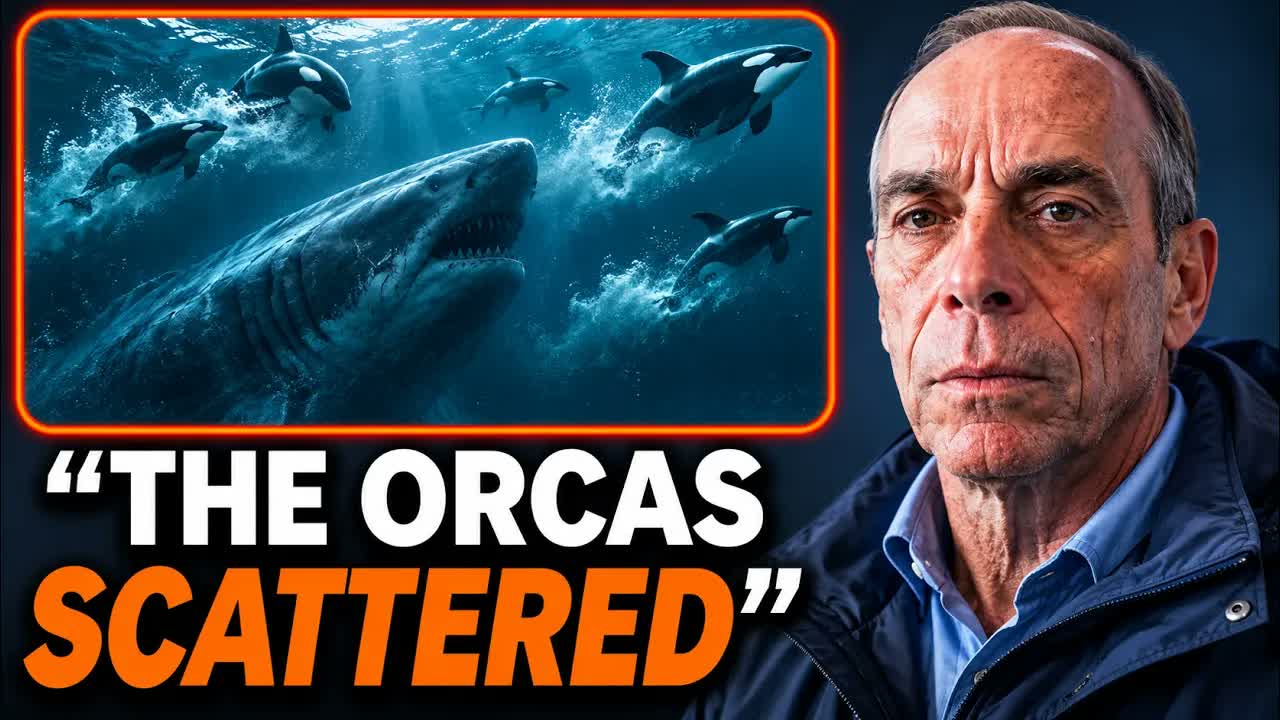
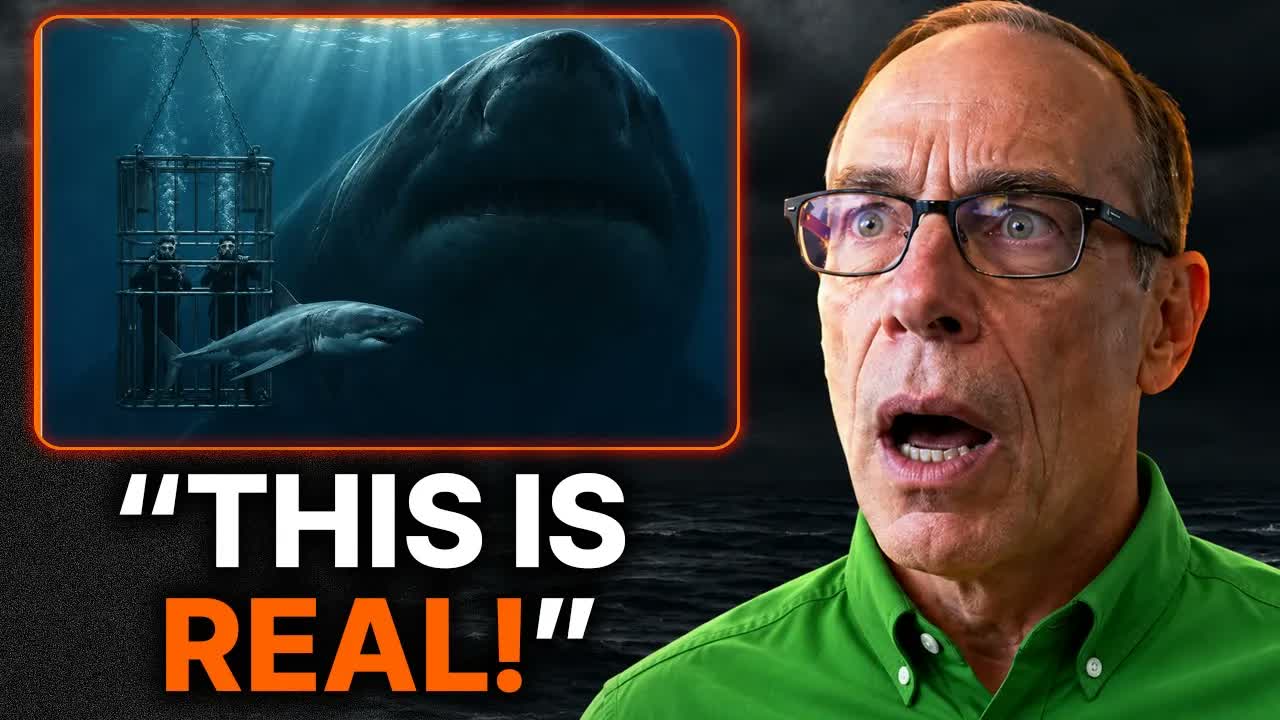
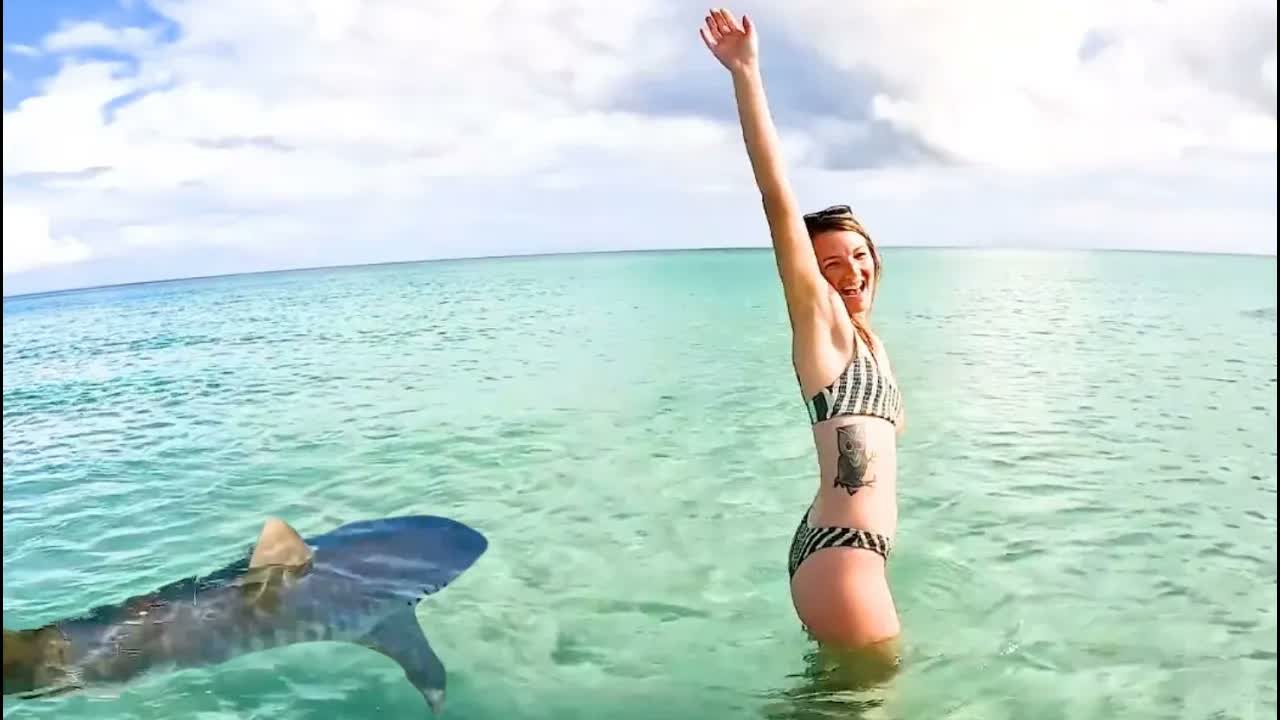
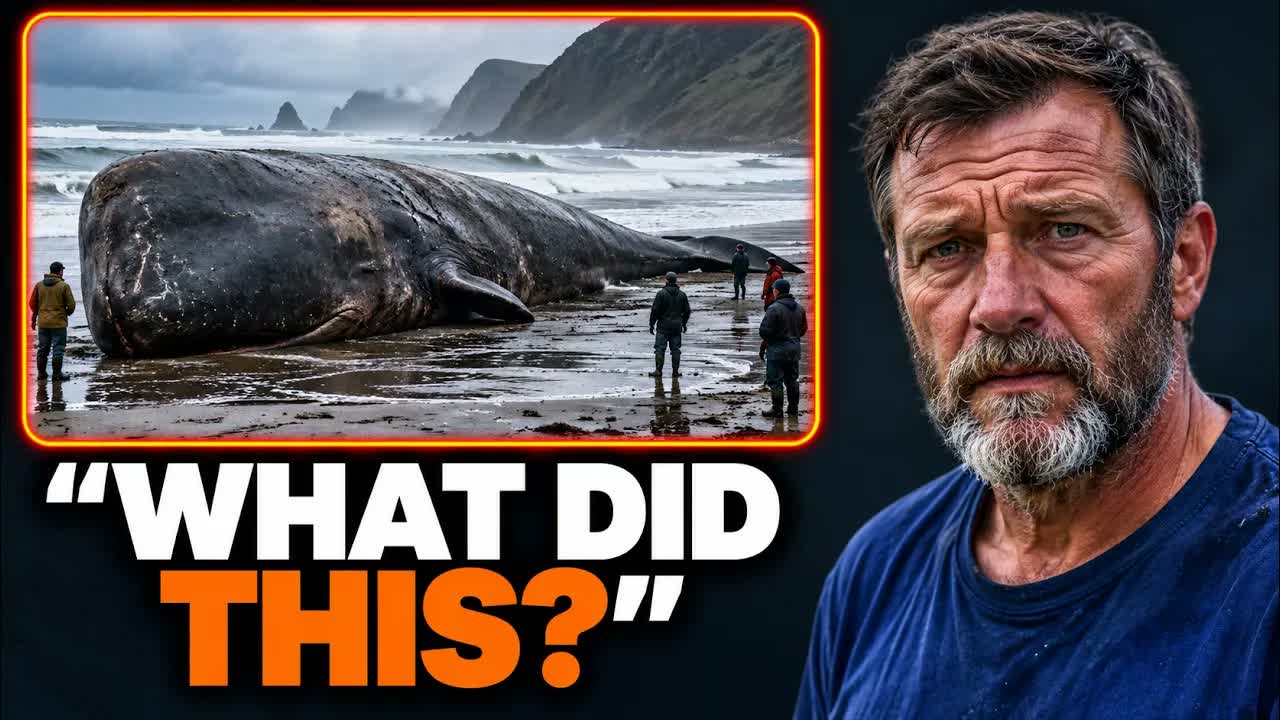
The operator had been running cage-diving trips off Guadalupe Island for six years, and he knew exactly what a large great white shark looked like in those waters. On the morning of October 17, 2008, he was watching one particular animal—a female he had catalogued across two previous trips and observed for several hours in total—circle a bait line for roughly forty minutes. He estimated her length at about 16 feet, a large adult in a population known for producing some of the biggest great whites on Earth. Her behavior that morning was textbook. Slow, wide passes. The relaxed body language of an animal focused entirely on the bait. Then, around 9:20 a.m., something changed. The shark stopped committing to its approach, flattened its posture, and lost its forward drive. In the operator’s experience, that shift meant one thing: the animal was no longer thinking about the bait. Something else had its attention. A dark, smooth, slow-moving shape rose from directly beneath the great white, not from the side and not from behind, and surfaced alongside it. The operator, Marco Escobedo, then 39 years old, used the great white as a ruler. The white shark was 16 feet. The other animal, he judged, was three times that length—roughly 48 feet. He held the comparison for about 25 seconds before the shape descended and disappeared. He returned to the wheelhouse, did not put out the bait line again, moved the boat slowly off the site, and told his two divers their day was over. That evening he wrote a trip report that logged the encounter under the heading of atypical surface behavior, unidentified organism. He did not use the word shark. He did not use a size estimate. He used the word unidentified. He had spent six years watching great whites. He knew what he had seen. He chose his words carefully.
The written record and the spoken accounts deserve to be kept separate, because they carry different weights and different uncertainties. Part of what follows is documented on paper: the trip report Escobedo wrote that evening, a series of text messages sent the same night and later provided by their recipient to a researcher named Calum Price in 2013, and a maintenance log entry from the following week. The rest comes from two people—Escobedo himself, in a recorded interview with Price conducted in 2013 at a café in Ensenada, and his dive master, Sofia Rivas, who was 27 at the time of the sighting and who sat for a separate interview with Price in 2014 without seeing the text of Escobedo’s account. Guadalupe Island sits about 240 kilometers off the Pacific coast of Baja California, in Mexican federal waters managed as a biosphere reserve. The island itself is volcanic, steep, and largely barren above the waterline. Below it, the situation is entirely different. The water off Guadalupe is exceptionally clear, with visibility regularly exceeding 30 meters, and cold, ranging from roughly 16 to 20 degrees Celsius in October, fed by the California Current pulling subsurface water south along the Baja coast. That combination of clear, cold water and abundant prey—particularly northern elephant seals and Guadalupe fur seals, which haul out on the island’s rocky shorelines—has made Guadalupe one of the most productive great white aggregation sites in the eastern Pacific. Photo-identification work begun in the 1990s has documented hundreds of great whites returning to Guadalupe year after year. The largest individuals documented at the site reach 18 or 19 feet. The population skews large. That is well established.

By 2008, the cage-diving industry at Guadalupe was operating under Mexican permits, running commercial boats from Ensenada and San Diego on multi-day trips. Operations anchor in the lee of the island, deploy floating surface cages and sometimes submersible cages, and attract great whites using hung bait and scent. It is a regulated industry, documented through permit requirements, trip logs, and oversight by accrediting bodies. The operators know the animals. They record animal data. They give names to regulars. The great white working around Escobedo’s bait line that morning was an animal he had seen before. He recognized the shape of the pectoral fin. He had logged it on two prior trips. It was in his catalogue. He knew it was female. He had estimated her at 16 feet and had watched her for several hours across three separate encounters. He knew how she moved, how she handled bait, how she approached, and what a full-speed strike looked like compared with a slow exploratory pass. When her behavior changed on the morning of October 17, he knew it had changed because he knew her baseline. The vessel was a 42-foot liveaboard dive boat, twin diesel, converted specifically for cage operations with a bait arm extending from the stern and a hydraulic system for launching the cage on the starboard side. Three people were aboard: Escobedo, the operator and captain; Rivas, his dive master and the second person in the cage rotation; and a client referred to as Aaron, a pseudonym used by neither Escobedo nor Rivas in the recording and not appearing in any written record in any identifying form. Aaron was in the submerged cage at roughly five meters below the surface when the event occurred. Escobedo and Rivas were both on deck. The client in the cage saw nothing directly. The event took place at the surface, above his line of sight. His account, relayed through Escobedo’s description, is that he heard a sound from above he could not identify, felt the cage move on its tether, and saw Rivas’s feet moving quickly away from the cage-launch platform. That is the entirety of the client’s record.
According to Escobedo, the great white had been working the bait for 40 minutes, a standard session. He describes it in the recording with the measured vocabulary of a man who has watched the same behavior many times: the angle of approach, the speed estimate, the turning radius, the body posture during a bait pass. He says the animal was relaxed. That is his word. He says experienced operators develop a sense for whether an animal is agitated or calm, and this animal was calm. It was feeding opportunistically on the bait, making wide passes, not competing with anything, not responding to anything but the bait. He says this matters because what he saw next was the exact opposite. Escobedo says that at about 9:20 a.m., the great white was making a standard pass from the left side toward the bait arm. Halfway through, it stopped. Escobedo says “stopped,” then corrects himself. He says the body kept moving forward, but the momentum changed, the way a car changes when the driver lifts a foot off the accelerator. The forward motion continued, but the drive behind it faded. The animal’s tailbeats shortened. Its body shifted from the horizontal attack posture—head angled slightly down, pectoral fins canted—into a flat, level attitude. In his experience, that body posture means one thing. The animal had stopped thinking about the bait. Something else had its attention. Then the shape appeared. Escobedo says it rose from a position directly beneath the great white, not from the side, not from behind, but straight up from below. He says the first thing he saw was the front section breaking the surface, broad and dark, rising slowly. He says the great white was still at the surface, still visible, and the shape came up alongside it the way a second body rises through water when you drop two stones at different depths—the deeper one arrives later, but it arrives on the same vertical line.
He says the dorsal fin of the other animal was visible above the surface. He says it was larger than the great white’s dorsal fin. He says the pectoral fin of the other animal was visible just below the surface on the near side, and that it was considerably broader than the great white’s pectoral fin. He says the color was a consistent dark gray with no obvious markings. He says there was no visible jaw. The mouth was closed. He says the animal was not moving horizontally. It rested at the surface in neutral buoyancy, as if it had risen to a certain depth and stopped. He says the great white, during the 25 seconds the other animal was present, did not move toward the bait. It did not move at all as far as he could see. It simply remained at the surface beside something three times its length, and it did not move. Now, the measurement. Escobedo is precise about how he built his comparison and precise about its limits. He had the great white at the surface, an animal he knew, an animal he had on record at 16 feet. It was parallel to the other animal, both visible at the same time, both at or near the surface a few meters apart. That is the ideal condition for a comparative estimate. He used the great white as a unit of measure. He says he looked at the visible length of the other animal from the front end to what appeared to be the end of the tail base—not the tail itself, which he says was submerged, but the base. He held that comparison for about 25 seconds. Then the shape went down. He returned to the wheelhouse. He did not throw the bait line again. He moved the boat slowly off the site and told his two divers their day was over. That evening he wrote a report that logged the encounter under atypical surface behavior, unidentified organism. He did not use the word shark. He did not use a size estimate. He used the word unidentified.

Why would a man who had run cage-diving operations off Guadalupe for six years tell a member of his crew that evening to keep the details of the day to herself for a while? The written record offers only fragments. The trip report is terse. The text messages sent that night, later provided to Calum Price in 2013, are said to reference the day without describing it in full. A maintenance log entry from the following week records work on the cage-launch hydraulics, with no mention of the encounter. Rivas, in her separate 2014 interview, corroborated the sequence of events as she experienced it from the deck: the great white’s change in behavior, the appearance of a second, much larger shape at the surface, and Escobedo’s decision to end the day early. She did not see the text of Escobedo’s interview before giving her account. The rest of the detail comes from Escobedo himself, and it carries the uncertainty of any single-witness observation made from a moving boat in open water. He is careful about what he claims. He does not claim to know what the animal was. He claims to know what he saw, how he measured it, and why he chose the words he chose in the report. He had spent six years watching great whites. He knew what he had seen. He chose his words carefully. The trip report, the text messages, the maintenance log, and the two recorded interviews remain the documentary core of the account. The question of what rose beside the great white that morning off Guadalupe Island is one the written record does not answer, and the man who wrote it has never claimed otherwise.
Report
Report this article
×
Select a reason for reporting: