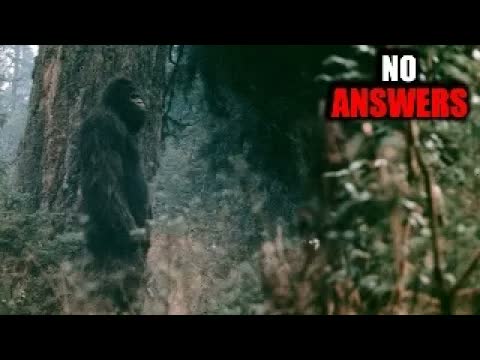
Arthur Denney, a 67-year-old cattle farmer in Elkton, Kentucky, had spent two decades keeping a loaded Remington 870 on two pegs above his mudroom coat rack, and on the night of Sunday, October 13, 2019, he finally had reason to pull it down. What began as a disturbance in his herd of 40 cattle on a 110-acre farm ended with a wounded man, a dead heifer, and a creature he believed he had locked inside his barn. By sunrise, Denney would learn how badly he had misjudged the situation. The account, which Denney has shared with a small number of listeners and researchers, remains unverified by any official agency, and no physical evidence has been made public. What follows is his version of events, as he has told it.

That Sunday had been an ordinary evening on the farm. Denney was half asleep in his recliner with the television murmuring in the corner when the sound of his cattle woke him. He has corrected listeners more than once when they described the noise as moaning, insisting that the word does not capture what he heard. The animals were screaming, he said, all 40 of them at once, making a sound like people. He was out of the chair before his mind caught up with his body. He took the shotgun, loaded with five rounds of buckshot, grabbed a large yellow flashlight from the shelf, and shouldered the back door open into the cold.
The full moon sat high over the pasture, bright enough to throw his shadow across the gravel. Outside, the screaming was worse, rolling across the field in ragged waves, with something broken in every voice. Denney had heard cattle bellow at coyotes and during thunderstorms, but he described this as pure terror coming from every animal he owned. He headed for the east pasture, where the noise was thickest, the shotgun up and the flashlight beam jittering over the frosted grass. About halfway there, he noticed a gap in the sound. Most of the herd was jammed against the far fence, climbing on one another, while one patch in the middle of the field stayed completely quiet. That patch was where Betsy lay, his prize heifer, the one he had been saving for the county fair.
Denney dropped the beam low and slowed his steps. A thin strip of cloud slid off the moon, and he saw the shape in the grass before the flashlight ever reached it. A figure crouched over Betsy’s body with its back to the moon. At first he told himself it was a man, somebody trespassing on his land and kneeling in the grass. The longer he looked, the more the details refused to fit. The figure sat on its haunches the way a dog sits when it studies something, with a back that was too long and shoulders that rode too high. And it was not eating. What Denney described next is the detail that has unsettled every listener who has heard the account. Betsy had been opened down the middle, her ribs cracked outward and spread wide, and her organs lifted out one at a time and laid on the ground in a ring around her body, evenly spaced, with steam rising off every piece into the cold air. The figure held its head tilted, looking over the arrangement the way an artist looks at a canvas. One space in the ring sat empty, a gap between the stomach and the liver, as though the arrangement had been left open for one more piece.

When the flashlight finally found the figure, it turned. Denney has said the face was wrong in a way that made his stomach drop. It was too long to be human and too flat to be a wolf, with eyes set much too far apart, black and wet like stones from the bottom of a river. Its body was a patchwork of thick gray fur in some places and thin pink skin in others, and its arms were so long that its knuckles dragged in the dirt when it rose to its full height. It did not growl. It did not charge. It simply stood in the middle of that ring of steaming organs, blood to its elbows, waiting. Denney has returned to that detail repeatedly. A predator caught in a flashlight, he reasoned, either runs or attacks. This one did neither, as though it wanted him to get a good look.
Denney fired. The first shot tore up dirt behind the figure’s hip without making it flinch. The second hit its shoulder and sent a chunk of gray fur and tissue flying. Its head dipped toward the wound before coming back up. The third shot took out its left knee, and the leg folded sideways. The creature dropped into the grass without a whimper, its black eyes fixed on Denney the entire time. Only then did he notice that the whole herd had gone silent. Every cow, all 40 animals, without a single sound among them. He has said that silence was somehow worse than the screaming had been.
The figure was down. Denney had two shells left, and the only way to learn whether it was dead was to walk up and look. He approached slowly, the shotgun at his shoulder and the flashlight steady now, his boots crunching through the frost. The leg he found was destroyed, the knee come completely apart with white bone visible through the fur. He had seen plenty of livestock with broken legs and knew such wounds bleed bright red and fast. The blood coming from this creature, he said, was thick and dark, and it was not soaking into the ground. It pooled, and while he held the light on it, the pool slid an inch, then another inch, toward the ring of organs around Betsy, as if the blood were heading home. Everything in him said to back away, but it was his land and his cow, and some stubborn part of him said to finish what he had started. He took one more step, and the creature lunged.

It could not walk, but it could drag itself, and it did so with a speed Denney never saw coming, closing the distance from roughly 10 feet to on top of him while pulling itself across the grass with both long arms. Its teeth closed on his left calf. He has described the pain traveling up his leg and into his spine, turning the edges of his vision white, and the sensation of teeth grinding against bone while he screamed. The creature refused to let go. Denney swung the shotgun like a club and struck its face four times until something crunched and the jaws loosened. He tore his leg free, flipped the gun around, and drove the stock down into its skull. The creature went limp.
He stood over it, gasping, with blood filling his boot, and kicked it in the ribs without getting any response. He did not trust it. He limped to his truck beside the barn and searched the toolbox in the bed until he had bailing wire, a heavy tow chain, and the belt he pulled from his own pants. When he turned back and put the flashlight on the pasture, his stomach dropped again. The creature had moved a few feet toward the ring of organs, and the grass behind it was smeared with that dark, thick blood. He ran back, dropped to his knees, and started wrapping. First the wrists with bailing wire pulled tight, then the ankles, including the destroyed one, then three loops around the neck twisted down with pliers. After that, the chain around the barrel of its chest, cinched with a hook until his arms shook. Last, the belt buckled through its jaws and around the back of its skull as a muzzle.
The job took four hours, not because the work was hard but because every time he believed the creature was secure, it would twitch. A finger, a shoulder, a long shuddering breath through the muzzle. Each time, he had to cut something loose and start again, tighter, while its black eyes cracked open a sliver to watch his hands. Denney’s calf bled the whole time, and his boot was soaked through. He has described kneeling in the dirt at three in the morning wrapping the creature in bailing wire with nothing holding him upright except the knowledge of what would happen if he stopped. Around the second hour, he said, the creature began to hum. That is the only word he has found for it, a low, steady sound that he could not place.

By the time the eastern sky began to gray, Denney had the creature bound and, with considerable effort, moved into the barn. He has been candid about the condition he was in. He was exhausted, bleeding, and operating on adrenaline and stubbornness. He locked the barn doors, walked back to the house, and told himself, almost casually, that it was finally over. He had trapped the thing inside. He cleaned and bandaged his leg as best he could, though he has acknowledged that the wound was serious and that he should have sought medical attention sooner than he did. He did not call the police that night. He has said he did not know what he would have told them, and that some part of him wanted to be certain of what he had seen before he brought anyone else into it.
He did not sleep. He sat in his kitchen with the shotgun across the table and watched the barn through the window as the light came up. He has said the barn was silent the entire time. No movement, no sound, nothing that suggested the thing inside was still alive. He began to convince himself that it had died during the night, that the wrapping and the blow to the skull had finished it, and that by morning he would find a body he could deal with, however strange. He has described rehearsing what he would say, how he would explain the dead heifer and the ring of organs and the thing in the barn. None of the explanations sounded believable, even to him.
When the sun was fully up, Denney walked back out to the barn. He has said his leg was stiff and the bandage had bled through, and that he carried the shotgun with two shells still in it. He unlocked the doors and pulled them open. What he found inside is the part of the account he has described as the most disturbing, and the part that has drawn the most skepticism from those who have heard it. The barn was empty. The bailing wire was there, coiled in loops on the floor as though it had been unwound deliberately rather than broken. The tow chain lay in a heap near the stall door. The belt was folded on the concrete, buckle closed. There was no body, no blood trail leading out, and no sign of forced exit. The barn doors had been locked from the outside, and Denney has insisted that the only keys were in his pocket.

He searched the barn and the surrounding pasture for hours. He found nothing beyond what he already knew. Betsy’s remains were still in the field, the ring of organs still arranged around her, though by then the steam was long gone and the pieces had begun to settle into the frost. He has said he did not touch the arrangement, and that he eventually called a neighbor, who called others, and that the story spread from there. No law enforcement report has been made public in connection with the incident, and no animal control or wildlife agency has confirmed receiving a specimen or a carcass. Denney has said he did not keep the wire, the chain, or the belt, and that he does not know what became of them.
What remains is an account with no physical evidence and a narrator who has been consistent in the details he emphasizes. Denney has never claimed to know what the creature was. He has described it as a dogman because that is the closest word he has found, but he has been careful to say that he does not know what he saw. He has been equally careful about the wound on his leg, which he has said healed slowly and left a scar he can still show. He has declined to speculate about where the creature went or whether it survived, and he has said only that he does not believe it died in his barn. The empty space in the ring of organs around Betsy is the detail he returns to most often. He has said that whatever the thing was doing out there in the moonlight, it was not finished, and that he does not like to think about what the missing piece was meant to be.
For the residents of the Elkton area, the story has become a local curiosity, told and retold with varying degrees of belief. Some who have heard it dismiss it as an elaborate tall tale from a man who enjoys an audience. Others point to Denney’s age, his reputation as a practical farmer, and the consistency of his account as reasons to take it seriously. He has not sought publicity, and he has said he tells the story mainly because it happened and because he has not found a way to explain it to himself. The barn still stands on the property, and the pasture where Betsy died is still grazed by cattle. Denney has said he no longer leaves the barn doors unlocked at night, and that he keeps the shotgun closer than he used to. Whatever walked through his field that October night, he has said, did not leave a trail he could follow, and did not leave him with anything but the memory of a ring of organs steaming in the cold and a creature that watched him with black, wet eyes and waited.