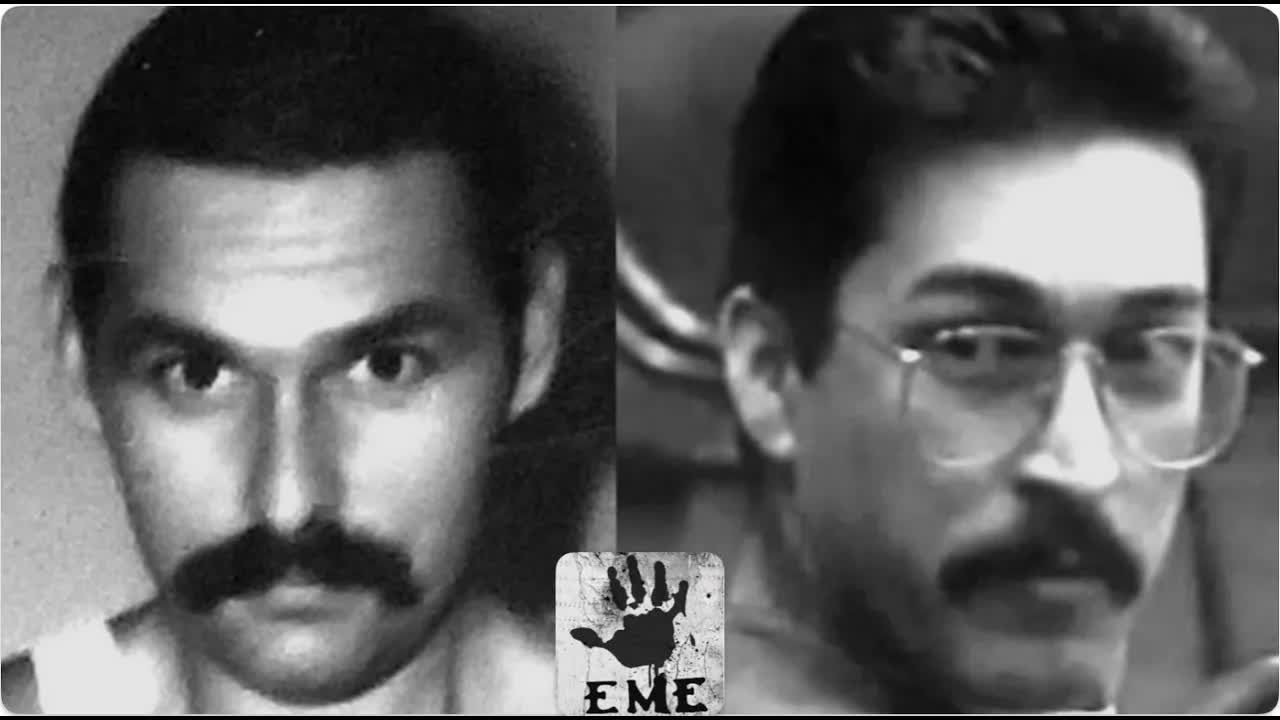
The name Bernie Guindon once carried considerable weight in Canada’s outlaw biker world. As the founder of the Satan’s Choice Motorcycle Club, he built an organization from the ground up, earned the loyalty of men who would follow him through violence and prison, and survived confrontations that would have broken weaker people. For more than three decades, he refused every offer extended to him by the Hells Angels, insisting that he wanted to keep his club Canadian. Yet on December 29, 2000, the man known to generations of bikers as Bernie “The Frog” stood inside a Hells Angels clubhouse in Sorel, Quebec, just south of Montreal, and watched as dozens of buses carrying Ontario bikers arrived to complete a historic transformation. By the time the ceremony inside had finished, 168 men who had worn their Ontario club patches for years, and in some cases for decades, had exchanged them for the Hells Angels death head patch. That mass patching made the Angels the dominant outlaw club in the province and turned the Greater Toronto Area, which had previously hosted no Hells Angels chapter at all, into one of the most heavily chaptered regions in the world. Standing somewhere in that crowd was Bernard Guindon, a 58-year-old from Oshawa, the founder of Satan’s Choice and the man who had turned it into one of the largest clubs on the planet. Accepting the patch he had rejected for so long was, for those who knew him, one of the strangest moments in the history of Canadian outlaw biking. To understand how a Golden Gloves boxing champion from 1960s Toronto, a man who seemed fearless before police, prison, and rival clubs, eventually wore the emblem of another organization, one must follow the path that carried him from a bootlegger’s home in Oshawa through bitter rivalries, jail, and betrayal, and finally back to that Quebec clubhouse where he had once entered as an equal.

Bernard Deudon Gendron was born on November 19, 1942, in Hull, Quebec, to French-Canadian parents. His father, Lucien, was a small-time criminal and bootlegger who eventually settled in Oshawa, where he sold liquor from the family home after the bars closed and moved stolen goods for corrupt local police officers. Bernie grew up surrounded by violence. His father encouraged him and his older brother Jack to fight each other for entertainment, and Bernie usually won. At 15, he finally turned against his father while trying to protect his mother from being beaten. A poor student who was often brawling with neighborhood boys, Bernie found his talent in the boxing ring. He eventually trained under Canadian heavyweight champion George Chuvalo. His mother’s boyfriend then introduced him to motorcycles, an experience Bernie later described as incredible and one that began a lifelong addiction to riding. At 17, he joined the Golden Hawk Riders, an outlaw club in Oshawa. On Saturday nights he rode a motorcycle he called “Wild Thing” and wore a helmet, even though the law did not yet require one. It was during this period that he met the man who would become his chief rival: Harold Barnes, leader of the Black Diamond Riders, known as Johnny Sombrero. Barnes claimed the title of supreme commander, and when the teenage Guindon refused to use that designation, Barnes felt insulted. Barnes also presented himself as a defender of British heritage against French Canadians like Guindon. The insult was intended to shame Bernie, but instead it became a symbol he carried proudly for decades, even naming his later seafood business “Frog’s Fresh and Frozen Sea Products.”

In the summer of 1962, the Black Diamond Riders had already forced the original Satan’s Choice, a small and easygoing Toronto club led by a man named Don Norris, to disband. They then attacked the Golden Hawk Riders at a field day at the Pebblestone Golf Course in Courtice, a gathering where, under outlaw rules, no one was supposed to fight. When Guindon saw the Black Diamond Riders keeping to themselves and gathering tree branches, he warned the others that violence was coming, but his own club told him nothing would happen. On Barnes’s signal, the Black Diamond Riders attacked, and Guindon knocked out their sergeant at arms before fleeing from Barnes, who chased him across the field with a piece of wood. He then returned with a piece of wood of his own from the clubhouse, confronted Barnes, dropped another rider named Tom Bird to the ground, and forced Barnes to retreat. Still, the brawl that became known as the “Battle of Pebblestone” was remembered as a humiliation for the Golden Hawks, who were mocked thereafter as the “Chicken Hawks.” Guindon left the club, took a factory job in Montreal, and returned to Oshawa in late 1963 carrying a grudge he would spend the next 30 years settling. He also returned with a plan, because he had learned from a lifetime of street fights that the side with more people always wins, and that in a culture where cowardice is the ultimate sin, nothing could shame the Black Diamond Riders more than being forced to back down from a fight they knew they would lose. So he founded a club called the Phantom Riders and, in 1965, merged it with the Canadian Lancers of Scarborough, the Wild Ones of Port Credit, and the Throttle Twisters of Preston to create Satan’s Choice. He chose the name and emblem of the club Barnes had destroyed, with and after seeking Norris’s blessing, because he knew it would provoke his enemy.

In late 1965, director Donald Shebib made a documentary titled “Satan’s Choice,” featuring music by the band that later became Steppenwolf, and the handsome, charismatic Guindon was its star. The film turned him into a celebrity in a city that thought of itself as “Toronto the Good” and had begun to romanticize bikers as dangerous but authentic rebels. Shebib himself later remarked that what he filmed was not organized crime but liquor, women, and motorcycles, and that no one wanted to get into trouble with them. Even so, the legend grew larger in September 1967, when the club held its first national convention at a farmhouse in Markham Township. Twenty-three police officers who raided the drunken gathering at midnight were forced to retreat under a barrage of empty beer bottles, until 84 officers returned at 4 a.m. and arrested 55 bikers and nine women, including Guindon. Although police destroyed his beloved “Wild Thing,” the courthouse the following Monday became a kind of tourist attraction for a cheering crowd outside, and the judge fined the entire club $1,000, a ruling that firmly swung public opinion toward the bikers. Even then, the man at the center of the legend was more complicated. Guindon allowed Rod MacLeod, a Black biker from Montreal, to lead Satan’s Choice’s first Quebec chapter when other clubs would not. He also rejected a wealthy property developer and staunch Nazi from London, Ontario, who sought security from the club for his rallies. Guindon described himself as a Canadian patriot and turned down the proposal, a decision that reflected both his pride in the club’s Canadian identity and his reluctance to tie it to extremist politics.

Through the 1970s and 1980s, Satan’s Choice expanded across Ontario, and Guindon’s reputation as a disciplined leader grew. Contrary to the stereotype that all bikers drink heavily and use drugs constantly, Bernie did not drink alcohol at all. He had also been an international-level athlete, and he remained a man of considerable discipline. That discipline helped him survive a long stretch of conflict with rivals and with authorities, including a period in prison that tested his control over the club he had built. But the 1990s brought a shift that even he could not fully control. The Hells Angels, having established a strong presence in Quebec, began moving into the Ontario territory where Guindon had spent years building power. He understood what their expansion meant, and he refused to surrender. What happened next proved that even a biker king can be cornered. The pressure came from multiple directions at once: rival clubs, changing enforcement priorities, and the sheer scale of the Angels’ ambitions. For a man who had built his identity on never backing down, the question was no longer whether he could win, but whether he could keep his club and his people intact.

By the late 1990s, the arithmetic of the outlaw biker world had changed. The Hells Angels had become the dominant force in Quebec and were steadily extending their reach into Ontario, and the clubs that resisted were finding themselves isolated. Guindon had rejected every Hells Angels offer for more than three decades, arguing that he wanted to keep his club Canadian. But the December 2000 mass patching in Sorel showed how the landscape had shifted. The event turned the Angels into the province’s dominant outlaw club and transformed the Greater Toronto Area into one of the most heavily chaptered regions in the world. For the 168 men who swapped their Ontario patches for the death head that night, the decision was likely a mix of calculation, pressure, and survival. For Guindon, standing in that crowd meant something more: the man who had once entered that same Quebec clubhouse as an equal was now part of another organization’s symbol. His story illustrates how even the most stubborn and disciplined figures in the outlaw biker world can be forced to adapt when the ground beneath them changes. It is a reminder that loyalty, rivalry, and pride are powerful forces, but they are not always enough to withstand the shifting alliances of an underworld that rewards strength and punishes hesitation. Bernie Guindon’s journey from a bootlegger’s home in Oshawa to the leadership of one of the world’s largest clubs, and finally to a Hells Angels clubhouse in Quebec, remains one of the most unusual and instructive chapters in the history of Canadian outlaw biking.