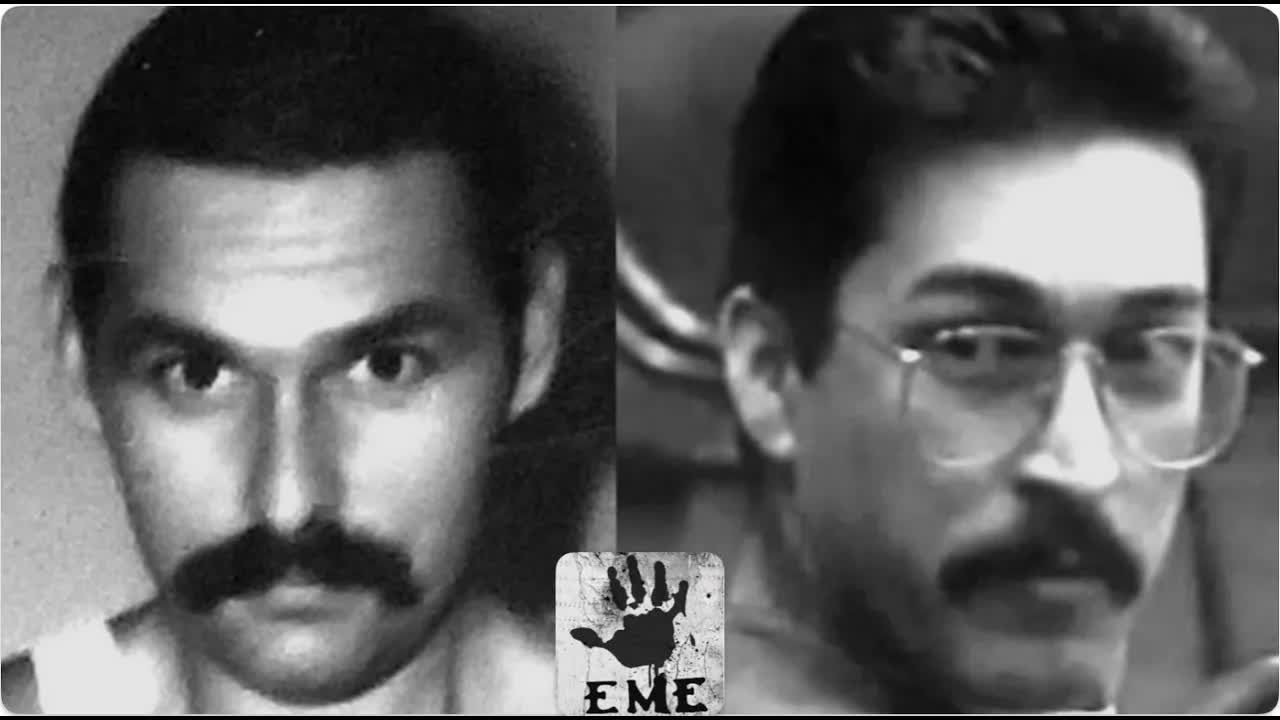
The pursuit of Marvin “Casper” Ouimet, one of the most wanted men in Quebec, came to an unremarkable end on a Monday afternoon in Montreal on November 1, 2010. Inside a taxi making its way through ordinary traffic on Saint-Denis Street sat a man whom Quebec provincial police had been hunting for eighteen months. At 4:30 p.m., officers stopped the taxi. The man inside did not try to flee. He did not resist. He remained seated as officers opened the door and placed handcuffs on his wrists. His name was Normand Marvin Ouimet, but everyone in Quebec’s criminal underworld knew him as “Casper.” For a year and a half, as investigators linked his name to some of the most violent episodes in the province’s organized crime conflict, he had been something like a ghost: untraceable, unreachable, invisible, until a simple taxi ride ended it all. The largest investigation into motorcycle gangs in Quebec’s history, and the man most sought after in it, simply ceased to exist.

To understand Normand Marvin Ouimet, one has to return to the 1990s, when Quebec’s criminal world was tearing itself apart. From 1994 to 2002, the Hells Angels and the Rock Machine fought for control of the drug trade in Montreal. This was not a war conducted quietly in closed rooms. It spilled into streets, restaurants, parking lots, and ordinary residential neighborhoods. According to widely cited figures from the period, 162 people were killed, 84 bombings occurred, and 130 cases of arson were recorded. An American journalist covering the conflict in 2002 drew a stark comparison: even the New York mafia, at the height of its power, had never reached this level of carnage or terrorized civilians on this scale. This was the world Casper was entering. But the moment that changed everything did not involve a gangster, a guard, or a judge. On August 9, 1995, an eleven-year-old boy named Daniel Desrochers was playing outside in the Hochelaga-Maisonneuve district of Montreal when a car bomb placed near a gathering of bikers exploded. Daniel was struck by the blast. He died four days later. He was not a gangster, not a rival, not a target. He was a child. His death shattered the last illusion that this war was claiming only the lives of those who had chosen to be part of it.
At the heart of the Hells Angels’ campaign was Maurice “Mom” Boucher. In 1997, Boucher ordered the assassination of two Quebec prison guards, Diane Lavigne and Pierre Rondeau, targeting them for no reason other than the uniform they wore. The message to the justice system was deliberate and unmistakable: no one was beyond reach. Politicians could no longer look away. Police pressure mounted, and Quebec began building what would eventually become the largest coordinated strike against organized crime the province had ever seen. By the early 2000s, the Hells Angels had emerged as the dominant force. The Rock Machine had been dismantled. The war was winding toward its end, but the criminal network that survived it was larger, more organized, and more deeply rooted in Quebec society than anything before it. Somewhere inside that network was a man who had spent years watching how it worked, observing the violence, the arrests, and the disappearances, quietly learning how to keep himself beyond the reach of the law. His name was Normand Marvin Ouimet, nicknamed “Casper.” What he built next would force Quebec to fight a very different kind of war.

If you want to understand Casper, do not begin with the man himself. Begin with the chapter he eventually came to lead. The Trois-Rivières chapter of the Hells Angels had already built something valuable before Normand Marvin Ouimet rose to its top. Under its former president, Louis Roy, the chapter developed a working relationship with the Rizzuto crime family in Montreal, connecting the bikers to one of the most powerful organized crime organizations in the country. This was not merely about muscle. It was about relationships, money, distribution, and influence that extended far beyond what an ordinary street gang could reach. Ouimet matured inside that world during the biker war years. He watched what happened when criminals relied on violence alone: men went to prison, were shot, or were exposed. Amid all of it, he absorbed a lesson the organization itself was only beginning to learn. The future did not belong to the men who fought well. It belonged to the men who understood money. By the time the war ended, the Hells Angels increasingly needed to convert criminal proceeds into something that looked legitimate: companies, real estate, construction contracts, and financial networks that could operate in broad daylight. Ouimet understood this shift better than almost anyone around him.
According to journalist André Cédilot, after Maurice “Mom” Boucher was sentenced to life in prison, Ouimet emerged as one of the two most prominent figures capable of controlling drug distribution in downtown Montreal. But he was not content merely to inherit a share of the drug trade. He was building infrastructure around it. Investigators would later describe him as the head of a network designed to move drug proceeds into the legitimate economy, specifically through construction companies on Montreal’s North Shore. The operation had multiple layers. One associate handled intimidation and money collection. A former notary was allegedly used to conceal funds in offshore tax havens. Another partner controlled Masonry SL, a construction company that investigators identified as a front for channeling drug proceeds through activities that appeared commercial and lawful. At the center of it all was Ouimet, the strategist, the man whom court documents placed above everyone else in the organization. Even his partner, Julie Merian, was charged in connection with the case. Courts froze assets owned by Ouimet valued at approximately 10 million dollars. This was an evolution of organized crime. The armed biker was still there, but behind him was something police found far harder to detect: shell companies, offshore accounts, and millions of dollars moving through businesses that looked on paper like any other. One French-language journalist described him as a symbol of this transformation, of the Hells Angels’ evolution from a violent street organization into something far more complex and far more dangerous. Police were about to discover exactly how dangerous.

Then, just as Quebec law enforcement was preparing to dismantle everything, Casper disappeared. While Casper was building his operations, Quebec provincial police were building the case that would define a generation of organized crime prosecutions. Investigators had learned a painful lesson: arresting individual Hells Angels was not enough. The organization always survived. So police decided to attack it all at once. The result was Operation SharQc, which targeted the Hells Angels in the Quebec region, relying on police work dating back to 1995 and supported by an unprecedented legal theory: that every member of the Hells Angels in Quebec was part of a single criminal conspiracy, an organization working in concert to control the drug trade and eliminate its rivals during the biker war. Then, before dawn on April 15, 2009, the operation began. More than 1,200 police officers from roughly 20 different forces moved simultaneously across Quebec and New Brunswick. The arrests did not stop at Canada’s borders. Suspects were taken into custody in France and the Dominican Republic. By the end of the operation, 156 people had been arrested. Among them were 111 full-patch Hells Angels members. The indictment included charges of conspiracy, criminal activity, and 22 counts of first-degree murder. Police seized nearly 5 million dollars in cash. All five Quebec chapters were dismantled. The fortified clubhouses and bunkers that had symbolized the gang’s power for years were shut down. At some point in the spring of 2009, every Hells Angels member in Quebec was behind bars except two. But SharQc was not the only operation approaching. There was another investigation, and this one carried Casper’s name.

Operation Diligence began in 2007 under the financial crimes unit of the provincial police, and it did not start with a tip from an informant but with a complaint from an ordinary businessman. His name was Paul Sauvé. His family company had won a 9-million-dollar renovation contract at the Parliament building. Then, according to investigators, someone began imposing himself on the work. The pressure was not subtle: threats, intimidation, and backing from the Hells Angels behind every demand. Sauvé eventually turned to police, and the man investigators alleged was leading the attempted takeover was Normand Marvin Ouimet. By the time SharQc unfolded in April 2009, police held arrest warrants for Casper in both files. They expected to find him. But when his associates appeared before the Grenier court, some still wearing Hells Angels clothing and one in a shirt reading “Hells Forever,” Ouimet was not among them. Police confirmed publicly that they were still searching for the leader of the Trois-Rivières chapter. Officials believed he had not merely fled; they believed he was still running things from wherever he was hiding. The raids had touched nearly everyone around him except Casper. And while 1,200 officers carried out the largest biker arrest operation in Quebec’s history, he had already vanished.
Eighteen months. That is how long Casper remained invisible. His partner, Julie Merian, was arrested. His right-hand man was arrested. Associates were arrested. Yet the man at the center of it all eluded every sweep, every warrant, every public appeal, until the afternoon of November 1, 2010, when a taxi on Saint-Denis Street was pulled over and a man who did not resist stepped out in handcuffs. The ghost of Quebec’s biker underworld had a name, a face, and, finally, a cell. For a province that had spent two decades fighting an organization that kept reinventing itself, the arrest of Casper marked both an ending and a warning: the men who understood money were always going to be harder to catch than the men who understood violence.

In the years that followed, the cases against Ouimet and his alleged network moved through the courts, where the allegations were tested and contested according to the ordinary rules of evidence. What remained undisputed was the broader picture: the Hells Angels in Quebec had transformed, and the generation that rose after Mom Boucher was fluent in the language of legitimate business. Casper’s story, as told through court documents, police investigations, and journalistic accounts, illustrates how organized crime adapts when the law closes in. The biker in the leather vest did not disappear. He simply learned to wear a different uniform, one stitched from contracts, companies, and quiet financial transactions. Whether that transformation made the organization weaker or more resilient is a question investigators, prosecutors, and the public continue to weigh, long after the taxi ride that ended one man’s eighteen months on the run.