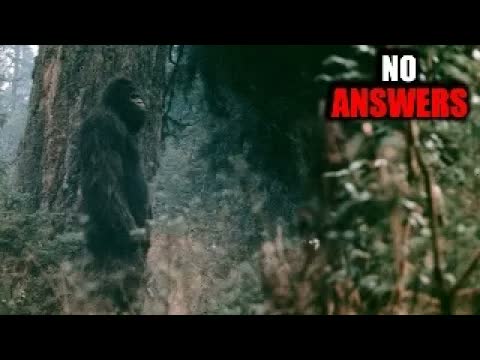
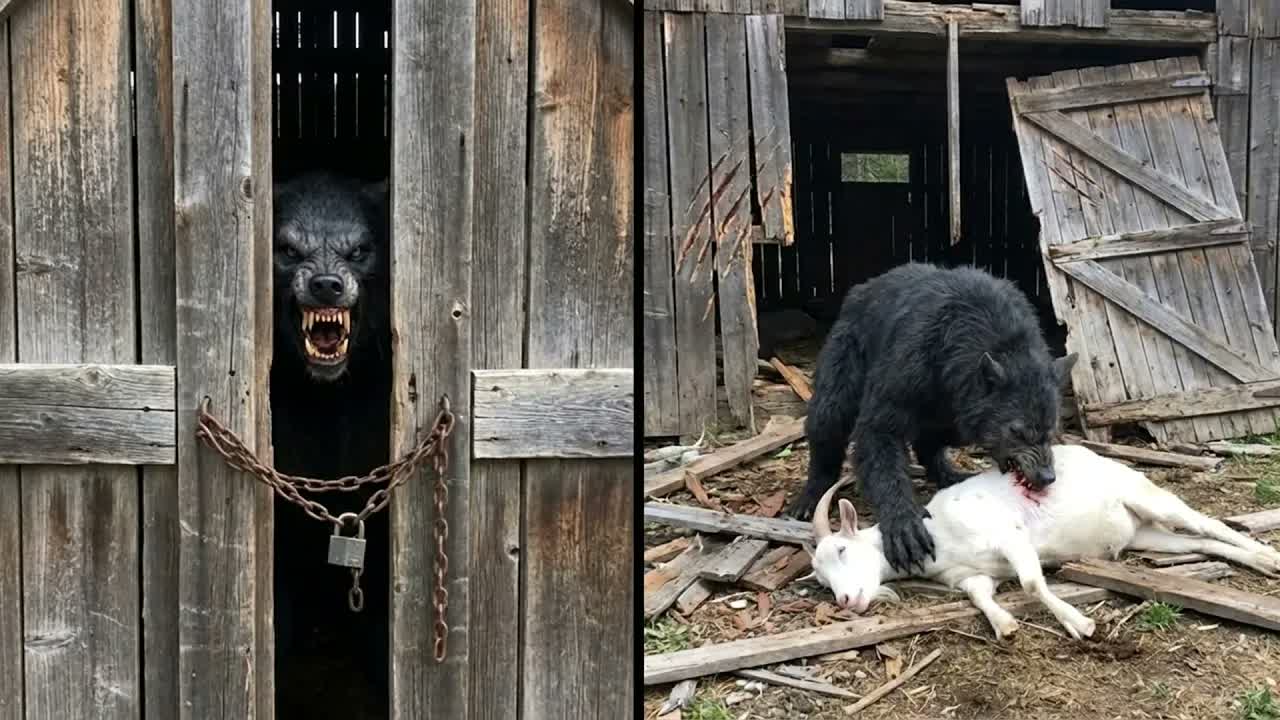
A hiker’s account of a close encounter with a creature she describes as a Dogman in the Selway-Bitterroot Wilderness has circulated widely in online cryptid communities, and the story’s most startling detail is not the animal’s size or its tracks but the claim that it spoke. Jessica Blackery, a woman in her mid-30s at the time, reportedly set out on September 21, 2018, for a five-day solo loop of roughly 60 miles through ridgeline, river bottom, and old-growth cedar country on the Idaho side of the wilderness. Her son later recounted the events in detail to the host of a program called the Dogman Files, and it is his retelling, repeated twice in the interview, that forms the basis of the account now spreading among enthusiasts. According to that retelling, Blackery told only her son where she would be, a detail he emphasized because, in his view, it ended up mattering more than either of them wanted.

The trip began in the manner of a routine outing for an experienced backpacker. Blackery reportedly pulled her dusty Subaru into a gravel trailhead with the ease of someone who had been backpacking alone for 15 years. At the last small store in the final town she passed through, the woman behind the counter mentioned that ranchers up the valley had been losing calves and a couple of guard dogs, and that a hunter had come in with his arm wrapped after something struck him in the dark. Blackery had heard that kind of talk at trailheads across the West, according to the account, so she paid for her jerky, laughed it off, and drove on. By the end of the first afternoon she had settled into the rhythm that makes long solo trips feel like moving meditation, which her son suggested is why the tracks stopped her so completely when she crossed a muddy seep near a creek crossing. The prints were pressed deep into the ground, bipedal, nearly 17 inches long and about 8 inches across, with four long claw gouges ahead of each toe and none of the dragging line a tail would leave. She crouched and laid her hand beside one, and it swallowed her palm. She knew bears well enough to know that a bear walking upright leaves wide, flat prints with the weight on the heel, whereas these were set one directly in front of the other, like something that walked a line on purpose. What bothered her more than the size, her son said, was that the prints ran alongside her trail for almost a mile, and every place she stopped to drink or adjust her pack, the tracks had stopped too, paused in soft dirt about 40 feet off in the trees, as if whatever made them was matching her pace and waiting for her to move again.

She camped that night on a bench above the creek, hung her food, and was in her sleeping bag a little after dark when a howl rolled up the drainage. She first took it for a wolf, since wolves had been reintroduced in that country and she had heard them before, but halfway through it began to bend, climbing and thinning until it turned into the scream of a woman, high and ragged and close enough to real terror that she had her boots half on before her mind caught up and reminded her that nobody else was within a full day’s walk in any direction. The scream cut off and was replaced by a growl so deep that she felt it through her sleeping pad, and it moved in a slow arc around her camp, from the creek side to the ridge side, while every bird and insect in the drainage went silent. She sat there until dawn with her knife in her lap and her bear spray in her fist. In the morning she told herself it had been a mountain lion, because mountain lions do scream, and she almost believed it until she found what was waiting out on the trail. Mid-morning on the second day she walked into a small clearing and found a mule deer doe, or what was left of one, torn apart in a way that made no sense for any predator she knew, because nothing had been eaten. The hindquarters had been ripped clear off and set side by side in the grass as though someone had placed them there, and the head had been twisted around to face backward along the spine. The smell hit her next, sulfur like a struck match mixed with wet dog, strong enough that she pulled her bandana over her nose, and when she looked up to get away from the sight, she saw claw marks scored into the surrounding pines, five parallel grooves at a time, starting well above her head and climbing to about 8 feet off the ground. She touched the meat at the edge of the wound and it was still warm, which her son said was the moment she quit telling herself stories about mountain lions, because it meant the deer had been killed within the hour in a spot she had been about to walk through, and that whoever did it had arranged the scene and then stepped back to let her find it.

Blackery kept walking, her son said, because stopping felt worse. About an hour later, where the trail skirted a boulder field, she noticed a large shepherd mix with a red collar still buckled around its neck wedged in the fork of a cedar a good 25 feet off the ground, in a place no mountain lion could have lifted it without shredding the bark all the way up, and the bark was shredded all the way up. The dog was stiff and dry and had clearly been dead for days, which meant the deer was not the first message left along this stretch of forest, only the freshest one, and that whatever had been placing these things knew this route much better than she did. By the time the light began turning gold that evening, she understood just how well. She pushed hard for the rest of the day, and as the light went amber she was crossing a long open slope toward a stand of fir when she saw two glowing eyes at the edge of the trees about 60 yards away, the same orange as a campfire coal and set far higher off the ground than any bear or wolf could be. As her eyes adjusted she made out a shape standing upright, seven or eight feet tall, with a long muzzle and pointed ears like a wolf’s carried on a thick, muscled neck, arms that hung almost to its knees ending in hooked claws, and no tail at all. Her son was clear that she expected it to charge, because every instinct told her it would, but it did not move. It simply stood there studying her with an attention that felt more like judgment than hunger, as if it were waiting for her to make some kind of decision.

She made one: she ran. Within about a hundred yards, according to the account, she understood that the creature was not chasing her the way a predator would, because it kept appearing ahead of her and off to the side. Every time she cut right toward the river valley, where her map showed the loop dropping to an old forest service cabin and the easy way home, a crash in the brush or a flash of those amber eyes shoved her back uphill. Every time she angled left toward the high ridge, the creature fell back and let her go. Her son used the word “herded” when he told the story, because that, he said, was exactly what it was doing. She worked out the pattern after about 10 minutes of running, and the question she could not answer was why a creature that could clearly outrun her three times over would waste its time steering her at all, unless the valley held something it did not want her anywhere near. By then the sun was gone, and the next sound she heard made her stop thinking about the Dogman completely. It was a child crying, a small, hiccuping, wet sob drifting up from the dark of the valley, and she said nothing on earth turns a parent around faster than that sound. She took two full steps toward it before she noticed the crying had started again behind her, in the exact same voice with the exact same catch in the breath, and then a third time off to her left, all from different places at once, the way a ventriloquist throws a voice. She ran uphill again, and now she could hear the creature behind her, a heavy, rhythmic thudding on two legs. She heard it clear a fallen log in a single stride and land without slowing, then vault a gully she had needed both hands to climb down, then crash through a thicket of young fir as if the trees were curtains.

What happened next is the part of the account her son described as difficult to believe, and it is the reason the story has drawn so much attention. According to his retelling, the creature closed the distance on the uphill slope and spoke, not in a growl or a howl but in broken yet clear words. The exact phrasing has been repeated across online discussions of the case, and the son’s account leaves no room for ambiguity about his mother’s certainty that the sounds were language. Skeptics have noted that no physical evidence has been made public: no casts of the 17-inch prints, no photographs of the arranged deer or the dog in the cedar, and no documentation beyond the family’s recollections as relayed to a program devoted to the subject. Researchers who follow such reports routinely caution that eyewitness testimony, however sincere, is vulnerable to stress, fatigue, and the well-documented effects of fear on memory, and that solo backcountry trips offer no corroborating witnesses. Still, the account’s internal details, from the alternating gait of the tracks to the herding behavior on the slope, have convinced some listeners that Blackery encountered something genuinely unexplained. Her son has said only that his mother no longer backpacks alone and rarely discusses the trip at all, and that whatever walked that ridge in September 2018, the part that stays with him is not the size of it or the speed of it, but the fact that it chose to speak.