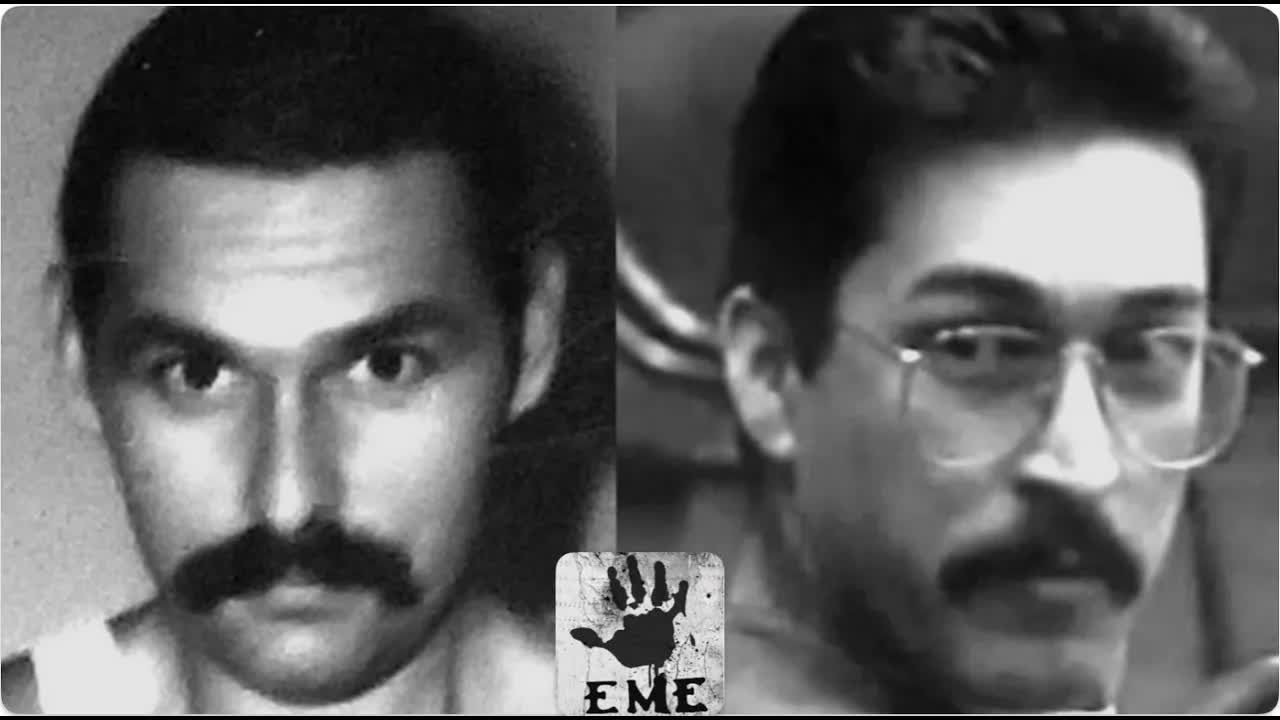
The story of how the Hells Angels established themselves in Canada cannot be told without Michel “Sky” Langlois, a man who rose from a small farming town to lead the country’s most feared outlaw motorcycle organization. His name is permanently linked to one of the darkest chapters in Canadian organized crime history: the Lennoxville Massacre, a crime that exposed the brutal internal logic of a club that presented itself to the world as a brotherhood. Langlois built the organization from almost nothing, and when investigators finally came looking for him, he used everything he had constructed to disappear.

Michel Langlois began his life far from the St. Lawrence River, in Saint-André-Avellin, a small farming community north of Ottawa where the land was worked largely by hand. He spent his teenage years doing what farm families did, but in the early 1960s he left for Montreal, and everything that followed came from what he found there. The city was alive in ways Saint-André-Avellin had never been. Money moved in places where it was not supposed to be, and an underworld was quietly building its infrastructure. Langlois discovered the world of motorcycles and recognized something in it that most men missed. It was not simply freedom; it was hierarchy, a structure in which a man’s willingness to act mattered more than his origins. What set him apart immediately was not desperation but reach. He obtained a pilot’s license and bought his own plane, and the men around him began calling him “Sky.” A man with an aircraft in 1960s Montreal was not a man without options.
Around 1964, Langlois helped found the Popeye motorcycle club alongside Roger Cullinane and a few others. The exact year is disputed in historical records, but the club’s rapid growth is not. It began with six men and had seven chapters across Quebec by 1970. That rate of growth did not happen by accident. Langlois understood what the club needed to survive in Montreal’s criminal economy and built it to those specifications. Among roughly 350 outlaw motorcycle clubs in Quebec, the Popeyes were considered the most violent, not the largest but the most violent. By the early 1970s they were operating as enforcers and drug distributors for the Dubois family, one of Montreal’s most feared crime dynasties, and were receiving direct murder contracts from the Montreal Mafia. In 1974, Langlois went further. The Popeyes moved into the manufacture and trafficking of chemical drugs, igniting the first major outlaw biker war in Canadian history. On one side were the Popeyes. On the other were the Devil’s Disciples, Montreal’s strongest biker club, and the Montreal chapter of the Satan’s Choice, backed by the West End Gang. By January 1976, fifteen Devil’s Disciples had been killed and the club had fallen apart. Sonny Barger, the founder of the Hells Angels, had originally planned to recruit the Devil’s Disciples as the first Canadian chapter. The Popeyes had just eliminated that option, so Barger turned to the club that had carried out the elimination, describing them as the most ferocious bikers in Canada. On December 5, 1977, the Popeyes formally joined the Hells Angels, becoming the first Hells Angels chapter in Canadian history, and Michel Langlois was among the founding members. Canada was now part of a global criminal network, and Langlois had helped put it there.

On September 8, 1983, Yves “Le Boss” Buteau, the first national president of the Canadian Hells Angels, was shot and killed outside a restaurant in Longueuil. The shooter was a twenty-two-year-old drug dealer named Gino Goudreau with ties to the rival Outlaws, who believed that killing the national president would earn him full membership. He was charged with second-degree murder but was later acquitted on grounds of self-defense. The position Buteau left behind passed to Michel “Sky” Langlois. He took on the role and immediately turned toward expansion, extending the Angels’ influence into British Columbia and building a national infrastructure that had not existed before. He was thirty-seven years old. What he did not yet know was that the organization he had inherited was consuming itself from within. He would have to stand above five bodies that his own club had buried.
Five men drove to a party hosted by their brothers. Everything else in this part of the story gains its meaning only after understanding the fate that awaited those five men. When the Montreal chapter split in September 1979 into north and south factions, it created two entirely different organizations under a single emblem. The North, based in Laval under Laurent “L’Ours” Langlais Viau, was made up largely of former Popeyes, men who saw no reason to change. The South, led by Réjean “Zig Zag” Lessard, was made up of members who had joined after 1977 with no Popeyes history and no patience for the North’s methods. Under Viau, the North chapter began to fall apart. Viau himself was consumed by cocaine and alcohol, and his members were using the drugs they were supposed to be selling. The chapter was skimming at least sixty thousand dollars from other chapters’ profits, causing constant arrests that gave police legitimate grounds for search warrants, and debts to the West End Gang and the Rizzuto family piled up until both threatened to cut ties with the Hells Angels entirely. One incident settled the decision. David Wolf Carroll, president of the Halifax chapter, paid ninety-eight thousand dollars to Yves “Apache” Trudeau, a contract killer who later admitted to forty-three murders, to carry out a hit. Carroll discovered that Trudeau had spent the money on cocaine. Lessard needed no convincing. He said the North chapter represented a threat to the existence of the Hells Angels in Quebec.

The plan devised by Lessard, Carroll, and Georges “Bo-Boy” Beaulieu of the Sherbrooke chapter was precise: retirement for some, transfer for others, and death for the rest, all delivered through an invitation to a party at the Sherbrooke clubhouse. When most of the targets failed to appear on the first night, Lessard extended the invitation to a second night and made attendance mandatory. Two men survived through circumstances beyond anyone’s control. Trudeau was in a rehabilitation facility in Oka. Michel “Jinx” Genest was in a hospital recovering from a gunshot wound suffered in a separate incident. But five men showed up on March 24, 1985: Laurent Langlais Viau, Jean-Guy “Brutus” Chafforon, Jean-Pierre “Matt” Lacroix, Michel “Willi” Mayrand, and Guy-Louis “Chop” Adam. “The Owl” had helped build the chapter that became the cornerstone of the Canadian Hells Angels. The others had devoted their adult lives to the same organization, men who had chosen the club’s emblem above everything else. They were no strangers to violence, but what they did not know how to survive was an invitation from their own brothers. They walked into that clubhouse believing they were among friends. Lessard had forty-one men waiting inside. The five were forced to stand in the center of the room and were shot. Guy-Louis “Chop” Adam fought his way toward the exit but was struck by seven bullets from three different weapons before he fell. History calls the event the Lennoxville Massacre. The killings took place in Sherbrooke; the victims had spent the previous night at a motel party in Lennoxville. Even the name of the crime is a form of misdirection. Three surviving members who were present that night were ordered to strip the bodies of their patches, remove them, and clean the room. The five dead were wrapped in sleeping bags, weighted down, and thrown into the St. Lawrence River, the same river from which a fisherman would pull his line three months later.

Langlois did not plan the massacre. It was the work of Lessard, Carroll, and Beaulieu. But his guilty plea establishes that, as national president, he was aware of what had been ordered and that he later helped conceal the evidence. The official position of the Hells Angels was that the five men had left the club voluntarily. For months, no one outside a close circle could prove otherwise. Then, in June 1985, a fisherman on the St. Lawrence River felt something heavy on his line. Police divers went into the water. All five men were there, inside sleeping bags and weighed down with iron weights, decomposing at the bottom. The cover-up story evaporated. Investigations expanded to include twenty-nine defendants. On July 2, 1985, Michel Langlois’s thirty-ninth birthday, he was arrested in Montreal and released pending trial. But he did not stay. The national president of the Canadian Hells Angels, the man who had helped bring the club to Canada and who knew those five men would be thrown into the river, was now a fugitive. He boarded a plane bound for Morocco. When police arrived at a Montreal convention center on February 22, 1986, where Langlois had rented display suites for a club gathering, he was already gone. He had used his experience as a pilot to leave the country. He lived in Morocco for a little more than two years. While he was absent, Yves “Apache” Trudeau, one of the intended targets of the massacre who had survived because he was in rehabilitation in Oka, cooperated with the prosecution and admitted to forty-three murders, putting dozens of Hells Angels members in the path of prosecution. Walter Stadnick ran the organization in Langlois’s absence. The Lennoxville charges were not going to disappear. On April 13, 1988, Langlois walked into the Quebec provincial police headquarters in Sherbrooke, accompanied by René “Caney” Émond, and surrendered.

The legal aftermath unfolded over years, with Langlois ultimately entering a guilty plea that confirmed his role in concealing what had happened to the five men. For the Hells Angels, the case became a defining moment, one that revealed how far the club was prepared to go to protect its structure and its reputation. For the families of the victims, the discovery in the river and the confessions that followed offered a measure of clarity but no restoration. The Lennoxville Massacre remains a reference point in Canadian criminal history, cited whenever the internal discipline of outlaw biker organizations is discussed. Michel “Sky” Langlois, the farm boy from Saint-André-Avellin who became a pilot, a founder, and a national president, remains tied to that chapter. His story is one of ambition, organizational skill, and the moral cost of building an institution that treated its own members as expendable when the structure required it. The river gave up its secret in June 1985, and with it, the official version of events that the club had maintained for months. What followed was not just a prosecution but a public reckoning with the way the Hells Angels operated in Canada, and with the man who had helped bring them there.