Charles F. Kettering, the brilliant General Motors research chief who held more than 180 patents and invented the electric starter, set in motion a chain of events in 1930 that would reshape American industry when he persuaded GM to purchase a small diesel engine manufacturer, largely because he wanted a better powerplant for his personal yacht. That acquisition, completed despite the turmoil of the 1929 stock market crash, created the company that became Detroit Diesel, an enterprise whose engines powered landing craft onto the beaches of Normandy, drove Sherman tanks across France, and dominated the North American diesel market for decades before entering a steep and painful decline. By 1987, the same company that had once commanded the market it helped create held less than 5 percent of it. The story of how that happened, and of the racing driver who nearly rescued the brand, is a case study in how engineering brilliance, wartime necessity, corporate strategy, and market change can collide.

The story begins with a wealthy man and a boat. Kettering, who served as head of research at General Motors and was widely regarded as one of the brightest engineers of the twentieth century, was fascinated by diesel engines. He purchased a diesel unit from the Winton Engine Company of Cleveland, Ohio, and installed it in his yacht. The engine ran, but it suffered from persistent problems, particularly in its fuel injection system. The Winton injectors were heavy, weighing roughly 75 pounds each, and unreliable. Kettering grew so frustrated with the failing fuel system that he directed General Motors engineers to design a replacement. They developed what they called the unit injector, tested it on a single-cylinder experimental engine they nicknamed Big Bertha, and eventually installed it in Kettering’s yacht. He took an 18-hour cruise, and the GM injectors performed flawlessly the entire time. That voyage changed everything. Kettering was so impressed that he went directly to GM president Alfred Sloan and persuaded him to buy Winton outright. Alexander Winton, one of the pioneers of the American automobile industry, was reportedly enthusiastic about the deal. He knew diesel held enormous potential, but development costs exceeded what his company could bear alone. The transaction nearly collapsed because of the 1929 stock market crash, but it closed in 1930. At the same time, General Motors acquired the Electro-Motive Engineering Corporation, which was Winton’s largest customer in the construction of diesel-electric rail cars.
Over the following eight years, the GM research team worked to develop a small, lightweight, high-speed two-stroke diesel engine. To understand why this was difficult, one has to appreciate what diesel engines were like in the early 1930s. The large industrial diesels of that era were massive, slow-turning machines designed for stationary power generation, large ships, and locomotives. They weighed thousands of pounds and operated at speeds that seem extraordinarily slow by modern standards. These were not engines that could be fitted into a truck or a bus. They were built for applications where size and weight did not matter because nothing moved. What Kettering wanted was fundamentally different. He wanted something compact enough to fit under the hood of a commercial vehicle, yet powerful enough to replace gasoline engines in heavy-duty applications. Gasoline engines had the advantage of being lighter and faster, but diesel fuel was cheaper, and diesel engines converted fuel into useful energy more efficiently. If General Motors could build a diesel small enough for road vehicles, the commercial potential would be enormous.
The two-stroke design was the key to making that possible. Because a two-stroke engine fires on every revolution of the crankshaft rather than once every two revolutions like a four-stroke engine, it produces more power per unit of displacement. For a given engine size, you get roughly twice as many ignition pulses, which means smoother, more powerful output relative to engine weight and physical dimensions. That advantage would make Detroit Diesel’s fortune over the next four decades. It would also eventually become the very reason the company nearly collapsed. But in the early 1930s, no one was thinking about that distant future. Kettering sent his son Eugene to work alongside Winton engineer Carl DeWitt Salisbury in Cleveland to master the two-stroke concept. They built experimental engines, experimented with bore and stroke ratios, and redesigned blowers, manifolds, and accessory housings to try to make the weight-to-horsepower ratio practical for road use. All of that research culminated in 1938 when General Motors’ Detroit Diesel division launched the Series 71. The name came from the displacement: 71 cubic inches per cylinder. The initial lineup included the single-cylinder 1-71, the two-cylinder 2-71, the four-cylinder 4-71, and the six-cylinder 6-71. These engines were painted a distinctive Alpine Green, which later became one of the most recognizable sights in American industry. Apart from a handful of GM engineers and a few truck operators, almost no one noticed. That was about to change in a way nobody could have predicted.

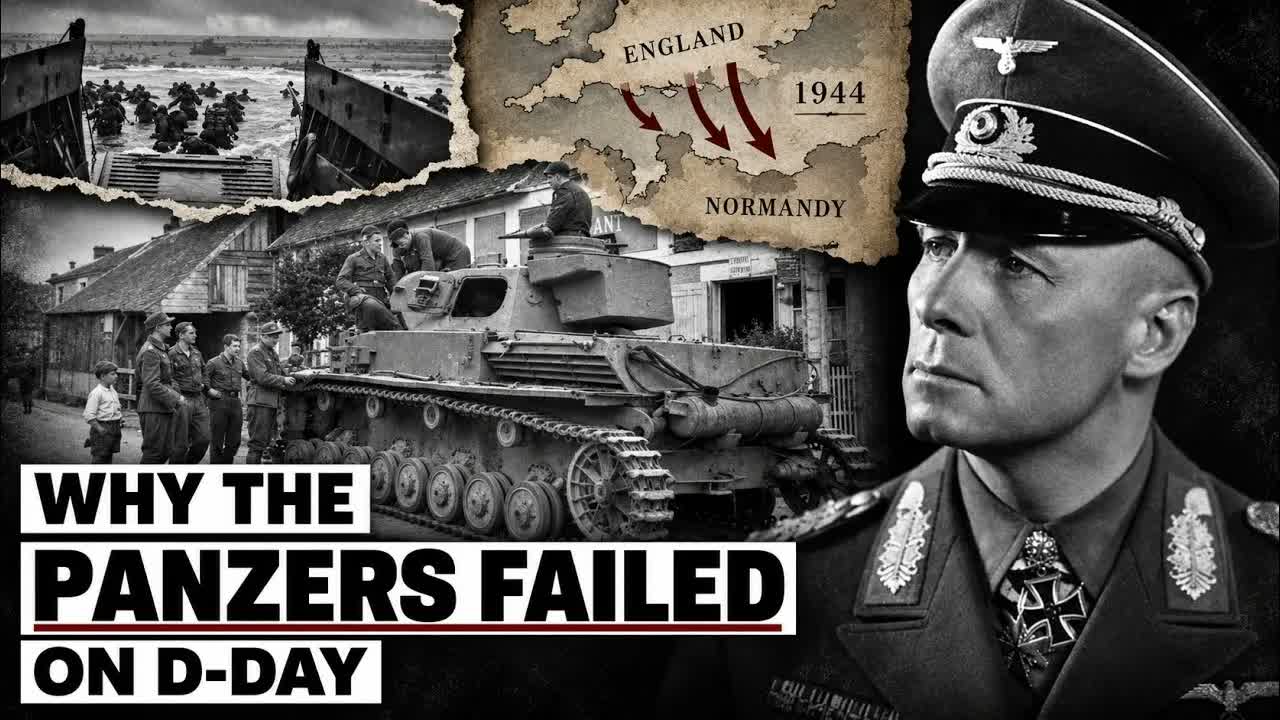
In 1941, the United States entered World War II, and the military urgently needed exactly what Detroit Diesel was building: compact, reliable, powerful diesel engines that could withstand harsh conditions with minimal maintenance. The 6-71 was almost perfectly suited to combat applications. The two-stroke architecture meant fewer moving parts compared with a four-stroke engine, which made field repairs simpler. It was relatively light for the power it delivered, and it was extremely durable. You could run these engines hard in extreme heat, bitter cold, dust, mud, and salt water, and they kept going. Mechanics who worked on them during the war later said they were among the most forgiving engines they had ever seen. Wartime production figures were staggering. In 1941, Detroit Diesel built roughly 9,000 Series 71 engines. By 1944, annual production had jumped to 62,000 units, and those numbers do not include engines assembled by Gray Marine Motor, which produced marine versions under license. In 1943 alone, Detroit Diesel’s workforce of 4,300 employees, including more than 1,400 women, produced 57,892 engines. At peak output, the assembly line in Detroit completed about 6,000 engines per month, and those engines went wherever the war went. Roughly 57,671 engines ended up in American landing craft. About 19,000 of them went into the famous Higgins boats, the Landing Craft Vehicle Personnel that carried troops to the beaches during the D-Day invasion of Normandy. An additional 8,000 engines powered the larger LCM Mark III landing craft. About 9,000 engines were fitted in quadruple arrangements for infantry landing ships. On land, roughly 22,000 engines were paired as the GM 6-71 to generate 410 horsepower for the M4A2 Sherman tank. Another 11,000 engines were installed in M10 tank destroyers, and about 4,000 powered Valentine tanks. If you have ever seen footage of Allied forces storming a beach or rolling across Europe in armored columns, you were watching Detroit Diesel engines at work. You just did not know it.
The war ended and Detroit Diesel gained something no amount of advertising could buy: the confidence of an entire generation of American workers. Tens of thousands of returning soldiers had spent years depending on these engines under the most dangerous conditions imaginable. When those same men came home and went to work in trucking, construction, commercial fishing, or any other industry that ran on diesel power, they bought the engines they already knew and trusted. Beginning in 1945, Detroit Diesel formally took over marketing of the Series 71 for marine applications, replacing Gray Marine Motor, which had been assembling marine versions since the start of the war. The transition from military production to civilian sales was almost seamless because the same engine that powered a landing craft could power a shrimp boat. The same engine that drove a Sherman tank across France could drive a bulldozer across a construction site. Detroit Diesel did not need to redesign anything. They simply had to point the existing product at new customers, and the customers were already convinced. During the 1950s and 1960s, Detroit Diesel grew into the most widely used brand of diesel engine in North America. The Series 71 expanded into V configurations, including the 6V71, 8V71, 12V71, and the massive 16V71, which produced enough power for mining trucks and large oceangoing work boats. They introduced the Series 53 for lighter applications in 1957, and the Series 1 through 10 for heavy-duty industrial use. The introduction of the Series 149 in 1967 provided more displacement and power for the largest mining and industrial applications. Widespread military use during the Korean War reinforced the brand’s reputation, and commercial customers followed wherever the military had proven these engines reliable. In 1965, General Motors reorganized the division and formally named it the Detroit Diesel Engine Division. Two years later, they celebrated production of the one millionth engine. In 1970, GM merged the diesel division with the Allison division, which focused on gas turbines and transmissions, to create the Detroit Diesel Allison Division. Allison had been part of General Motors since 1929 and produced an estimated 70,000 aircraft engines during World War II, so the merger combined two of General Motors’ most storied engineering operations.

For a time, the combined division seemed unstoppable. Detroit Diesel engines were everywhere: in freight trucks, school buses, fire apparatus, generators, pumps, boats, and heavy equipment. The distinctive Alpine Green paint and the unmistakable sound of a two-stroke diesel became part of the American industrial landscape. But beneath the surface, pressures were building that would soon reshape the entire market. The first major challenge came from emissions regulation. The Clean Air Act and subsequent amendments imposed increasingly strict limits on nitrogen oxides, particulate matter, and other pollutants from diesel engines. The two-stroke design that had given Detroit Diesel its power-to-weight advantage also made it inherently harder to clean up. In a two-stroke engine, fresh air enters the cylinder while exhaust gases are still leaving, and some of the fuel-air mixture can escape through the exhaust port before combustion is complete. That scavenging process, essential to the engine’s operation, contributed to higher emissions of unburned hydrocarbons and particulates. Four-stroke competitors, by contrast, had a separate exhaust stroke that made it easier to control what came out of the tailpipe. As regulators tightened standards through the 1970s and 1980s, Detroit Diesel found itself spending heavily to modify a fundamental architecture that was never designed with emissions in mind. Competitors such as Cummins and Caterpillar, which built four-stroke engines, were able to meet the new standards with less difficulty and at lower cost.
The second challenge was a strategic misstep inside General Motors. In the 1970s, GM decided to develop a lightweight diesel engine for passenger cars, hoping to capitalize on the fuel economy advantages of diesel during the oil crises. The result was the Oldsmobile diesel V8, introduced in 1978. It was a converted gasoline engine rather than a purpose-built diesel, and it suffered from widespread reliability problems, including head gasket failures and fuel injection issues. The damage to the reputation of diesel passenger cars in the United States was severe and long-lasting, and it cast a shadow over the entire diesel industry, including Detroit Diesel. Although Detroit Diesel’s heavy-duty engines were a separate product line with a strong record, the broader association with problematic passenger-car diesels did not help the brand’s image among consumers. Meanwhile, the company’s core customers, the heavy truck fleets, were becoming more sophisticated and more demanding. They wanted better fuel economy, longer service intervals, lower noise, and cleaner exhaust. The two-stroke engine, for all its virtues, was loud, and it emitted a characteristic blue-gray smoke that became increasingly unacceptable in urban areas. Cities and states began restricting diesel emissions, and fleet operators faced pressure from regulators and the public to clean up their equipment.
The third challenge was competition. Cummins Engine Company, based in Columbus, Indiana, had been building four-stroke diesels since 1919 and had developed a strong reputation for reliability and fuel efficiency in heavy trucks. Caterpillar, based in Peoria, Illinois, dominated the construction and mining equipment market and built rugged four-stroke engines that were well suited to those applications. Both competitors invested heavily in research and development and benefited from the inherent emissions advantages of the four-stroke design. As the 1980s progressed, Cummins and Caterpillar gained market share at Detroit Diesel’s expense. By 1987, Detroit Diesel’s share of the North American heavy-duty diesel market had fallen below 5 percent, a stunning reversal for a company that had once been the dominant player. The decline was not the result of a single catastrophic failure but rather a gradual erosion driven by regulatory pressure, architectural limitations, competitive dynamics, and shifting corporate priorities within General Motors. The company that had been built on a wartime reputation for toughness found that reputation alone could not sustain it in a market that increasingly rewarded emissions compliance and fuel efficiency.

Then came an unexpected twist. In 1988, General Motors sold Detroit Diesel to Penske Corporation, the transportation conglomerate founded by racing legend Roger Penske. Penske, a former race car driver who had built a business empire spanning truck leasing, automotive retail, and motorsports, saw potential in the brand. The deal gave Detroit Diesel a measure of independence from GM’s corporate bureaucracy and brought in leadership with a deep understanding of the trucking industry. Penske’s team moved quickly to modernize the product line and address the emissions problem. The centerpiece of the turnaround effort was the Series 60, a four-stroke, electronically controlled heavy-duty diesel engine introduced in 1987 and refined through the early 1990s. The Series 60 abandoned the two-stroke architecture that had defined Detroit Diesel for half a century and adopted the four-stroke design that competitors had been using all along. It was a difficult decision for a company whose identity was tied to the two-stroke engine, but it was a necessary one. The Series 60 proved to be a strong performer, with good fuel economy, low emissions, and excellent durability. It became popular with truck fleets and helped stabilize the company’s fortunes. In 1993, Penske took Detroit Diesel public, and the company’s stock began trading on the New York Stock Exchange. The turnaround was real, but it was not enough to restore the company to its former dominance.
The market had changed too much. Cummins and Caterpillar had entrenched themselves with large fleets and had built extensive service networks. The heavy-duty truck market had consolidated around a few major engine suppliers, and Detroit Diesel was no longer the default choice. The company continued to invest in new engine platforms, including the Series 50 and the Series 55, and it formed a joint venture with MTU Friedrichshafen, a German engine manufacturer, to develop a new generation of heavy-duty diesels. But the competitive pressure remained intense. In 2000, DaimlerChrysler acquired Detroit Diesel, folding it into the Daimler Trucks North America organization. The brand continued to exist as a engine marque for Freightliner and Western Star trucks, but it was no longer an independent company. The Detroit Diesel name still appears on engines built for Daimler’s North American truck brands, and the company’s legacy lives on in the thousands of engines still in service around the world. But the era when Detroit Diesel was the most widely used diesel brand in North America, when its engines powered the landing craft at Normandy and the tanks that rolled across Europe, is long gone.
The story of Detroit Diesel is a reminder that engineering excellence and a strong reputation are not permanent assets. Markets change, regulations evolve, and competitors adapt. The two-stroke engine that gave Detroit Diesel its edge in the 1930s and 1940s became a liability in the 1970s and 1980s as emissions standards tightened and four-stroke competitors gained ground. The company’s decline was not caused by a single mistake or a single bad decision. It was the result of a slow accumulation of pressures that the company struggled to address in time. Roger Penske’s intervention in 1988 gave the brand a new lease on life, and the Series 60 engine demonstrated that Detroit Diesel could still build competitive products. But the market had moved on, and the company’s position as the dominant player in the North American diesel market could not be recovered. The Alpine Green engines that once powered the Allied war effort and drove the postwar economic expansion are now part of industrial history, a testament to what American engineering could achieve and a cautionary tale about what happens when the world changes faster than a company can adapt.

Today, the Detroit Diesel name survives as a brand within Daimler Truck North America, applied to heavy-duty engines built for Freightliner and Western Star trucks. The company’s legacy is visible in the thousands of vintage Series 71 and Series 53 engines still running in boats, generators, and construction equipment, and in the affection that many mechanics and truck drivers still hold for the distinctive sound and rugged simplicity of those old two-stroke diesels. The story of Detroit Diesel, from Kettering’s yacht to the beaches of Normandy to the competitive struggles of the 1980s and the Penske-era revival, is a story about the rise and fall of an American industrial icon. It is a story about how a single engineering insight, the two-stroke diesel, can create decades of success and then become a barrier to adaptation. And it is a story about how even the most dominant companies can find themselves on the outside looking in when the market shifts beneath their feet. The racing driver who nearly saved Detroit Diesel was Roger Penske, and his intervention gave the company a second act. But the forces that had eroded its market position were too powerful to reverse entirely, and the company that had once defined the American diesel market became a brand within a larger corporate structure, its glory days preserved in memory and in the enduring reliability of the engines that still bear its name.