Archduchess Maria Christina of Austria arrived in Spain as a foreign bride chosen for dynastic convenience, yet she would become the one figure holding a fractured nation together while enduring relentless public disapproval. Branded an outsider by angry crowds, mocked as “Maria the Dry,” and blamed by many for the greatest humiliation to befall Spain in the modern era, she nonetheless stood as the sole barrier between her adopted country and widespread disorder. She wielded near-absolute authority while living a life of profound isolation. Her name was Maria Christina of Austria, and her story is one of iron will, personal sacrifice, and the cruel irony of a people turning against the woman who saved them.

The stage on which this drama unfolded was a Spain torn between two irreconcilable worlds: the romantic legend of its imperial past and the chaotic reality of its faltering present. In the 1870s, Spain was a country bleeding from a thousand wounds, a nation haunted by its own history, a fallen giant stumbling through the twilight of its power. For decades the country had been a revolving door of disorder. Generals stormed parliament buildings. Constitutions were written and then discarded like scraps of paper. Kings and queens were exiled and restored to the throne in rapid succession. The specter of the ultra-conservative Carlists, who rejected the liberal direction of the monarchy, loomed over the northern mountains, igniting civil wars that pitted brother against brother in a brutal struggle over the nation’s identity. The soil of Spain was soaked in blood, and the people were exhausted. They yearned for stability, yet they remained deeply suspicious of authority.

It was into this vacuum of authority that the Bourbons returned. In 1874 the monarchy was restored with the accession of King Alfonso XII, a young man who carried the weight of a dynasty on his shoulders. Alfonso was the nation’s hope. He was handsome, charming, and possessed a natural charisma capable of disarming even his harshest critics. He was known as “El Pacificador,” the peacemaker, because during his reign the deadly Carlist Wars came to an end and the ten-year rebellion in Cuba was temporarily suppressed. For a brief, shining moment, it seemed Spain might find its way into the modern world. The cafes of Madrid buzzed with optimism, theaters filled to capacity, and politicians, for the first time, appeared to be working toward a shared future. But the foundation of this new peace was frighteningly fragile, resting entirely on the life of one man. And that man, the beloved King Alfonso, was himself a tragic figure, a man with a broken heart whose body was slowly failing.
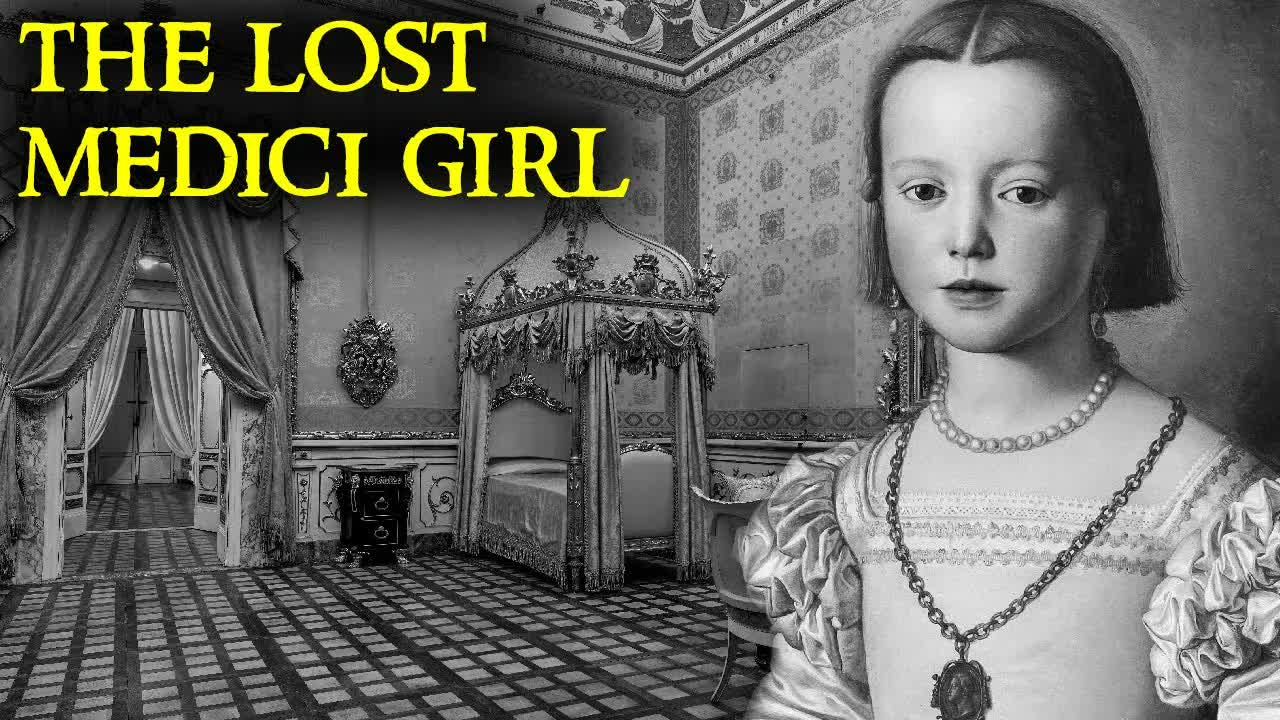
The true prelude to Maria Christina’s sorrow begins not with her arrival but with the ghost of the woman who came before her. To understand why Maria Christina was treated so harshly, one must know the story of Mercedes of Orleans. Mercedes was the first wife of Alfonso XII, his cousin, and the eternal love of his life. Their story resembled fiction, a genuine romance in an age defined by opportunistic political alliances. The Spanish people adored Mercedes. She had dark eyes, was beautiful, and was authentically Spanish. When they married in 1878, the entire nation celebrated. It seemed like the dawn of a golden age, but the fairy tale soon turned into a horrifying nightmare. Only six months after the wedding, Queen Mercedes fell ill. Typhoid fever, or perhaps a miscarriage complicated by infection, ravaged her body. The King sat beside her day and night, holding her hand as life slipped away. She died two days after turning eighteen.
Mercedes’s death plunged Alfonso XII into a darkness from which he never emerged. The King who came out of the crypt of the Escorial was not the same man who had entered it. He was shattered. He became reckless, throwing himself into his work and into meaningless passing affairs, trying to drown his grief in diversion. But beyond the personal tragedy, the Queen’s death ignited a feverish political crisis. There was no heir. The King had no son. If Alfonso, whose health was already suspect amid rumors of tuberculosis circulating at court, were to die, the throne would pass to his sisters or, worse, ignite another civil war with the Carlist claimants. The stability of the entire nation was at stake. Politicians, generals, and clergymen all came to the grieving King with the same harsh demand: you must marry again. You must produce an heir. The loss of a spouse was a luxury a King of Spain could not afford.
And so the search began. It was a search for a man seeking a womb, a diplomatic survey of European courts to find a suitable candidate who could secure the Spanish crown and bring strong allies to Madrid. The criteria were strict. She had to be Catholic, of royal lineage, and prepared to enter a court still shrouded in mourning for a beloved queen. Spanish ministers looked north toward the rigid, disciplined Habsburg court in Vienna. The Austrian Empire may have been fading, but the Habsburg name still carried the weight of centuries of divine right. It was a name that commanded respect. And there, under the aging Emperor Franz Joseph, they found her.
Maria Christina Desideria Henrietta Felicitas Raineria of Habsburg-Lorraine was twenty-one years old. She was not beautiful by the classical standards of the era. She was tall, with the sharp, distinctive features of the Habsburgs, and possessed a dignity that bordered on severity. She did not have the captivating charm of a Spanish lady or the delicacy of a French princess. She was intelligent, well-read, and possessed a sharp, dry wit that few were permitted to see. But what most distinguished her was her piety. Maria Christina was a woman of deep faith. In fact, before the Spanish diplomats knocked on her door, she had no intention of marrying at all. She longed to become the head of a convent, imagining a quiet life of contemplation, prayer, and service within its walls. The glittering, noisy, and dangerous world of politics held no appeal for her.
When the offer came from Spain, Maria Christina was horrified. She knew the reputation of the Spanish court as a place of intrigue, passion, and instability. She knew the King was still suffering from the loss of his wife. She knew she would be walking in the footsteps of a ghost. But she was a Habsburg, and in the world of the Habsburgs, personal desire counted for little against duty. Emperor Franz Joseph, the head of the family, made clear that this marriage was necessary. It would bind the Austrian and Spanish crowns. It would serve the interests of the Catholic Church. It would be a service to God. Maria Christina submitted. She folded away her dreams of the convent and prepared to travel to an unknown land to marry a man she had never met, a man who, she sensed with feminine intuition, was still in love with the dead.
The meeting of Maria Christina and Alfonso XII took place in Arcachon, France, in the summer of 1879. It was a scene the historians painted in shades of gray. Picture the villa overlooking the sea, the stiff formality of the retinue, the tense rustle of silk. Alfonso, handsome but haggard, his eyes drowned in sorrow, bowed before the tall, reserved Austrian Archduchess. He found her pleasant. She was polite. She spoke fluent French. She was clearly intelligent. But there was no spark. There was none of the overwhelming passion he had felt with Mercedes. In a letter to his sister, Princess Paz, Alfonso wrote with painful frankness: she is not ugly at all. She is very pleasant, very learned, and plays the piano exceedingly well. But I am not in love with her and never will be. I married her because she was the best option, because she was a jewel among straw.
As for Maria Christina, she looked at the King and saw a man of captivating charm but suffering from deep sorrow. She fell in love with him almost immediately, not with the passion of romance novels but with deep devotion and protectiveness. She saw his fragility. She wanted to be the one to heal him. But she also felt the wall he had built around his heart. She knew, even then, as they walked along the shore in polite conversation, that she would always be the second wife, the replacement. When she agreed to the marriage, she whispered to her priest that she felt she was being led to a sacrifice. She was right. She sacrificed her right to be loved for her right to be queen.
The wedding took place on November 29, 1879, in the Basilica of Atocha in Madrid. The city was decorated with banners and flowers, but the atmosphere was strange. The crowds cheered, but there was a reserve in their voices. They looked at Maria Christina’s pale face, her stiff posture, her blonde hair, and saw a foreigner. They compared her immediately to the memory of Mercedes. Mercedes was laughter and radiance. Maria Christina was silence and stone. And as the carriage wound through the streets of Madrid, a fanatic attempted to assassinate the King and his new bride. Two shots rang out from a pistol. They missed their target, but the terror of that moment was seared into Maria Christina’s soul. This was her welcome to Spain: a loveless marriage and an encounter with death. She sat in the carriage, her face frozen, refusing to show fear, holding the King’s hand not out of panic but out of fierce determination to stand beside him. In that moment, the dry queen showed the first glimpse of the steel beneath the silk.

Life in the royal palace was a study in isolation. The Spanish court was a complex web of protocol, gossip, and old feuds. The aristocracy looked down on her Austrian habits, mocked her accent, and found her insistence on punctuality and strict protocol suffocating. Spanish nobles were accustomed to a degree of laxity and a Mediterranean rhythm of life, and Maria Christina’s Viennese discipline seemed to them arrogant. She was lonely, desperately lonely. The King treated her with great generosity, but he was often absent. The rumors of his affairs were not mere whispers; they were open secrets. He sought consolation in the arms of opera singers and noblewomen, searching for the ghost of his lost love in the faces of others, leaving Maria Christina to dine alone in the vast halls of the palace.
Yet she did not retreat into self-pity. Instead, she poured herself into the duties of her position. She learned Spanish with rigorous determination. She studied the country’s laws, its history, and its complex political landscape. She became, in private, one of the most informed people in the royal circle. Observers who expected a passive foreign consort were surprised to discover a woman of formidable intelligence and unbending principle. She was not warm, but she was reliable. She was not beloved, but she was respected by those who worked closely with her. The court might whisper about “Maria the Dry,” but the ministers who dealt with her came to understand that behind the reserve lay a mind of remarkable clarity.

Then came the blows that would define her life. In November 1885, King Alfonso XII died of tuberculosis at the age of twenty-seven, just months before the birth of his son. Maria Christina, pregnant and grief-stricken, found herself thrust into an impossible position. She was to serve as regent for her unborn child, and if the child were a girl, the throne would pass to Alfonso’s eldest sister. The nation held its breath. The Carlists, sensing weakness, prepared to strike. The political parties schemed. And in the midst of this, a young widow, a foreigner whom the people had never truly accepted, was expected to hold the entire edifice together.
When her son was born, he was proclaimed King Alfonso XIII, and Maria Christina became regent. For sixteen years she governed Spain with a firm hand and a meticulous sense of duty. She faced assassination attempts, uprisings, colonial disasters, and constant political intrigue. She navigated the treacherous waters of a nation that had never learned to love her, and she did so with a stoic resolve that earned her, if not affection, at least a grudging admiration. She was accused of being cold, of being too Austrian, of being too pious, of interfering too much or too little. Yet through it all, she never wavered in her conviction that her duty was to preserve the crown for her son and to keep Spain from descending into chaos.
The tragedy of Maria Christina lies in the bitter irony of her position. She gave her life to a country that never fully embraced her. She defended a throne that was, in the end, abolished. She raised a king who would one day be forced into exile. And she did it all while carrying the private grief of a woman who had been, from the very beginning, a substitute for a ghost. History remembers her as a stern figure, a woman of duty rather than warmth, but it often forgets the price she paid. She was a widow who defended Spain while facing public disapproval, a woman who sacrificed her dreams of a quiet life for the burdens of power, and who bore the weight of an empire’s collapse with a dignity that few of her critics could have matched.

Her story is a reminder that history is rarely kind to those who serve it. Maria Christina of Austria was not the heroine the Spanish people wanted. She was not the radiant Mercedes, the beloved queen of a golden moment. She was the one who remained when the golden moment passed, the one who stood in the cold light of reality and held the line. Whether she is remembered as a villain or a savior, the record of her regency stands as a testament to a remarkable, if unappreciated, woman who gave everything to a nation that gave her so little in return.