When Princess Elizabeth prepared to marry Prince Philip in November 1947, Britain was still emerging from the shadow of the Second World War, with food rationing and austerity shaping daily life. The nation craved a celebration, and the young princess’s wedding became exactly that. Yet behind the polished ceremony and the carefully staged photographs lay a series of quiet dramas involving some of the most precious jewels in the royal collection. The most famous of these unfolded just hours before the wedding, when the diamond fringe tiara that Elizabeth was to wear suddenly snapped in two. The story of that morning, and of the other jewelry emergencies that have punctuated royal weddings across Europe, offers a rare glimpse into the gap between the fairy-tale image and the practical reality of marrying into a monarchy.

The diamond fringe tiara, made by the jeweler Garrard in 1919, had originally belonged to Queen Mary before passing to Elizabeth’s mother. On the morning of the wedding, as the bride was being dressed at Buckingham Palace, the delicate diamond setting gave way. With the ceremony only hours away and the whole country waiting, a jeweler was summoned and the tiara was taken away under police escort to be repaired. The piece was welded back together at the workshop and rushed back to the palace in time for Elizabeth to walk down the aisle with it perfectly in place. The incident has since become one of the most retold stories of the 1947 wedding, a reminder that even a future queen is not immune to the small catastrophes that can strike on the biggest day of her life.
The tiara was not the only item causing anxiety that morning. Elizabeth’s parents had given her two historic pearl necklaces, the Queen Anne and the Queen Caroline, which were intended to be worn together. The pearls were still at St James’s Palace, on display with the wedding gifts, in a different building from where the bride was preparing. Her private secretary, Jock Colville, set off to collect them and found himself trapped in London traffic. In an unexpected rescue, King Haakon VII of Norway, the bride’s great-uncle, lent Colville his limousine, and the pearls were delivered to the palace in time. The image of a future queen’s wedding jewelry being ferried across London in a Norwegian king’s car has become a favorite anecdote among royal historians, a small comic counterpoint to the solemnity of the occasion.

More than six decades later, another royal wedding produced its own jewelry drama, this time involving a wedding ring that proved unexpectedly stubborn. On 29 April 2011, at Westminster Abbey, Catherine Middleton stood before Prince William in front of a global television audience. When the moment came to place the ring on her finger, the band stopped at her knuckle. William eased it over gently, and the world watched as a prince negotiated with gold in real time. The backstory was a small comedy of worry. Long before the wedding, her engagement ring, the sapphire that had belonged to William’s late mother, Diana, had been slightly too large and kept turning on her finger. The crown jewelers, G. Collins and Sons, reportedly added tiny platinum beads inside the band to tighten it without cutting or damaging the metal.
Then came the wedding band itself, made of Welsh gold from the Clogau St David’s mine, following a royal tradition that stretches back nearly a century, and crafted by the jeweler Wartski. According to royal reporters, Catherine had lost weight in the run-up to the wedding and was afraid the band might slip off in front of the world. She therefore asked for it to be made a size smaller. The craftsmen did their job almost too well, and her greatest fear, a ring slipping off, was replaced by a ring that would not go on. One worry was traded for another at the altar in front of the largest crowd she would ever face. It is also worth noting that William did not wear a wedding ring then and does not now, a family habit shared with his grandfather, Prince Philip, who never wore one during 73 years of marriage. The only jewel to cause trouble at the altar belonged to the bride.

In the Netherlands, a different kind of gamble was taken with a royal heirloom. On 2 February 2002, in Amsterdam, Máxima Zorreguieta, an Argentine banker, was about to marry the future king of the Netherlands. Rather than simply borrowing a tiara, she altered one. She took the diamond base of the Dutch royal family’s pearl button tiara and, in place of the pearls, set five diamond stars that had once belonged to Queen Emma. Jewelry enthusiasts have a name for a piece assembled this way, a Franken tiara, a crown stitched together from two treasures. In Dutch royal tradition, stars stand for luck and light, and Máxima wanted both. It was a risk to rewrite a royal heirloom in front of the cameras on the most photographed day of her life.
As the story goes, the tiara nearly gave everyone a reason to panic. The screw securing one of the diamond stars reportedly came loose, allowing the star to fall off during the preparations. A newly reconfigured royal tiara, minutes away from its international debut, was suddenly missing one of its most distinctive features. Fortunately, the problem was reportedly spotted and fixed before Máxima walked down the aisle, and by the time she appeared in her wedding gown the stars were back in place. She needed every drop of composure that day. Her father, a former minister under Argentina’s military regime, was not invited, and she walked into that cathedral without him. Next to that, the tiara was the lightest thing she carried. The Dutch took her to their hearts that day, and sometimes the star that matters is not the one on your head.

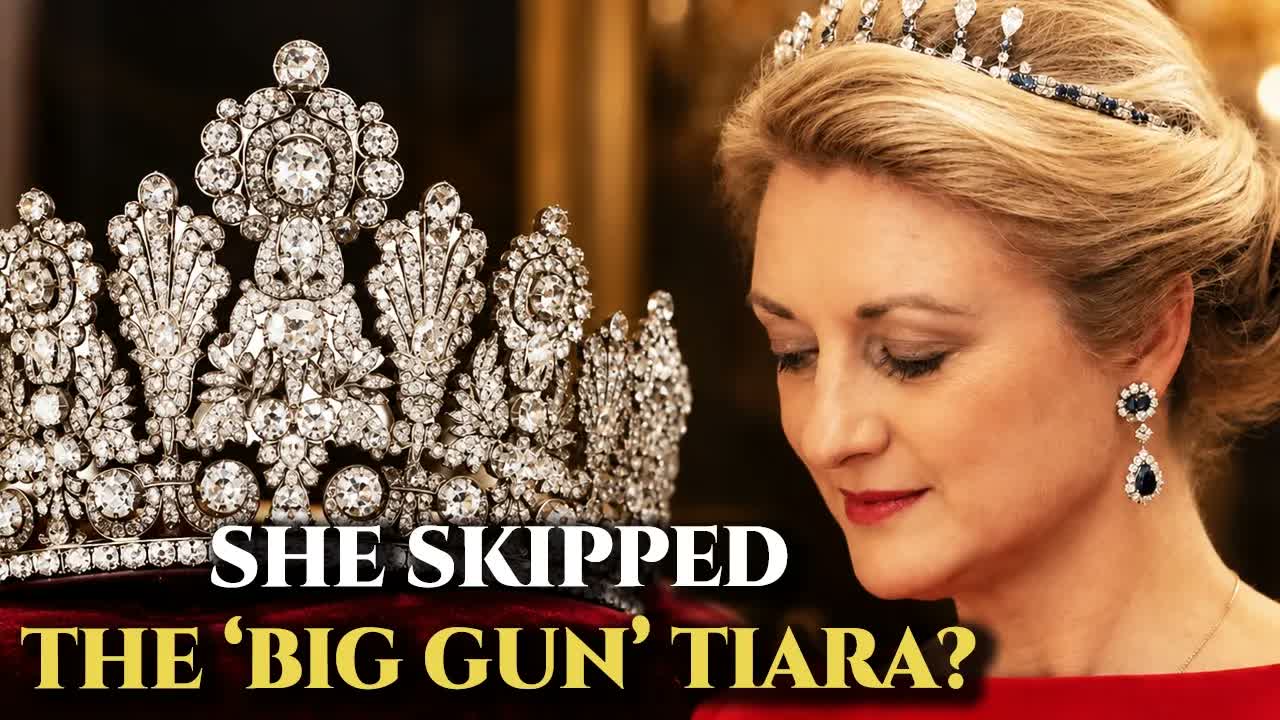
In Spain, a bride wore a tiara because tradition said so, even though it was reportedly not the one she had originally wanted. On 22 May 2004, in Madrid, Letizia Ortiz was about to become Spain’s future queen, and the tiara she wore down the aisle would become part of royal wedding history. According to royal watchers, the Prussian tiara was not the piece Letizia originally preferred. The one she reportedly favored was the Spanish floral tiara, a delicate diamond creation with a romantic design that would later become one of her most recognizable royal jewels. The Prussian tiara, designed by the Berlin jeweler Koch, had been passed through generations of royal women before Queen Sofía lent it to Letizia. Sofía herself had worn it when she married the future King Juan Carlos in 1962, and for the Spanish royal family the symbolism was unmistakable: Letizia would enter the monarchy wearing the same tiara as her mother-in-law, continuing a tradition that connected royal brides across generations.
The floral tiara offered something different. Created by Mellerio in 1867 and presented to Queen Sofía as a wedding gift in 1962, its delicate floral motifs gave it a softer, more feminine appearance, and its lighter silhouette complemented Letizia’s petite frame and understated style. The story takes an intriguing turn here. The tiara associated with Letizia’s wedding was the one that honored royal tradition, but the tiara she would repeatedly choose in the years afterwards was the floral one. It gradually became one of her signature pieces, establishing an identity of its own within her wardrobe. The episode illustrates how royal jewelry is never merely decorative. Each choice carries the weight of protocol, family history and personal preference, and brides must balance all three under the gaze of millions.

Perhaps the most poignant example of wedding jewelry causing physical discomfort comes from 29 July 1981, when Lady Diana Spencer stepped into the glass coach in a dress that had already been crushed on the way to St Paul’s Cathedral. Her veil measured 153 yards of tulle, her train stretched 25 feet, the longest in royal wedding history, and on her head sat the Spencer tiara, which reportedly gave her a severe headache throughout the event. Diana had been offered tiaras from the royal collection, but she chose her family’s own piece, a decision that carried its own significance. The Spencer tiara, with its intricate floral and scroll design, became one of the most recognizable jewels of the twentieth century, forever linked to the image of the young bride who seemed to embody a fairy tale even as the day itself proved physically taxing.
Taken together, these stories reveal a consistent pattern beneath the glitter. Royal weddings are staged as seamless spectacles, yet the jewels at their center are fragile, heavy and prone to failure at the worst possible moment. Tiaras snap, screws loosen, rings refuse to slide, and pearls get stuck in traffic. What distinguishes these accounts is not the mishaps themselves but the calm with which the brides and their teams responded, often within minutes and far from public view. The souvenir programs and official photographs record the finished picture, the composed bride and the perfect sparkle. The anecdotes that circulate afterwards record something more human: the snapped frame, the borrowed limousine, the ring that fought back. For anyone who has ever prepared for a momentous occasion and watched a small detail go wrong, these royal stories offer an oddly comforting lesson. Even a future queen can hear a snap two hours before the ceremony, and still walk down the aisle completely calm.