The royal vaults of history were built to protect the most precious treasures of civilization, yet some jewels vanished anyway — through theft, revolution, betrayal, and simple catastrophe. Today we examine the crowns, necklaces, and diamonds that were lost, and the mysteries surrounding their last known whereabouts. From the mud of an English estuary to the strongrooms of Dublin Castle, these are the royal jewels that disappeared.

Number 12: King John’s Lost Royal Treasure. In October 1216, King John of England was a monarch under siege. Facing rebellion and invading forces, he moved through eastern England with a baggage train loaded with supplies and valuables. For a medieval king, that train was enormous. It stretched for miles and carried everything the royal household required, including precious objects, gold, silver, plate, and royal treasure. Then came The Wash. The Wash is a vast tidal estuary on England’s east coast, and in the thirteenth century it was more dangerous than it is today. Its sands shifted under horses’ hooves, and the tide returned with frightening speed. On October 12, the king’s baggage convoy attempted the crossing. The king himself took another route. His treasure did not. Carts and packhorses became stuck in the soft ground as the tide rose. Lives were lost, vehicles vanished, and the water and mud swallowed a substantial quantity of royal treasure. King John survived the disaster but died just one week later. The story of the loss of the English crown jewels in The Wash became famous, although historians question precisely what royal items were in the convoy. A detailed scholarly study published by the archaeological society also cautioned against simply assuming that the entire royal crown was among the lost property. That uncertainty actually makes the story more compelling. Somewhere beneath the shifting mud and sands of The Wash may lie the remains of one of England’s most famous royal disasters. Hundreds of years of searching have produced no spectacular recovery. If the royal treasure is still there, it has been hidden for more than 800 years, and no one knows exactly where to look.

Number 11: The Great Mogul Diamond. Few lost jewels can match the sheer size of the Great Mogul diamond. When the French traveler Jean-Baptiste Tavernier saw it in India in the seventeenth century, he described a massive diamond weighing approximately 280 carats after cutting. The stone was associated with the Mughal court, and its cutting was said to have been carried out by a Venetian lapidary named Hortensio Borgio. Apparently, the result was not what the Mughal ruler had wanted. Tavernier described its unusual shape and criticized the cutting. Yet regardless of its flaws, it remained an exceptional diamond. Then the history becomes far less clear. In 1739, the Persian ruler Nader Shah invaded Delhi and seized enormous quantities of treasure. The Great Mogul diamond was traditionally associated with that era. After Nader Shah’s assassination in 1747, the diamond disappeared from reliable historical records, and that is where the mystery begins. There is no display in a modern museum, no royal inventory telling us its fate, no confirmed image of it, and no surviving stone that can be identified with certainty as the Great Mogul. One theory suggests the diamond may have been recut into the famous Orlov diamond, now part of the historic Russian crown collection. Similarities in shape and timing have reinforced this theory, but it has never been conclusively proven. A gemological study also found that the Great Mogul was too small to have been made into the Koh-i-Noor diamond, which overturned another popular theory. So there are two possibilities. Either the Great Mogul diamond vanished forever, or it sits somewhere within a royal collection under another name, its original identity erased when someone decided the famous stone would be safer if no one knew its origin. That is what makes the Great Mogul so hard to forget. We know what it looked like. We know its approximate size, and we know who saw it. Then the trail simply breaks off.

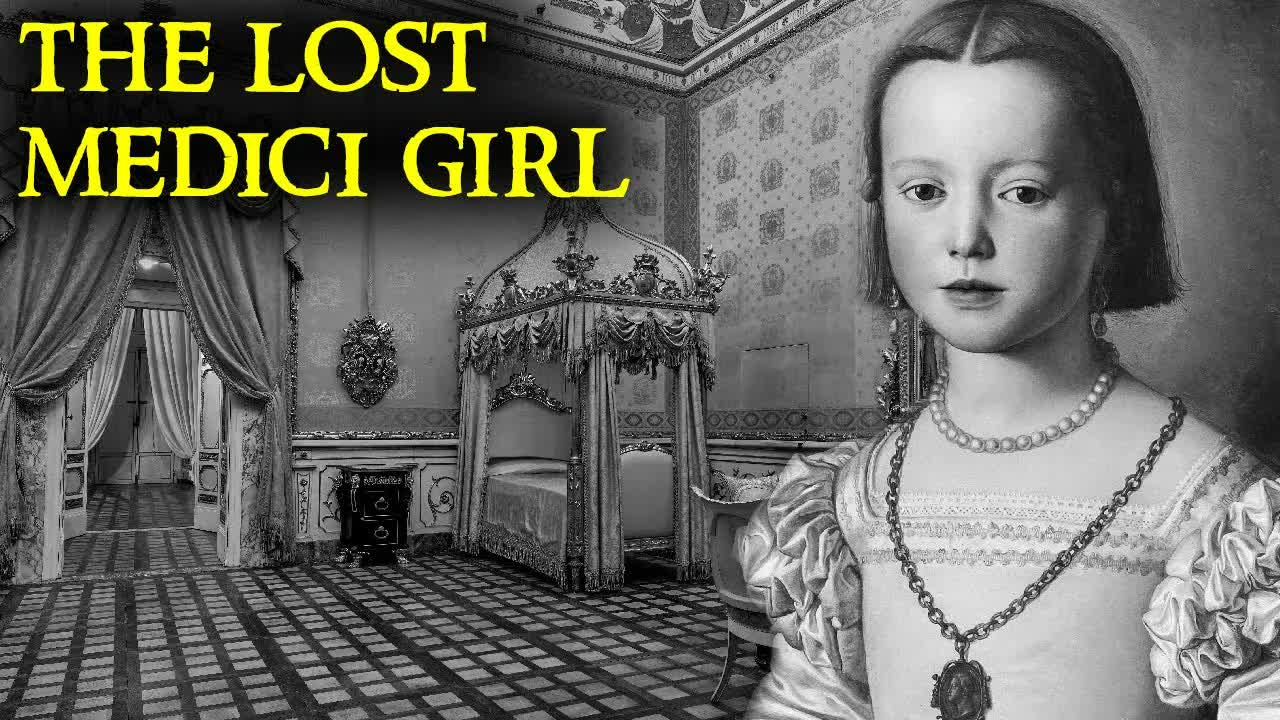
Number 10: The Florentine Diamond. The Florentine Diamond was different. It was not a rough stone waiting to be discovered. It was a finished royal jewel with a history stretching back centuries. This yellow diamond weighed approximately 137 carats and had an unusual double-sided triangular shape. Its history passed through the Medici family and eventually into the imperial collection of the Habsburgs. For generations, it was one of the most famous royal diamonds in Europe. Then the Austro-Hungarian Empire collapsed after the First World War. Emperor Karl I went into exile, and the diamond disappeared. Accounts of what happened to it multiplied and conflicted. The Habsburg family removed some private jewels from Austria during the exile period, but the precise fate of the Florentine Diamond became one of the greatest unresolved questions surrounding the former imperial collection. For decades, people assumed the stone had simply faded away. There was even an old theory that the diamond had been lost centuries earlier at the Battle of Murat, although later accounts of its history placed it in the Habsburg collection long after that. What makes the story particularly strange is that the diamond was important enough to be documented, described, and replicated in models. Yet the original vanished from public view. Today, no confirmed original Florentine Diamond is on public display. Only the history remains. A yellow stone weighing about 137 carats, once held by one of Europe’s most powerful ruling dynasties, its final location still unknown. It is the kind of jewel that does not need a curse. Its disappearance alone is a perplexing mystery.

Number 9: The 138.5-carat Portugal Diamond. This may be one of the most painful losses in the entire story, because this diamond survived almost everything. It survived political turmoil. It survived earthquakes. It survived the collapse and rebuilding of the monarchy. It survived for decades inside a royal treasury. Then, in 2002, it was loaned to a museum and someone stole it. The stone was a rough Brazilian diamond weighing 138.5 carats, the second-largest rough diamond in the Portuguese royal collection. It was among 15 Portuguese royal pieces sent to The Hague for an exhibition titled “Diamonds: From Rough Stone to Jewel.” On December 3, 2002, professional thieves broke into the museum and took six pieces. The largest rough diamond was among them. The stolen items also included a major diamond necklace, an eighteenth-century diamond necklace, a ring dating from the reign of João VI, diamond brooches, and a jewel-encrusted walking stick handle. After that, the trail went cold. The Dutch government later paid 6 million euros in compensation, but compensation could not bring the stones back. A royal diamond can be compensated financially. Its history cannot. The 138.5-carat rough stone spent centuries as part of a collection that repeatedly survived disaster. Then, after surviving all of that, it disappeared from a museum. The most likely fate of a stolen precious diamond is a grim one. It can be cut into smaller stones, recut, and sold separately. Once that happens, its original identity is completely erased. The diamond may still exist somewhere, but the 138.5-carat royal Portugal diamond most likely no longer does.

Number 8: The Irish Crown Jewels. The Irish Crown Jewels were not actually a royal crown. They were the insignia of the Order of St Patrick, an elite order founded in 1783. The collection included a star, a diamond badge, and five gold collars set with hundreds of jewels, many of them Brazilian diamonds. Their disappearance in 1907 remains one of the most mysterious jewelry thefts in British and Irish history. The jewels were kept in a strongroom at Dublin Castle. There were keys, locks, and guards, and yet someone managed to get in. The loss was discovered on July 6, 1907, just days before King Edward VII was due to arrive in Dublin. The timing was disastrous, as the jewels were meant to be used in important ceremonies connected with the Order of St Patrick. When the safe was opened, the reaction was simple. They were gone. There was no dramatic explosion, no smashed safe, no obvious signs of forced entry. The investigation became a maze of suspects and theories. One suspicious detail was that the building and the strongroom had suffered security breaches before the theft, and a cleaner had even discovered an intruder inside the strongroom. Then there was the matter of the keys. The two safe keys were held by Sir Arthur Vicars, the official responsible for the jewels. Investigators explored many possibilities, including Francis Shackleton and Captain Richard Gorges. Clairvoyants were consulted. Searches were conducted in graveyards. Rewards were offered. Nothing worked. No one was successfully prosecuted for the theft, and the jewels never returned. Dublin Castle still describes the case as an unsolved mystery. More than a century later, the Irish Crown Jewels remain missing. The most troubling detail may be the simplest. They disappeared from one of the most heavily guarded buildings in Ireland, and no one can say exactly how.
Number 7: The Lost Romanov Jewels. When the Russian monarchy collapsed in 1917, it lost more than a throne. It lost a treasury of treasures. The Romanov family possessed extraordinary quantities of jewelry, including diamond crowns, emeralds, pearls, brooches, necklaces, and intricate works by Fabergé and other court jewelers. Then revolution destroyed the world in which those objects existed. Some jewels were hidden. Some were smuggled abroad. Others were seized by the new authorities. Still other pieces were completely dismantled, since stones could be sold individually and gold and platinum settings melted down. That was a particularly effective way to make royal jewelry disappear. Destroy the setting, remove the stones, and the object that once carried a dynasty’s name ceases to exist as a single identifiable piece. The Romanov loss is therefore different from a single stolen diamond. It is a scattering. What survives today in museums and private collections represents only a fraction of what the imperial family once owned, and the whereabouts of countless pieces remain unknown. Some may still rest in unmarked storage. Some may have been sold quietly and recut beyond recognition. The revolution did not merely end a dynasty. It dissolved its jewels into the wider world, and no inventory will ever fully account for them.