When Prince Maximilian of Liechtenstein, the second son of Prince Hans-Adam II, attended a private gathering in New York in 1997, few in the room could have guessed that the evening would eventually reshape a small corner of European royal history. There he met Angela Brown, a fashion designer from Panama who had built a career of her own in one of the world’s most public industries. She held no aristocratic title, no royal lineage, and no family tree connected to centuries of European tradition. Yet the connection that began that night would lead, three years later, to a marriage that made Angela the first person of African descent to marry into a reigning European royal house.

The story did not begin in a palace. Angela Gisela Brown was born on February 3, 1958, in Bocas del Toro, a coastal town in Panama that most people outside the region had never heard of. Her father was a businessman, and her mother stayed at home to raise the family. It was an ordinary childhood in an ordinary place, far removed from crowns and court ceremonies. When Angela was just five years old, everything changed: her family packed their belongings and moved to New York City. A small girl from a Panamanian coastal town suddenly found herself living in one of the largest cities in the world. She grew up there, attended school there, and there she discovered something she loved — fashion.
After high school, Angela enrolled at Parsons School of Design, one of America’s leading fashion schools. She did not merely attend; she excelled. She won the Golden Thimble award from Oscar de la Renta, a prize given to the most talented students, and she graduated in 1980. A prize, however, is not the same as a career. Angela began working, spending three years as a stylist before taking a larger risk. She entered into a partnership with a company in Hong Kong and launched her own fashion label, called “A. Brown.” She was building something real — a business, a name, and a life she had made for herself without outside help. Later she took on an even bigger role, becoming creative director of the American fashion house Adrienne Vittadini. This was no small operation; the company had stores across the United States, including a flagship in Beverly Hills. Angela was no longer simply a designer — she was managing the creative side of a national brand.

It was at precisely this point in her life — successful, independent, and far removed from the world of monarchs — that everything changed. At the 1997 party in New York, she met a man named Maximilian. At first, no one in the room would have imagined the truth. He did not behave like someone from a European royal family. In fact, Maximilian was working in an ordinary job in finance, not living a life of palaces and protocol. He was simply a man at a party who met a woman he liked. The two began dating quietly, but this was never just an ordinary relationship. In European royal families, marriages are rarely purely personal decisions. They involve the family. They involve tradition. And in a case like this, they often stir controversy, because Angela was not of royal blood, held no aristocratic title, and had no family tree linking her to centuries of European history. She was a fashion designer from a small town in Panama. According to reports, when the relationship became serious, not everyone in Liechtenstein’s royal circle was pleased, and the match drew negative remarks from some members of the family. There was resistance; there was a sense of discomfort. This was not the kind of marriage traditional royal houses were used to.

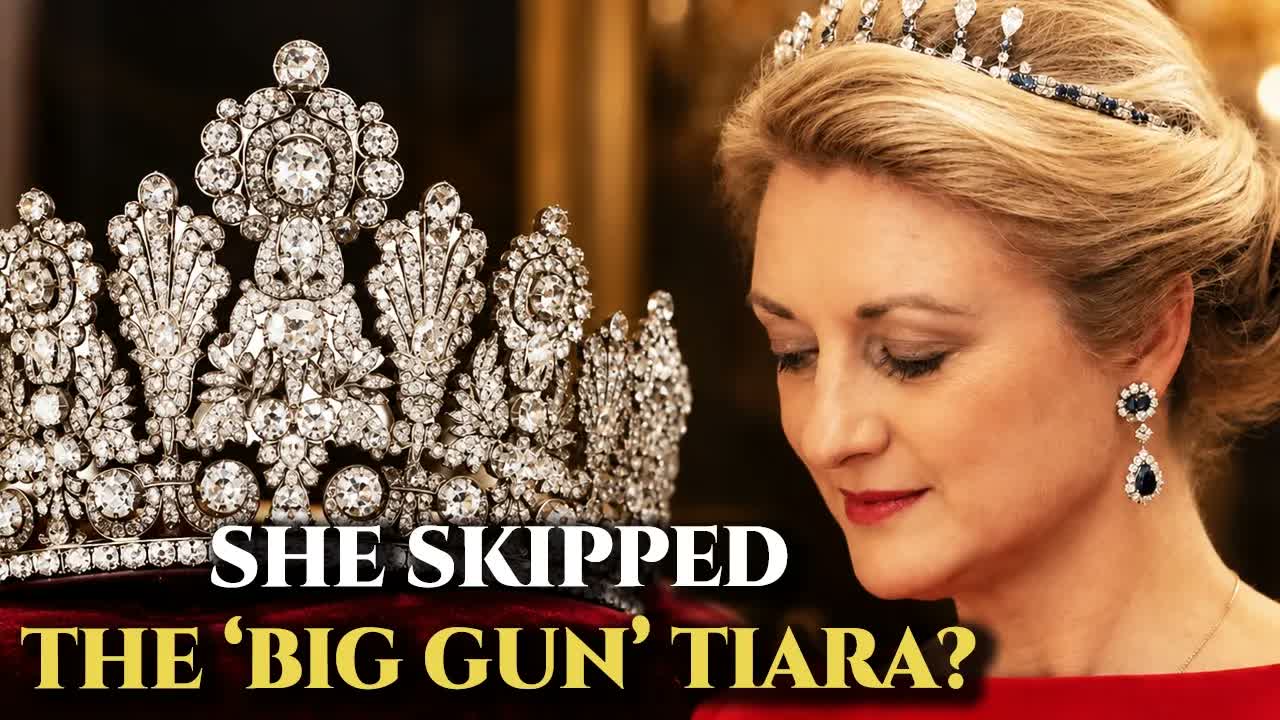
Maximilian, however, did not step back. In 1999, the Liechtenstein information office made the matter official, announcing the forthcoming marriage of Prince Maximilian to Angela Brown. It was now public, now a fact, and now impossible to stop. Around the same time, Angela made a major decision of her own. She did not simply agree to marry a prince; she sold her fashion label and prepared to leave New York entirely to move to Liechtenstein. Consider what that meant. She had built a business from nothing and had a career most designers only dream of — and she gave it up for a new life in a small European country she barely knew. Then came the wedding, held in two parts. First, on January 21, 2000, the couple married in Vaduz, Liechtenstein. Then, just eight days later, on January 29, 2000, at eleven in the morning, they held their religious ceremony in New York at St. Vincent Ferrer Church. And here is a detail that shows exactly who Angela was: she did not buy a wedding gown from a global fashion house. She designed her own. The woman about to become a European princess walked down the aisle in a dress she had made with her own hands. She also wore something connecting her to her new family’s history — the Kinsky tiara, an heirloom of the Liechtenstein family. In that moment, two entirely different worlds collided: a self-made designer from Panama and centuries of European royal tradition. Somehow, it worked.
With that marriage, Angela’s title changed forever. She became Princess Angela of Liechtenstein, Countess of Rietberg, with the official style of “Her Serene Highness.” But becoming a princess did not mean becoming famous; it meant quite the opposite. The following year, in 2001, Angela and Maximilian had their only child, a son named Prince Alfons Constantin Maria of Liechtenstein, Count of Rietberg. Today he holds a real place in the family’s future: he is sixth in the line of succession in Liechtenstein. One might expect Angela’s life to have become a whirlwind of royal events, media attention, and public appearances, but that did not happen. Instead, she deliberately withdrew from the spotlight. The family made a clear decision to stay out of the public eye as much as possible: no reality shows, no monthly press interviews, no constant appearances. Angela — the woman who had once run a fashion label in one of the most public industries in the world — chose a private life behind the walls of Liechtenstein.

She did not disappear entirely. Since her marriage, Princess Angela has taken part in official events in the principality, sometimes alongside her son. She still appears at occasions and still represents the family, but she does so quietly. Occasionally, a small part of her old life surfaces. In 2015, she gave a rare interview, but it was not about royal duties. It was about something closer to her heart: she spoke about tourism in Panama, the country where her story began. She and her family have also spent time in Pedasí, a town on Panama’s Pacific coast. After all the palaces, the title, and the tiara, Angela still returns home.
Now, twenty-six years after that wedding, here is where things stand. Maximilian never became the reigning prince; that role passed to another branch of the family. Instead, he built a career in finance, working at the family’s private bank. Angela, meanwhile, became something rarer than royals chasing flashy headlines: a quiet example that love can cross any border, class, continent, or crown. Their son, Alfons, is now an adult who carries into the next generation of the family both his father’s royal blood and his mother’s Panamanian roots. The resistance Angela once faced has largely been forgotten. What is remembered instead is the fact that will remain prominent in Liechtenstein’s history forever: a prince who chose love over tradition, and a woman from a small town in Panama who became part of European royal history without ever losing her identity.

So here is the real question. Do you believe royal families today should still care about origins and backgrounds, or should love always come first, regardless of a person’s background? Tell us your views in the comments below. If you enjoyed this article, be sure to follow for more. As always, thank you for reading, and we will see you in the next story.