The Soviet Union’s response to the rise of Western supercarriers was not a bigger fleet, but a mountain. In 1954, a group of Soviet military engineers stood at the foot of Mount Aya on the Crimean coast, staring up at hundreds of meters of solid limestone rising abruptly from the Black Sea. From the water, the cliff looked entirely unremarkable, marked only by natural erosion and dense scrub. That was precisely the point. The instruction issued from Moscow was simple on paper but bordered on physical impossibility in reality: the Ministry of Defence demanded an underground naval base capable of stopping a fully integrated NATO carrier strike group. It had to withstand a direct nuclear strike, sustain its crew autonomously for weeks, and house enormous hydraulic machinery. Crucially, the entire facility had to remain completely invisible from the outside. The strategic reality of the early 1950s left the Soviet Union dangerously exposed on its southern flank. The Black Sea was a confined theatre, and Soviet naval planners knew that any conflict with the Western alliance would quickly bring heavily armed enemy ships to the Crimean coast. The Soviet surface fleet was still recovering from the devastating losses of the Second World War. It could compete with Western supercarriers neither in tonnage nor in air power. The asymmetric solution was the anti-ship cruise missile. Early Soviet cruise missiles, however, were massive, unwieldy and incredibly vulnerable. They were essentially unmanned aircraft that required lengthy fuelling procedures, large launch ramps and extensive ground equipment. Stationing these weapons on unprotected coastal batteries would have made them immediate targets for enemy bombers or naval artillery. The weapons needed armour, and the best available armour was the earth itself. That requirement led to the creation of Object 100, later known as Utyos.

The task of designing this fortress fell to a specialised design bureau. Its engineers confronted what was soon called internally the limestone paradox. The same rock that offered impenetrable protection against a nuclear blast wave also imposed absolutely rigid limits on operating space, ventilation and signal transmission. The mountain was meant to shield the missiles but simultaneously threatened to suffocate and blind them. The first planning phase required solving the geometry of an underground launch. A cruise missile cannot simply be fired from the depths of a dead-end tunnel. The exhaust from solid rocket motors would create an instantaneous overpressure event, rebounding off the limestone walls and scorching the launch crew, the remaining munitions and the delicate electronic targeting systems. The missiles had to be brought to the surface for launch, yet a permanent opening at the surface would have defeated the purpose of a nuclear-survivable bunker. The design bureau therefore had to develop a dynamic seal. They needed armoured gates thick enough to absorb the thermal radiation and atmospheric overpressure of a nearby nuclear detonation, yet mobile enough to open in seconds. Engineers designed massive steel and concrete covers weighing up to 80 tonnes each. These covers were to sit flush with the mountain’s natural contours, camouflaged with local stone and vegetation. Beneath these gates lay the launch ramps. The mechanical challenge of moving an 80-tonne armour plate quickly was immense. Commercial electric motors lacked the immediate torque required to shift the gates under combat conditions. The planners therefore turned to enormous hydraulic systems. Deep inside the mountain, electric pumps were to continuously pressurise hundreds of litres of hydraulic fluid. On initiating the launch sequence, automated valves would direct this stored pressure into massive steel cylinders, opening the armour gates in a single, continuous motion.

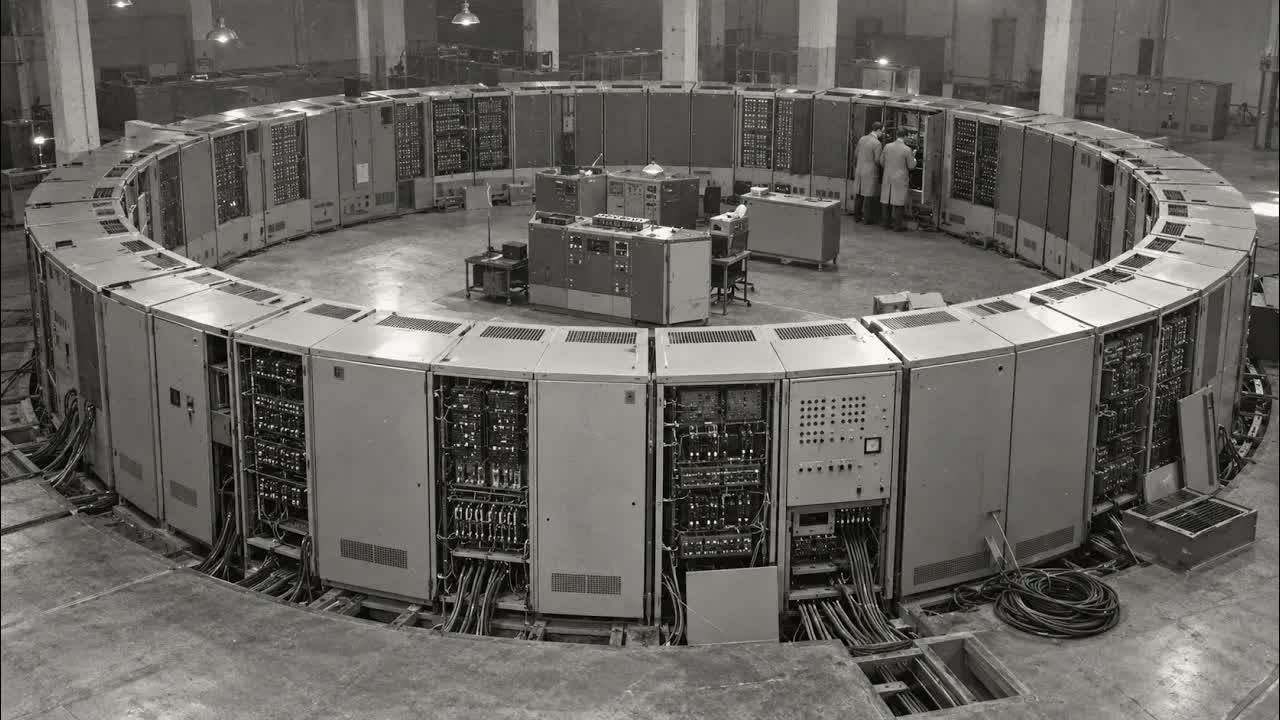
Yet excavating the rock for these mechanisms was only the most basic hurdle. The real problem was internal life support and the handling of toxic propellants. Early anti-ship missiles relied on liquid fuels and highly corrosive oxidisers such as fuming nitric acid. Handling these chemicals on an open airfield was already dangerous enough. Handling them inside a sealed underground cavern required an unprecedented safety architecture. The plans provided for fully isolated fuelling galleries. These galleries had to be lined with special stainless steel piping to prevent the acid from corroding the pipes. Should a leak occur during fuelling, toxic vapours would rapidly fill the tunnel network and prove fatal to the entire underground crew. To prevent this, the design bureau drafted an independent, closed ventilation system. Massive electric fans were to draw air through several stages of chemical, biological and radiological filters. The bunker’s internal air pressure had to be kept slightly above outside pressure to ensure that, with the gates open in a contaminated environment, fallout would be kept away from the interior spaces. The power required for the hydraulic pumps, fans, lighting and computers was immense. The complex needed its own underground power station with heavy marine diesel generators and massive internal fuel reservoirs. Diesel generators, however, consume large amounts of oxygen and produce heavy exhaust. Engineers had to route complex intake and exhaust shafts through the limestone, equipped with hardened blast valves that would close automatically upon a sudden external pressure rise. Then came the problem of target acquisition. A missile complex beneath hundreds of metres of rock is completely blind. The analogue targeting computers of the 1950s, consisting of massive racks full of vacuum tubes and mechanical relays, required precise climate control. They were extremely sensitive to humidity, vibration and temperature fluctuations. These delicate machines had to be installed in shock-protected rooms deep inside the complex. Yet to calculate a firing solution against a moving naval vessel, the computers needed continuous real-time data from surface radar. The planners had to design a complex array of external search and targeting radars high on the exposed peaks of Mount Aya. These rotating antennas swept the horizon, detected incoming threats and relayed the data to the underground computers. The transmission lines for this data could not simply be laid down the cliffs. They had to be routed through narrow, vertically drilled shafts, encased in thick lead and copper shielding to protect the analogue signals from the electromagnetic pulse of a nuclear detonation.

The operational sequence demanded by the Soviet command was incredibly tight. A target was detected by the external radar. The analogue computers needed several minutes to calculate the trajectory. Meanwhile, the missile had to be moved from its storage magazine to the launch ramp, fuelled with volatile propellants, and prepared for firing. Every one of these steps had to occur within the hardened shell of the mountain, with the armour gates sealed until the very last moment. The launch crews trained for a cycle measured in minutes, knowing that in a real exchange the warning time might be shorter still. The human dimension of the complex was equally demanding. Sailors and technicians assigned to Utyos lived and worked in an environment with no natural light, limited fresh water and constant mechanical noise. The design included cramped barracks, a galley, medical facilities and recreation spaces, all carved from the limestone. Psychological screening for personnel was reportedly strict, because the facility was expected to remain sealed for weeks after a nuclear exchange, with the outside world presumed contaminated. The mountain was to function as a self-contained world, and its inhabitants had to be selected accordingly.

Construction itself was a feat of engineering in its own right. Digging into solid limestone on the scale required meant blasting, boring and reinforcing on an industrial basis, all while maintaining the secrecy that the project demanded. Material excavated from the mountain had to be disposed of without attracting attention, and the workforce had to be compartmentalised so that no single group understood the full layout of the facility. The complex grew into a labyrinth of tunnels, shafts, galleries and hardened chambers, its true extent known only to a handful of planners in Moscow. For decades, Utyos remained one of the Soviet Union’s most closely guarded secrets, a fortress hidden in plain sight on a popular stretch of coastline. After the collapse of the Soviet Union, the facility was decommissioned and fell into disrepair, its gates sealed and its corridors abandoned. For years it stood as a monument to Cold War extremes, visited only by occasional researchers and explorers. That status has now changed. Russia has reactivated the complex, restoring its role in coastal defence and returning it to the inventory of active military infrastructure. The revival fits a broader pattern of Russia refurbishing Soviet-era hardened facilities along strategically sensitive coasts, and it has renewed interest in what the mountain was originally built to do: hold a Western carrier strike group at risk while surviving a nuclear strike. The limestone paradox, it seems, has not been fully resolved so much as accepted. The same rock that constrained the engineers of 1954 still constrains their successors, and the fortress built to counter supercarriers has returned to service in a world where those carriers still patrol distant waters.

Analysts caution that the reactivated complex should not be overestimated. Its original weapons are obsolete, and any modern deployment would depend on new missiles, new sensors and new communications links that must themselves survive the environment the mountain imposes. The facility’s value lies less in any single weapon than in the survivability it confers: the ability to absorb a first strike and still threaten an adversary’s most valuable naval assets. That logic, first articulated in Moscow in the early 1950s, remains legible today. Mount Aya’s cliffs still look unremarkable from the water. Somewhere beneath them, the machinery of a forgotten doctrine is once again maintained, waiting in the dark.