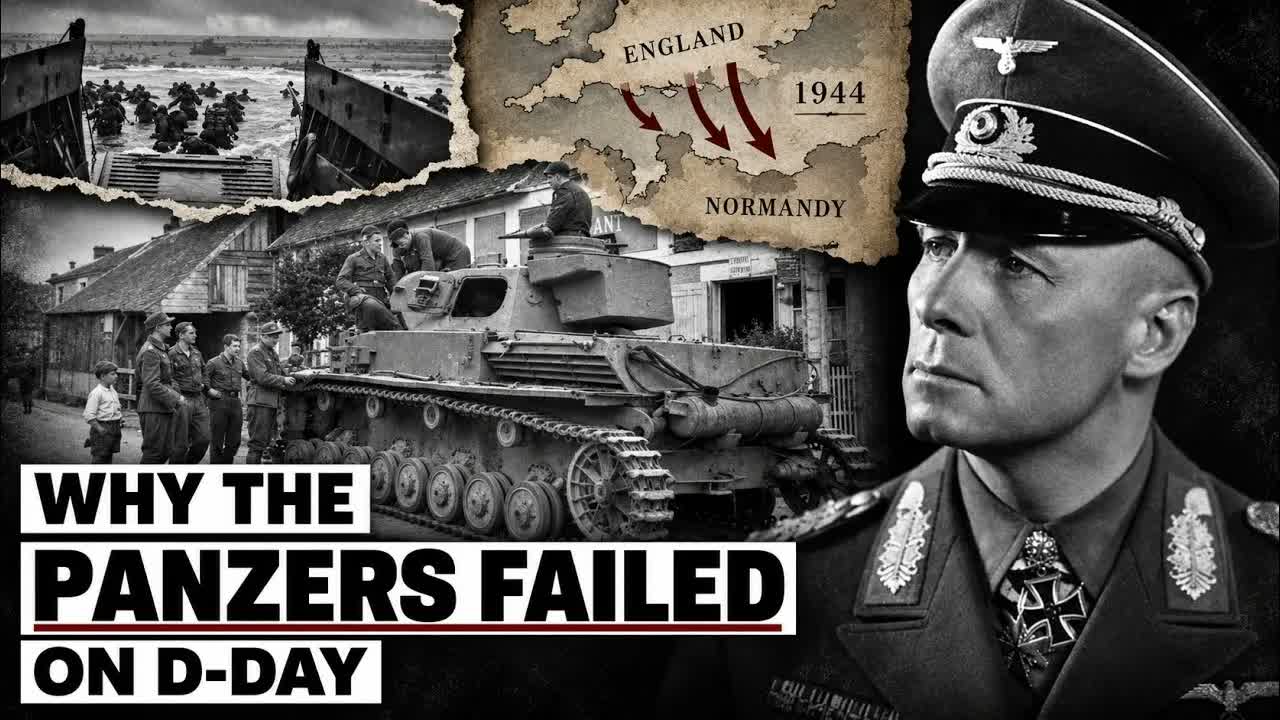
Manfred Rommel, the only son of Field Marshal Erwin Rommel, was sixteen years old when two senior SS generals arrived at his family home in Herrlingen, a village in southern Germany, on the morning of October 14, 1944. His father was recovering from injuries sustained when his car was attacked by Allied aircraft in Normandy three months earlier. Manfred was in the house. His mother, Lucie, was in the house. The two generals presented the choice that the regime had already decided was the only acceptable resolution to Rommel’s involvement in the July 20 plot that had attempted to assassinate Hitler. He could face a public trial, disgrace, execution, and the activation of collective punishment against his family, which under the regime’s policy extended to the persecution of the families of convicted traitors. Or he could accept a private death, in which case his family would be protected, his pension would continue, and he would receive a full state funeral as a hero of the Reich.

Rommel went upstairs. He had fifteen minutes. He told Lucie. He told Manfred. He explained the nature of the choice and what he had decided. Then he went back downstairs, got into the SS car, and was driven away from the house he would never return to. His life ended minutes after the car left. What Manfred carried out of that house at sixteen was not simply grief. It was precise and detailed knowledge of how his father had actually died, knowledge that contradicted every detail of the official account the regime was already preparing to publish. The lie was large and carefully woven. The regime announced that Field Marshal Erwin Rommel had died of wounds sustained in the aerial attack in Normandy on July 17, and that a German hero had passed away in service to the fatherland. The state funeral that followed was held with full military honors. Hitler sent a condolence message to Lucie. The ceremony was elaborate and public, attended by senior officers who delivered speeches about military sacrifice and national mourning over a coffin containing a man they knew had been killed on orders from the leadership that now presided over his funeral.

Manfred attended that funeral at sixteen, knowing that every word spoken over his father’s coffin was false. He could not say so. The terms of the agreement that ensured his mother’s safety, preserved the family’s protected status, and maintained the pension that would support them through the remaining months of the war required adherence to the official narrative. The lie was not merely something imposed on the family from outside. It was the condition of their survival. A condition Rommel himself had accepted and explained to his son with complete clarity in the fifteen minutes before he got into the car. Manfred was told the truth specifically so that the family could maintain the official lie without being caught off guard by it. He understood what he was being asked to carry, and at sixteen, he carried it.
After Germany’s defeat in May 1945, the terms of the original agreement lost their mechanism of enforcement. The regime was gone. The generals who had come to Herrlingen and presented the choice had died or fallen into Allied hands. Lucie Rommel made public statements confirming that her husband had been killed on Hitler’s orders rather than dying of his wounds, a public declaration she had been unable to make while the regime still stood. Manfred emerged from the immediate postwar period as a young man who had spent the last year of the war carrying a truth that the country was only just beginning to absorb. He was not a soldier in the traditional sense. He had been too young to meet most of the military requirements of the war, and the Germany he now lived in was building institutions that had no use for the military values the Rommel name had previously represented. He studied law. The choice was not accidental. Law in postwar West Germany was the destination for serious young people who wanted to help build something new from the ruins of the old system. It was serious, procedural, and entirely disconnected from the battlefield legends that had made his father’s name famous. He was not trying to escape the Rommel name. He was trying to find a way to carry that name in a context in which it had never existed before.

Meanwhile, the Rommel myth was being actively fed by forces outside the family. British and American fascination with Rommel as the acceptable German general, the honorable commander who fought cleanly in Africa, who resisted Hitler and died a martyr rather than a collaborator, was producing a rehabilitation narrative that served multiple purposes in the postwar period at once. It gave Western audiences a version of German military excellence they could admire without engaging in admiration of Nazism. It gave West German rearmament advocates a military hero whose story could be presented to a skeptical public and to skeptical alliance partners as evidence that the Wehrmacht had been something other than an instrument of the regime’s crimes. And it gave the Rommel family a framework within which the father’s death could be portrayed as principled resistance rather than coerced compliance. Lucie cooperated with Basil Liddell Hart’s 1953 publication of Rommel’s papers, which helped entrench the myth in its most polished form. Manfred did not resist this framework, but he also did not simply repeat it without reservations. He understood, in a way that the myth-building process often ignored, that his father had not calmly entered the SS car as an act of moral heroism. He had accepted the regime’s terms because the alternative was worse for his family. It is a different kind of decision, more complicated and less purely heroic than postwar narratives preferred.
In 1974, Manfred Rommel was elected mayor of Stuttgart. He held that office until 1996, twenty-two consecutive years administering one of West Germany’s most important cities during the period in which the Federal Republic was consolidating its democratic identity and its international rehabilitation. He was known throughout his tenure for moderation, civic seriousness, and a public dignity that contained nothing theatrical. The political spectrum that evaluated him over those years did so largely without reference to his father, because Manfred built his own record and offered independent grounds for assessment. This was a different kind of inheritance from any comparable figure. George S. Patton IV leaned heavily toward his father’s military tradition, carrying the helmet and the rhetoric to Vietnam and performing the legacy in uniform. Arthur MacArthur IV went in the opposite direction entirely, changing his name and disappearing into a Greenwich village. Manfred Rommel did neither. He occupied the same public space that had made his father famous, in Germany and before the German public and under the same name, but in a manner so different from his father’s that the surname eventually became associated with democratic municipal competence more than with armored warfare.

He was not naive about what his name meant or where it came from. He acknowledged the full truth of his father’s death publicly throughout his political career. The SS visit, the choice, the lie of the state funeral, without evasion or minimization. He did not pretend innocence about the regime his father had served. He did not spend his public life defending the Wehrmacht against the historical record. He simply did the administrative work of an elected mayor in a democracy year after year in a city that voted for him repeatedly, and made the name carry a different weight than it had in 1944.
Manfred Rommel died on November 7, 2013, in Stuttgart. He was 84 years old. He had outlived the Third Reich by nearly seven decades. He had outlived his mother, who died in 1971. He had outlived most of the generation that had actually fought the war his father commanded. He had outlived the Rommel papers, the Desert Fox myth, and the specific political circumstances that had made the Rommel name useful to West German rearmament in the 1950s. He had also outlived most of the people who had been present in the house in Herrlingen on October 14, 1944, when his father explained the choice and then got into the car.

Manfred spent nearly seventy years carrying the specific knowledge he had received at sixteen, the private truth behind the public lie that his father’s regime had built around the Rommel name. He carried it accurately. He acknowledged it publicly. He did not use it to dismantle the myth entirely, but he did not pretend the myth was the whole story either. The regime had killed Rommel to preserve a myth it needed for morale and public consumption. The agreement the regime made regarding the family’s safety in exchange for the official narrative produced, unexpectedly, a son who outlived the regime, outlived the myth-makers, outlived the specific political circumstances the myth had been designed to serve, and then spent twenty-two years as an elected mayor of a democratic city, making the name mean something his father’s regime could never have anticipated.